Ossetian Pies
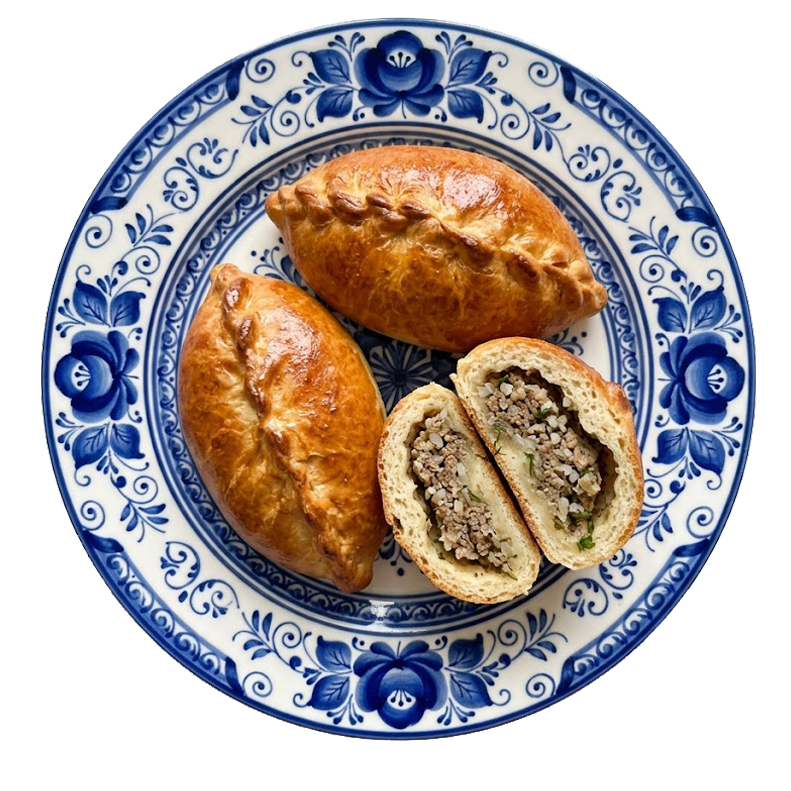
Ossetian pies occupy a central place in the feasting and ritual culture of Ossetia. Three pies are traditionally placed on the festive table; in a widespread interpretation, they symbolize God, the sun, and the earth. Among the well-known varieties are «ualibakh» with cheese, «tsakharadzhin» with beet leaves and cheese, and «fyddzhin» with meat. The baker’s skill is demonstrated in the thin dough and the generous, evenly distributed filling.
Ossetia is almost three hours away on a plane from the capital of Russia — though it’s still Russia. It is a historic region in the Caucasus, where mountain traditions, hospitality, and a strong sense of cultural identity have long been preserved. Among regions best-known dishes are Ossetian pies — traditional flat round pies. They are typically made from a leavened wheat dough rolled into thin rounds, filled, and baked on a flat surface or in an oven. Classic fillings include potato, cheese (often local or sulguni-style), beet leaves, and meat; fillings are placed in the center and the dough is folded and sealed before baking. Ossetian pies are often served hot, sometimes brushed with butter, and commonly shared during family meals and cultural celebrations, traditionally they are sometimes made and presented in odd numbers (three, five, seven) to symbolize good luck and completeness. In modern production they are produced both at home and by bakeries, and recipes vary regionally and by family tradition.
In Ossetian tradition, the preparation of pies is a sacred ritual. The three pies served at a festive meal symbolize the Supreme Spirit, the Sun, and the Earth. The secret to a genuine Ossetian pie is simple: an incredibly thin crust, a generous filling, and the heartfelt warmth with which it is baked.
represented by
Georgy Valiev
cooking
time
120 min
difficulty
level
Medium
key
ingredients
7 filling: 5 / 9
Ingredients
Dough
Potato and cheese filling
Ossetian cheese or suluguni
300 g
Herbal green filling
spinach (or beet greens)
300 g
spring onions or scallions
150 g
Ossetian cheese or feta
100-150 g
Recipe
1.
Mix the warm milk, warm water, sugar, and yeast. Leave for 10-15 minutes until foamy. Add salt, oil, and flour, then knead a soft elastic dough. Cover and leave in a warm place for about 1 hour.
2.
Boil the potatoes until tender, then mash them with butter. Grate the cheese and mix it with the potatoes. Season with salt and black pepper if needed.
3.
Wash and dry the greens well. Finely chop the spinach, spring onions, dill, and parsley.
If using fresh spinach, briefly wilt it in a pan until it softens, then let it cool and squeeze out any excess moisture. Combine all the greens with crumbled cheese, melted butter, salt, and black pepper. Use this filling in the same way as the potato-cheese filling.
4.
Divide the dough into 3 equal pieces and the filling into 3 equal portions. Flatten one piece of dough into a circle, place the filling in the center, gather the edges together, and pinch well. Turn the pie seam-side down and gently flatten it with your hands into a round disc.
5.
Make a small hole in the center to let steam escape. Bake at 220°C for 15-20 minutes, until golden. Brush with butter immediately after baking and serve warm.
6.
Hint
Ossetian cheese and suluguni are traditional Caucasian cheeses used in pies and breads. Common substitutes match their firm, salty, or stretchy qualities for similar results in recipes.
Ossetian cheese is dense, salty, and firm, often from sheep or cow milk. It can be substituted with firm feta and pressed mozzarella mixed with feta for melting in pies. Suluguni is semi-soft, brined, and stretchy when heated, it can be substituted with low-moisture mozzarella or halloumi for grilling
where
to try
Ambassadori
Moscow
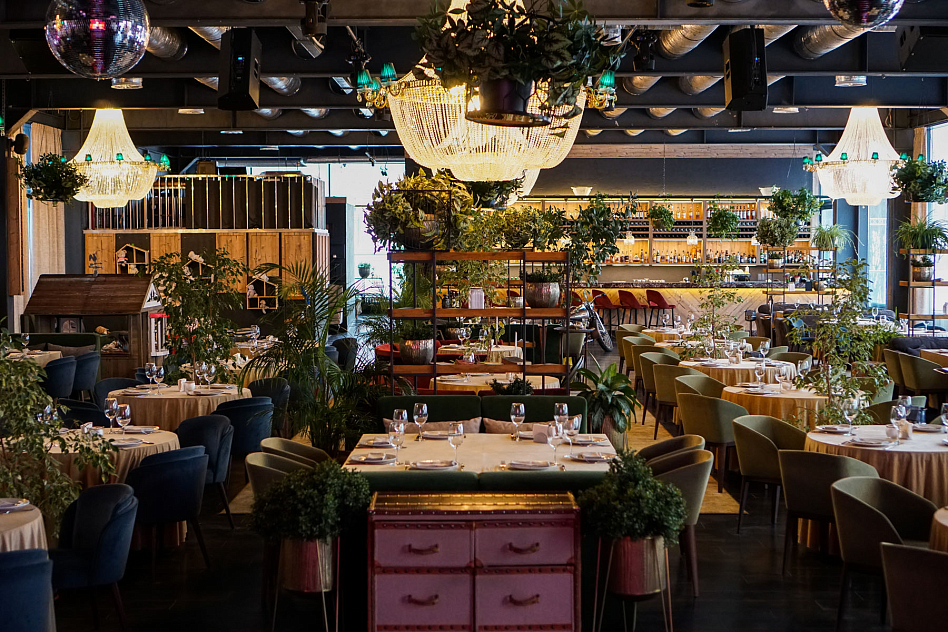
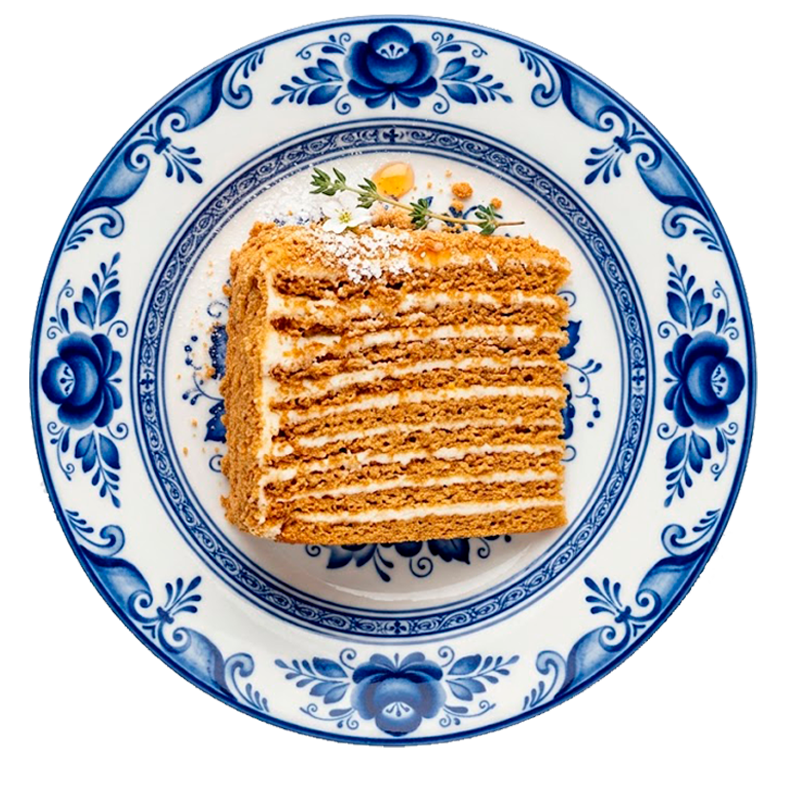
A panoramic restaurant directly on the Vorobyovy Gory viewing platform. Floor-to-ceiling views of Luzhniki and Moscow City. A good place to sit before the descent and try Russian classics: beef stroganoff with wild mushrooms, honey cake medovik, smetannik.
Palkin
Saint-Petersburg
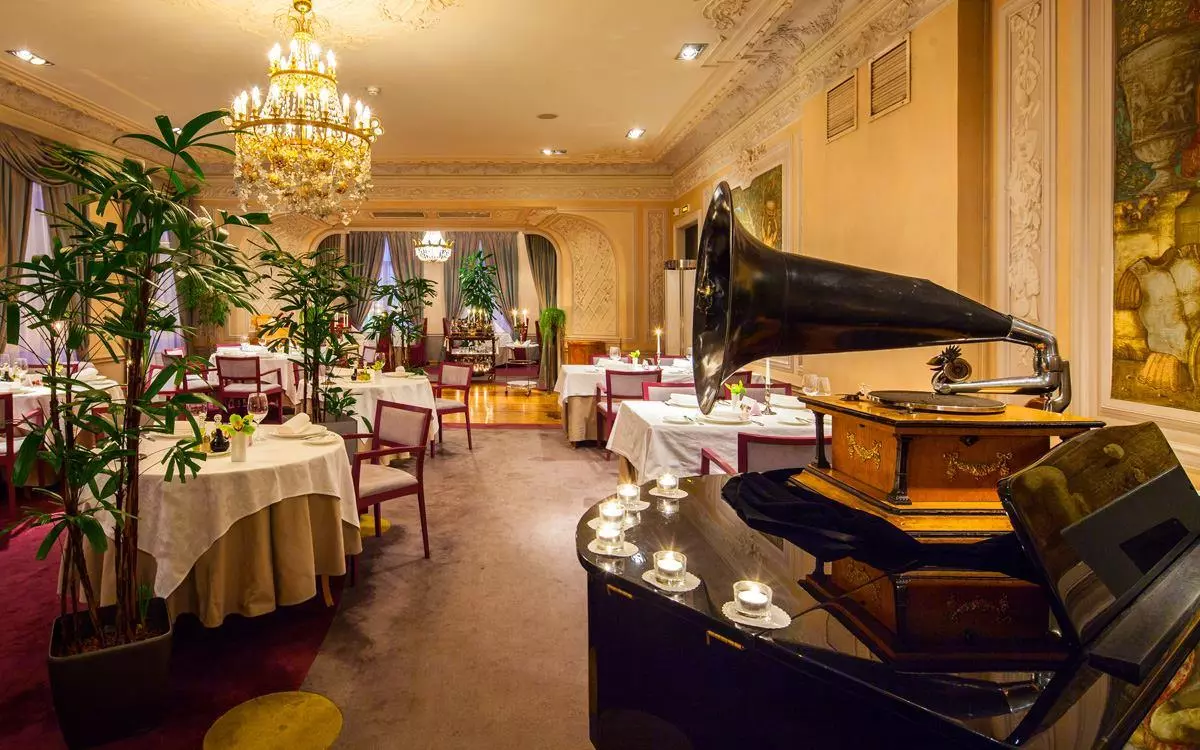
One of St. Petersburg’s oldest restaurant addresses. The establishment’s history dates back to 1785, and in the 19th century, the restaurant on Nevsky Prospekt became a meeting place for the city’s elite, writers, and artists. Today, Palkin continues the tradition of grand Russian cuisine: sturgeon, sterlet, caviar, game, rastegai pies, kulebyaka pies, and dishes inspired by pre-revolutionary restaurant traditions. The interiors feature stucco work, mirrors, and crystal, evoking 19th-century St. Petersburg.
Dom Rossiyskoy Kukhni (House of Russian Cuisine)
Moscow
A food hall on the VDNKh grounds. 15 counters of regional cuisine from Kamchatka to Kaliningrad under one roof, cooking masterclasses and tastings throughout the day. A rare format: the gastronomy that usually takes a month of travel across the country — covered in a single lunch.
Red Fox
Sochi
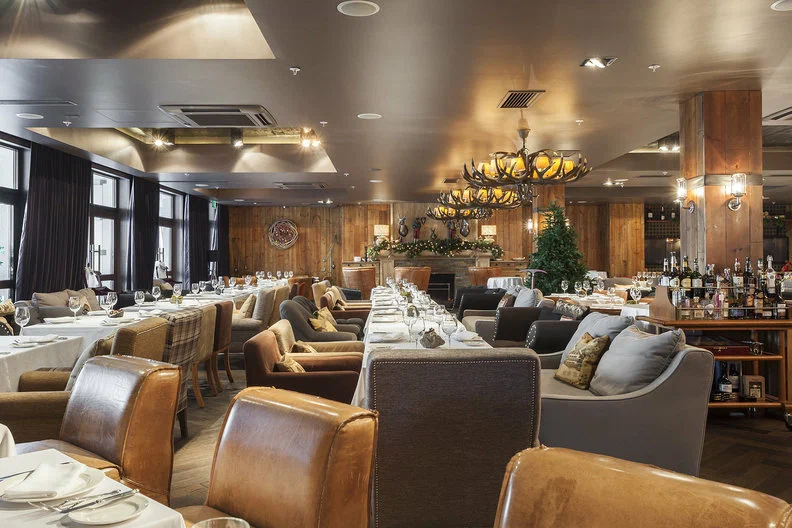
An alpine restaurant on Rosa Khutor with panoramic mountain views, where the cozy interior of a mountain chalet meets eclectic cuisine. The menu features American burgers, Caucasian baked goods, grilled dishes, and everything that world-class ski resorts are known for. A wide selection of craft beer and mountain beverages complements the experience.