Buuzy (Buryat dumplings)
Buuz is one of the main dishes of Buryat cuisine, related to Mongolian steamed dumplings. Meat filling with onion is enclosed in dough, gathered in folds and leaving a small opening on top. Steam creates an aromatic broth inside: first it is carefully drunk after biting into the buuz, and then the rest is eaten. Buuz are prepared both for the everyday table and for Sagaalgan — the New Year holiday according to the lunar calendar.
Buryatia is a republic in eastern Siberia, located along the eastern side of Lake Baikal and bordering Mongolia to the south. It is known for its vast mountains, steppe landscapes, and a rich cultural mix shaped by Buryat, Russian, Buddhist, and shamanic traditions. One of the iconic dishes of Buryat cuisine are Buuzy — large round steamed dumplings stuffed with meat — beef or lamb, onions and lard, no vegetables. The shape of the Buryat buuz corresponds to a yurt — traditional house, with a chimney at the top. The molding includes 33 pinches around the top hole. They are popular in Buryatia, Mongolia, Irkutsk region and Transbaikalia.
To get buuz exactly right, you have to go to Lake Baikal. This is a dish where I prefer not to take shortcuts or invent anything new—it is a national specialty rooted in deep-seated folk traditions. With *buuz*, you want that sense of authentic heritage.
They require excellent lamb, high-quality tail fat, and the right kind of dough. I believe such dishes should remain simple and pure—just as the people originally created them
represented by
Alexander Kucherov
cooking
time
90 min
difficulty
level
Medium
key
ingredients
8
Ingredients
Dough
egg large (or 2 small)
1 pcs
Filling
fatty ground beef or lamb
(750 g meat + 150 g sheep tail fat)
900 g
water (for juiciness)
100 ml
Neutral vegetable oil
3 tbsp
Recipe
1.
Filling
To prepare the meat filling, cut the beef and fat into small pieces. Peel the onions and set aside half of them. Cut the other half into large pieces and pass it through a meat grinder along with the meat and fat.
2.
Finely chop the other half of the onion with a knife and mix it with the minced meat. Season generously with freshly ground black pepper and salt. Add the water, mix everything well, and leave to marinate in a warm place while you prepare the dough.
3.
Dough
Mix all the ingredients in a bowl. Transfer to a work surface and knead it for 5-7 minutes with your hands until it becomes soft and elastic. Return in a bowl, cover with plastic wrap or a towel, and let it rest at room temperature for about 20 minutes.
4.
Shaping a buuz
Divide the rested dough into 3-4 pieces and work with them in sequence so that the dough does not dry. Roll one piece of dough into a long strip and cut it into several pieces weighing approximately 25 g each.
Form a ball out of the piece of dough in your hands, and then roll it out on a board into a thin disc about 8 cm in diameter. Try to make it thicker in the center than at the edges.
5.
Place about 50 g of minced meat in the center of the disc. Lift the edge of the dough and start folding it over the minced meat. Fold all the edges of the dough into a circle, leaving a one-centimeter-wide hole at the top. According to Buddhist tradition, there should be 33 folds on each buuz, but even experienced cooks may not always achieve this. Repeat with all buuzas.
6.
Steaming
Prepare a steamer. Pour vegetable oil into a saucer and dip the bottom of each buuz in it, placing them on the rack at a short distance from each other. Cook the buuzas in a steamer over a fairly high heat for about 20 minutes. Do not overcook them! Carefully remove onto serving plates and serve them hot.
7.
Note
The ratio of dough to minced meat in Buryat buuz is approximately 1:2. This means that there is twice as much minced meat as dough. A good ratio is 25 g of dough for every 50 g of filling.
8.
Serving and eating
A normal portion is 3-4 buuzas per person. They are served with sour cream, mustard or even soy sauce. In Buryatia it is customary to drink hot tea with milk while eating buuzas.
9.
How to eat buuz properly
It is considered inappropriate to use forks, knives, or spoons when eating buuzas. Take
with your hand, make a tiny bite at the side of the dough closer to the bottom and sip the hot broth from inside. Then carefully eat the rest of the meat and dough.
where
to try
Manul
Moscow
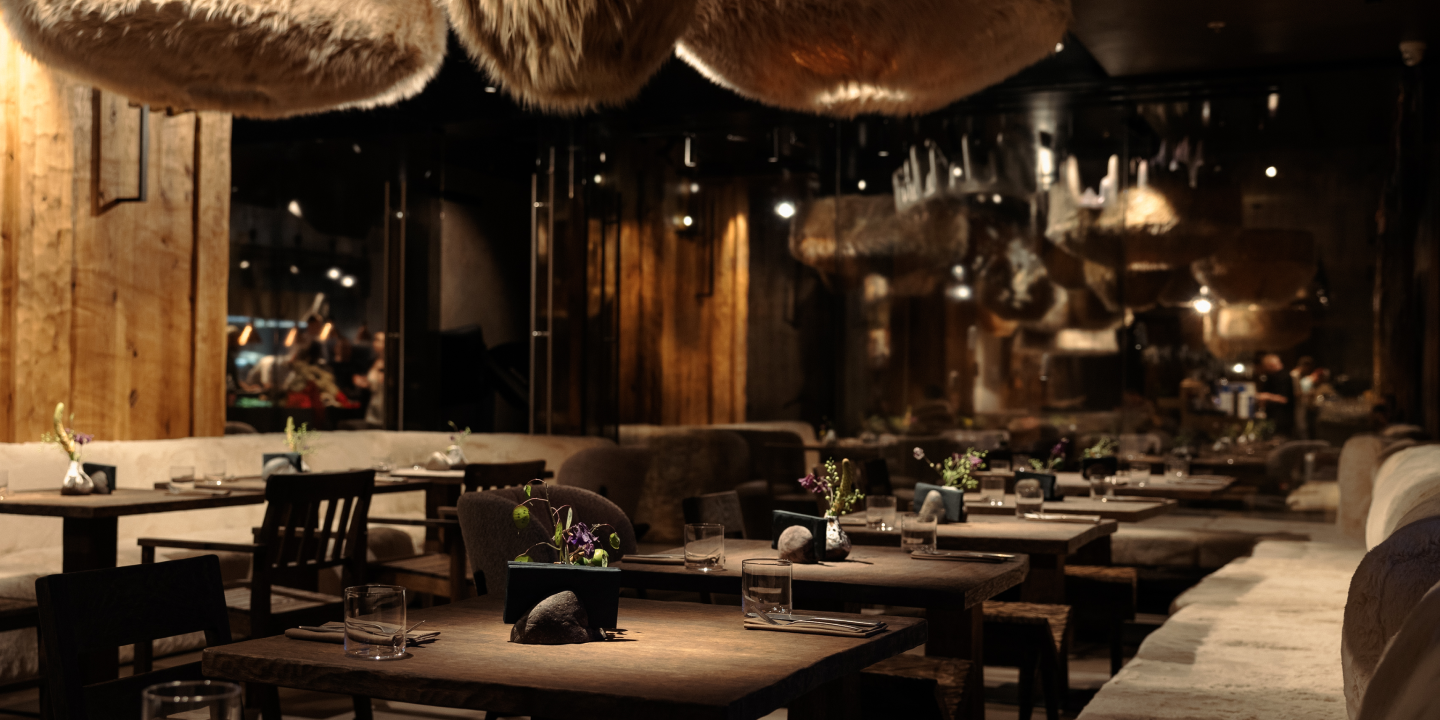
Manul is built around the cuisines of Siberian peoples, with a menu developed from recipes gathered on expeditions to Khakassia, Tuva, Altai, and the Yenisei region. Dishes include stroganina (thin-sliced frozen raw fish), muksun and chir, taiga venison, Khakass lamb, and khuzhuur pies, prepared in an open kitchen with a wood-fired oven. It sits in the Seasons gallery on Okhotny Ryad, a short walk from Red Square.
Dom Rossiyskoy Kukhni (House of Russian Cuisine)
Moscow
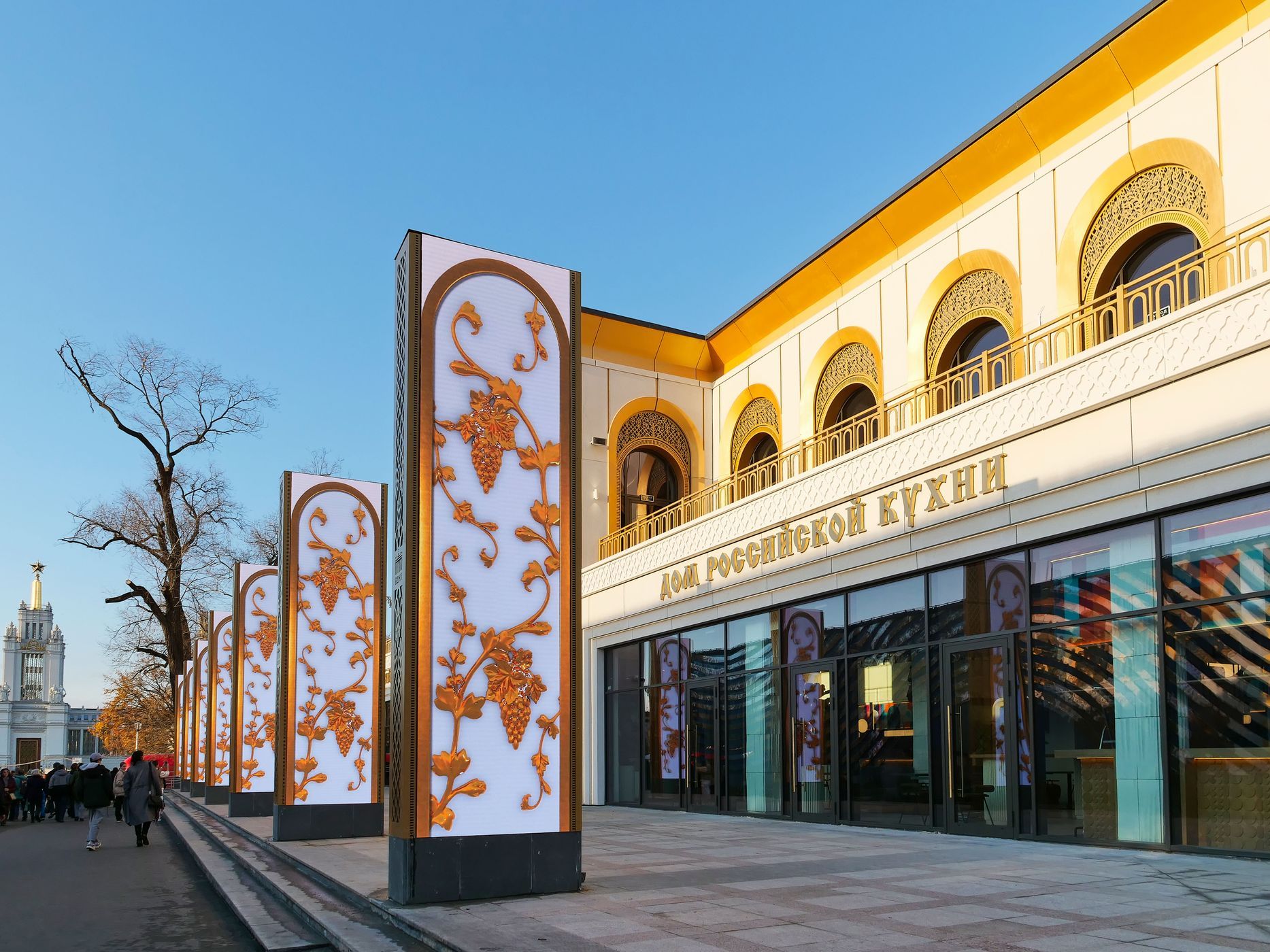
A food hall on the VDNKh grounds. 15 counters of regional cuisine from Kamchatka to Kaliningrad under one roof, cooking masterclasses and tastings throughout the day. A rare format: the gastronomy that usually takes a month of travel across the country — covered in a single lunch.