Dich (Game)
Sochi
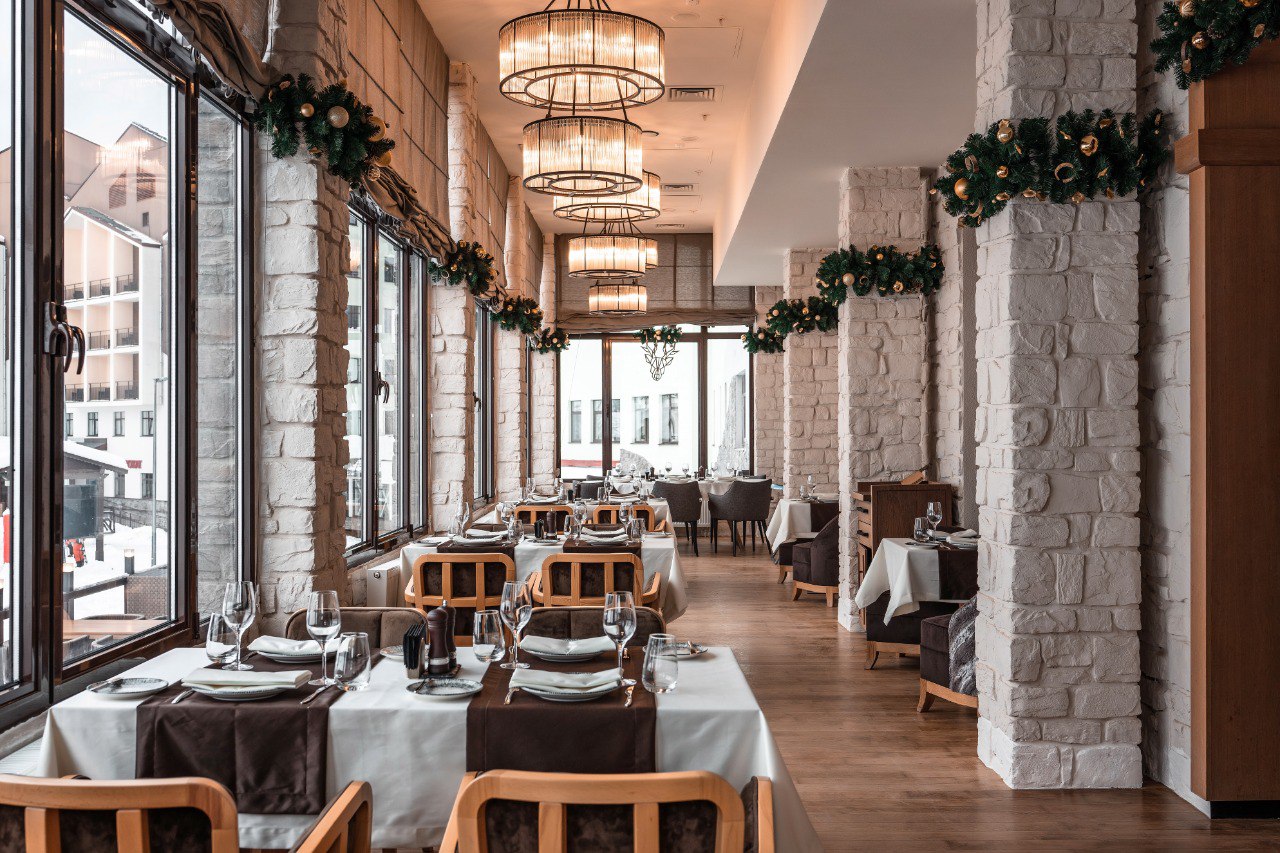
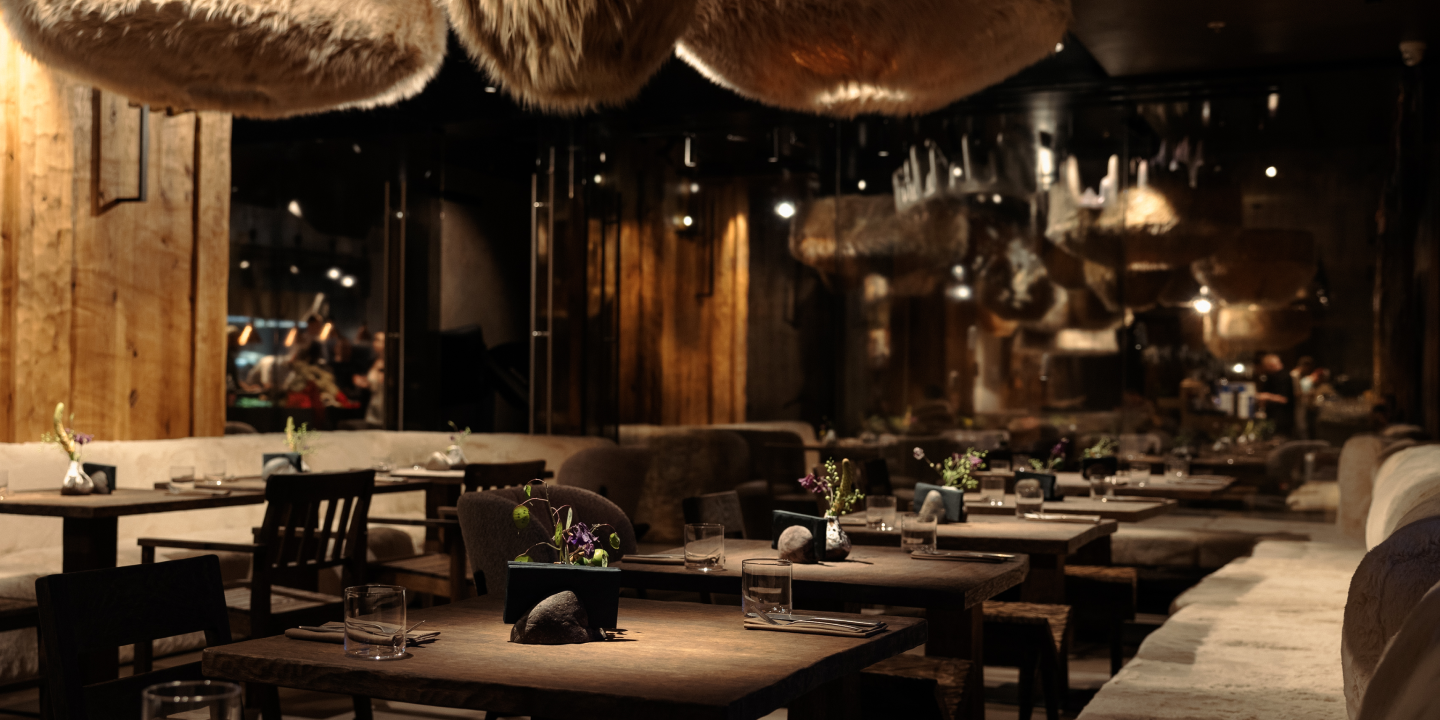
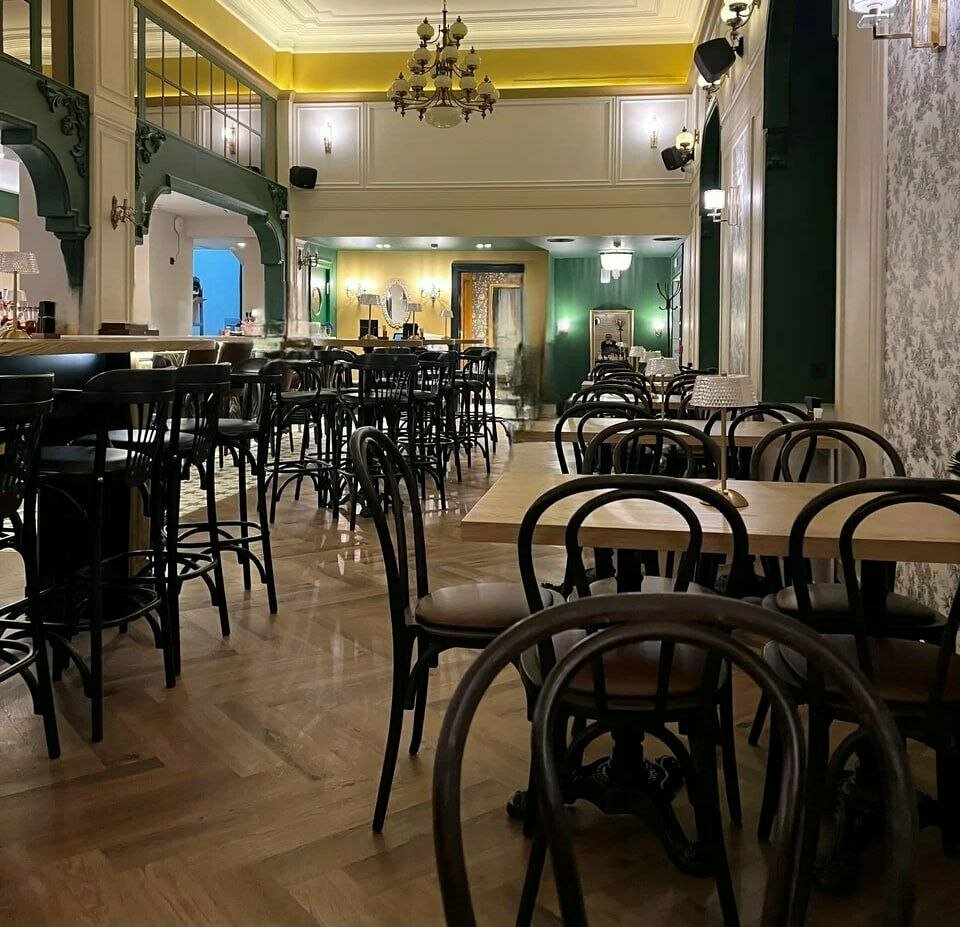
A restaurant in the Gornaya Olimpiyskaya Derevnya (Mountain Olympic Village) at altitude, where game and everything connected to nature take center stage. The menu features elk shchi, venison beefsteak, and dishes made from wild boar, roe deer, and duck. The chef works with local hunting and fishing trophies, transforming them into bold yet refined gastronomic hits.
Tugan Avylym
Kazan
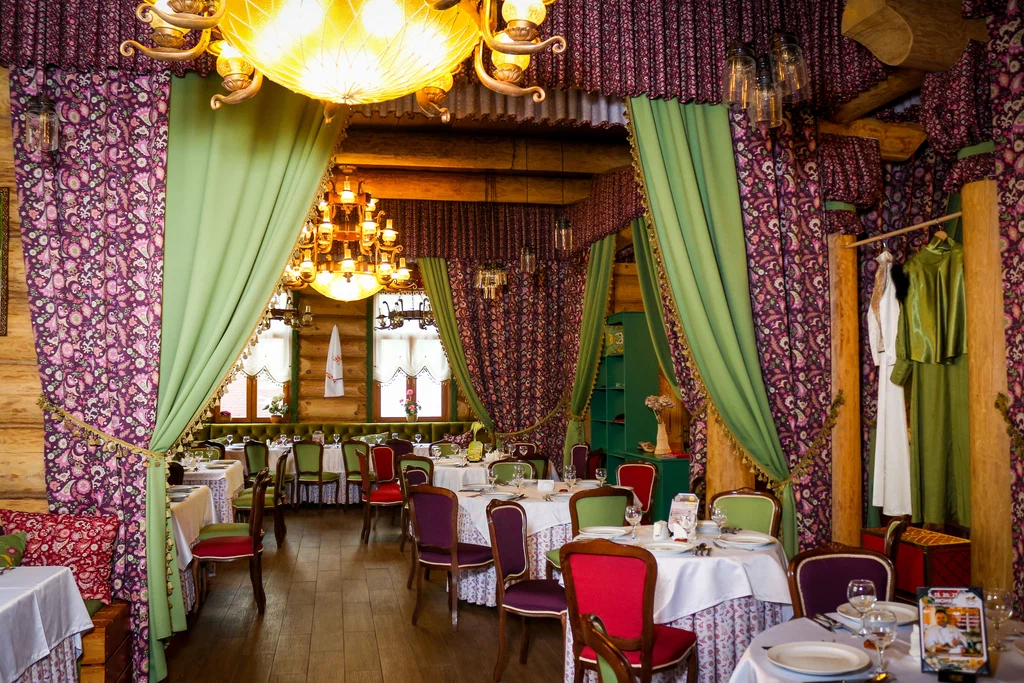
Set within a charming complex styled as a traditional Tatar village, Tugan Avylym offers an immersive introduction to the region’s cuisine and culture. Classic national dishes, wooden architecture, and authentic interiors create one of Kazan’s most distinctive dining experiences.
Café Pushkin
Moscow
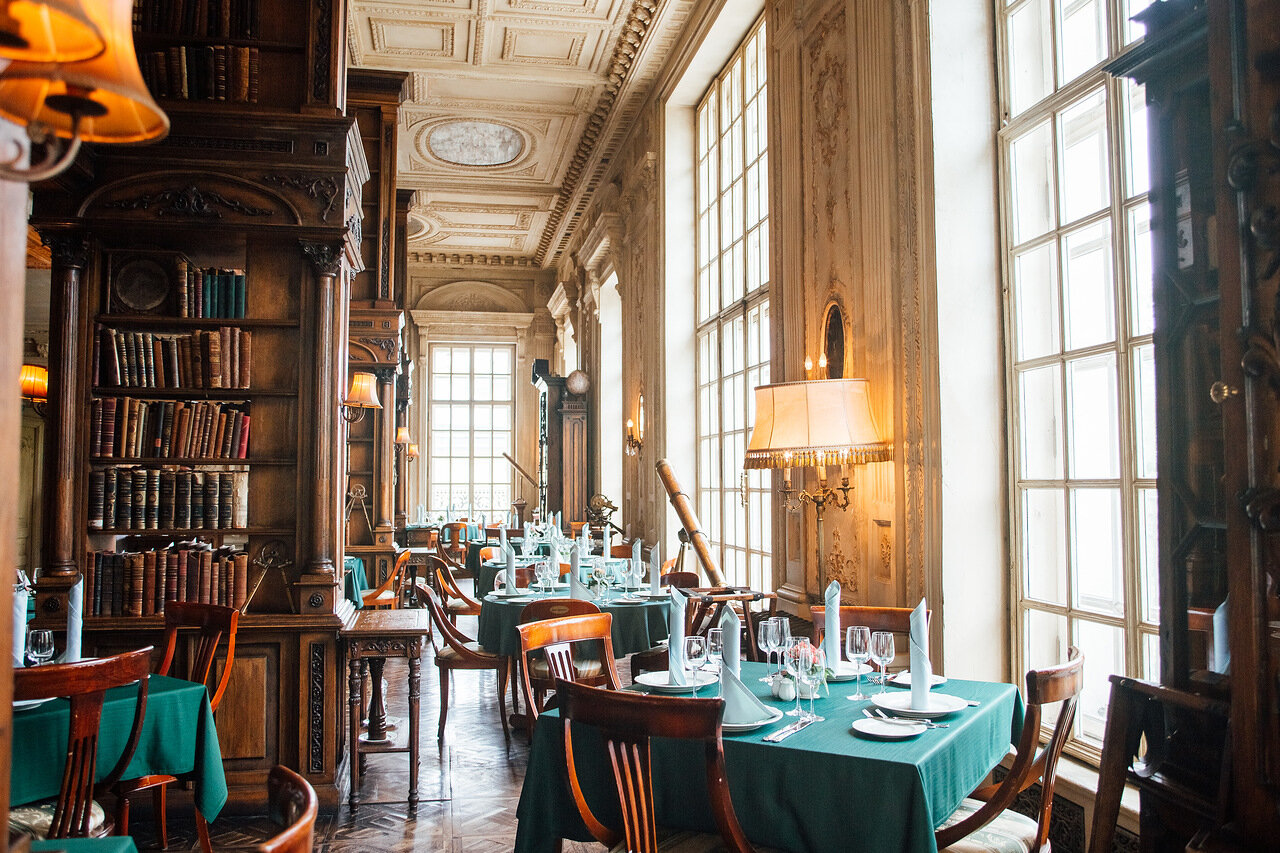
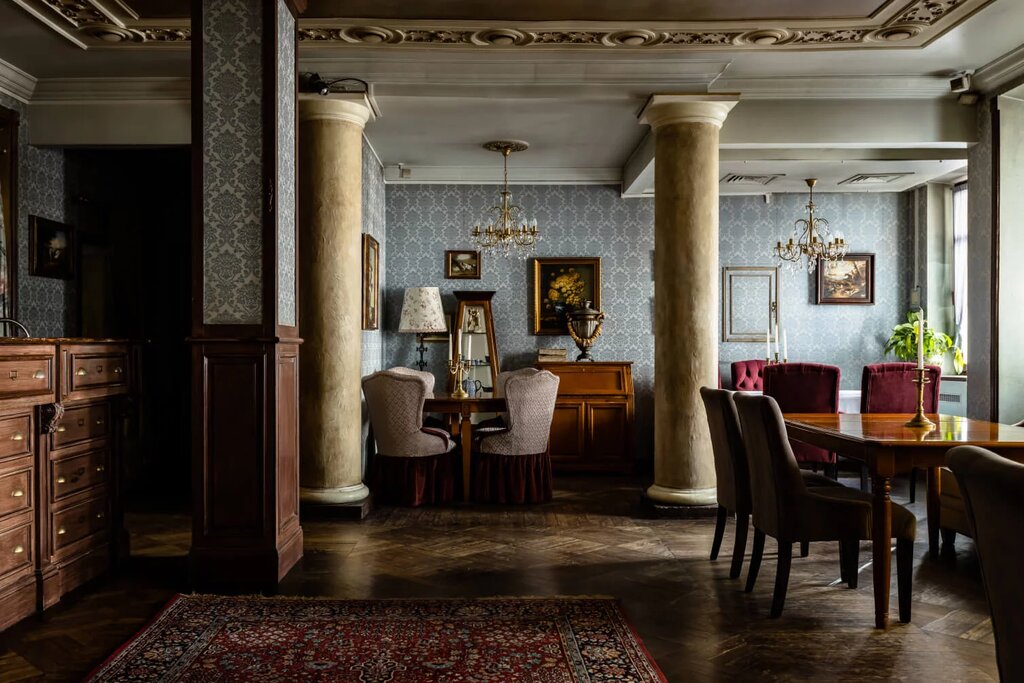
One of Moscow’s most iconic restaurants, Café Pushkin recreates the atmosphere of a 19th-century aristocratic mansion. It is renowned for classic Russian cuisine served in beautifully preserved historic interiors.
Burny
Vladivostok
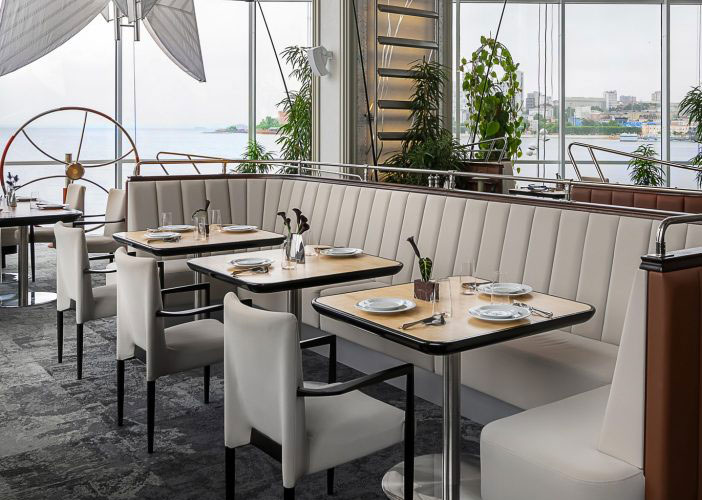
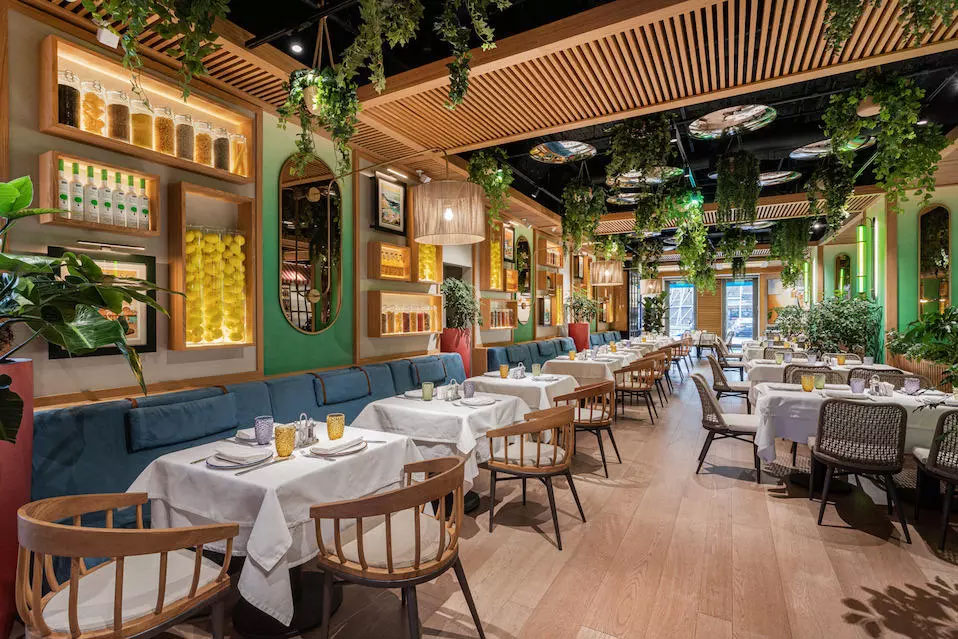
A panoramic Mediterranean restaurant on the central waterfront known for fresh oysters and sea urchin, set inside a modern multifunctional complex with sweeping views of the bay.
Sakhalin
Moscow
Russian and, in part, Soviet cuisine — in small portions, but with the addition of perfect seafood, brought here mainly from Russian seas.
#SiberiaSiberia
Moscow
A restaurant at the Azimut Hotel on Smolenskaya Street, where Siberia is assembled from specific products and dishes: stroganina made from muksun and sturgeon, pelmeni, salted mushrooms, venison, river fish, game, and wild Siberian herbs. The chef is Evgeny Kuznetsov, and most suppliers are Siberian producers.
Beluga
Moscow
Beluga celebrates Russian gastronomy with an emphasis on premium seafood, caviar, and traditional delicacies presented in a contemporary style. Located next to Red Square, it offers one of Moscow’s finest dining experiences.
Matryoshka
Moscow
Matryoshka offers traditional Russian cuisine inspired by recipes from the late 19th and early 20th centuries. Set on the banks of the Moskva River, it combines elegant interiors with authentic flavors.
Voskhod
Moscow
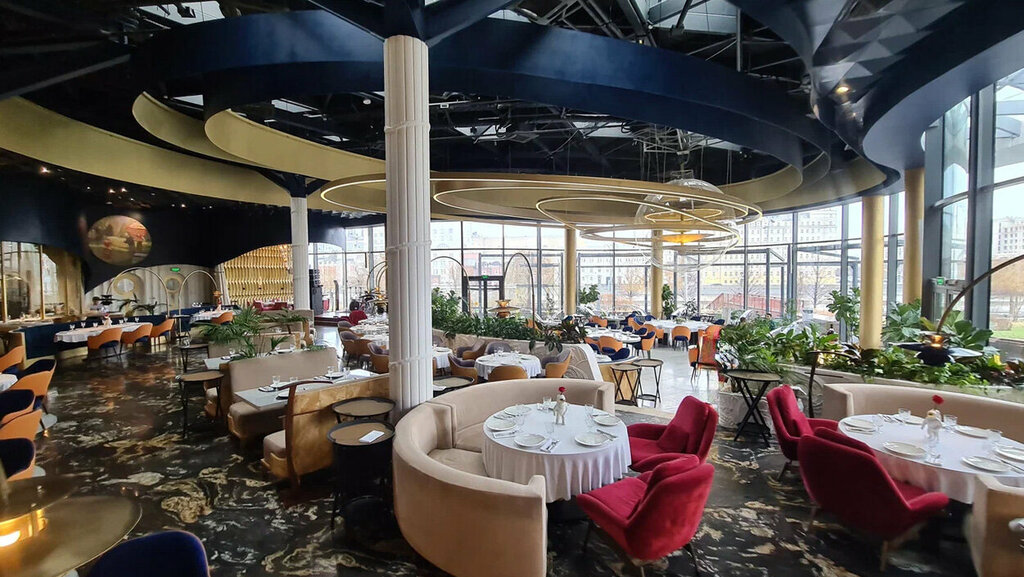
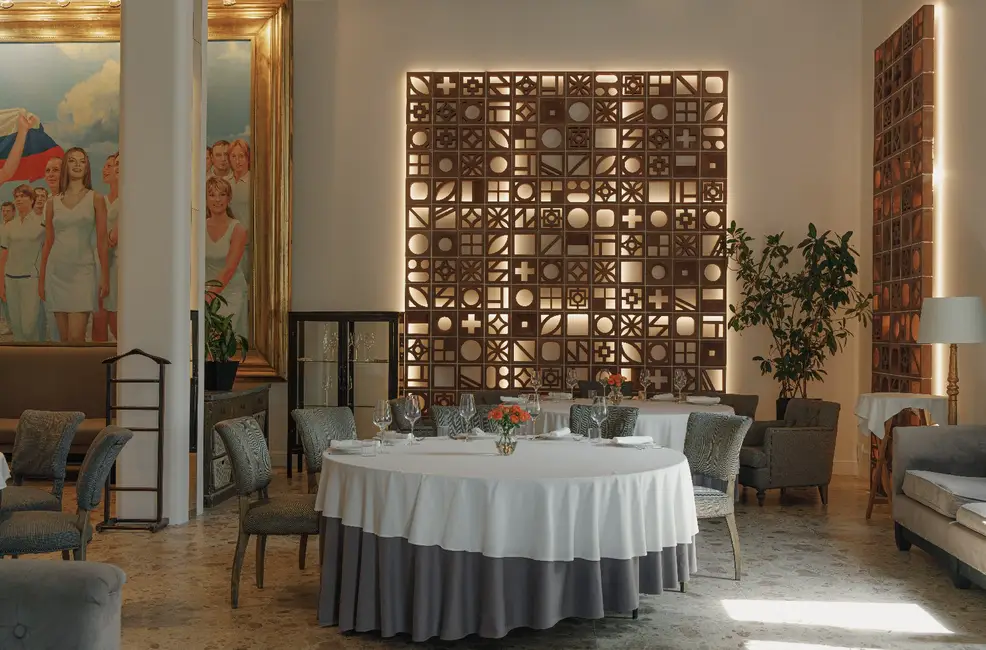
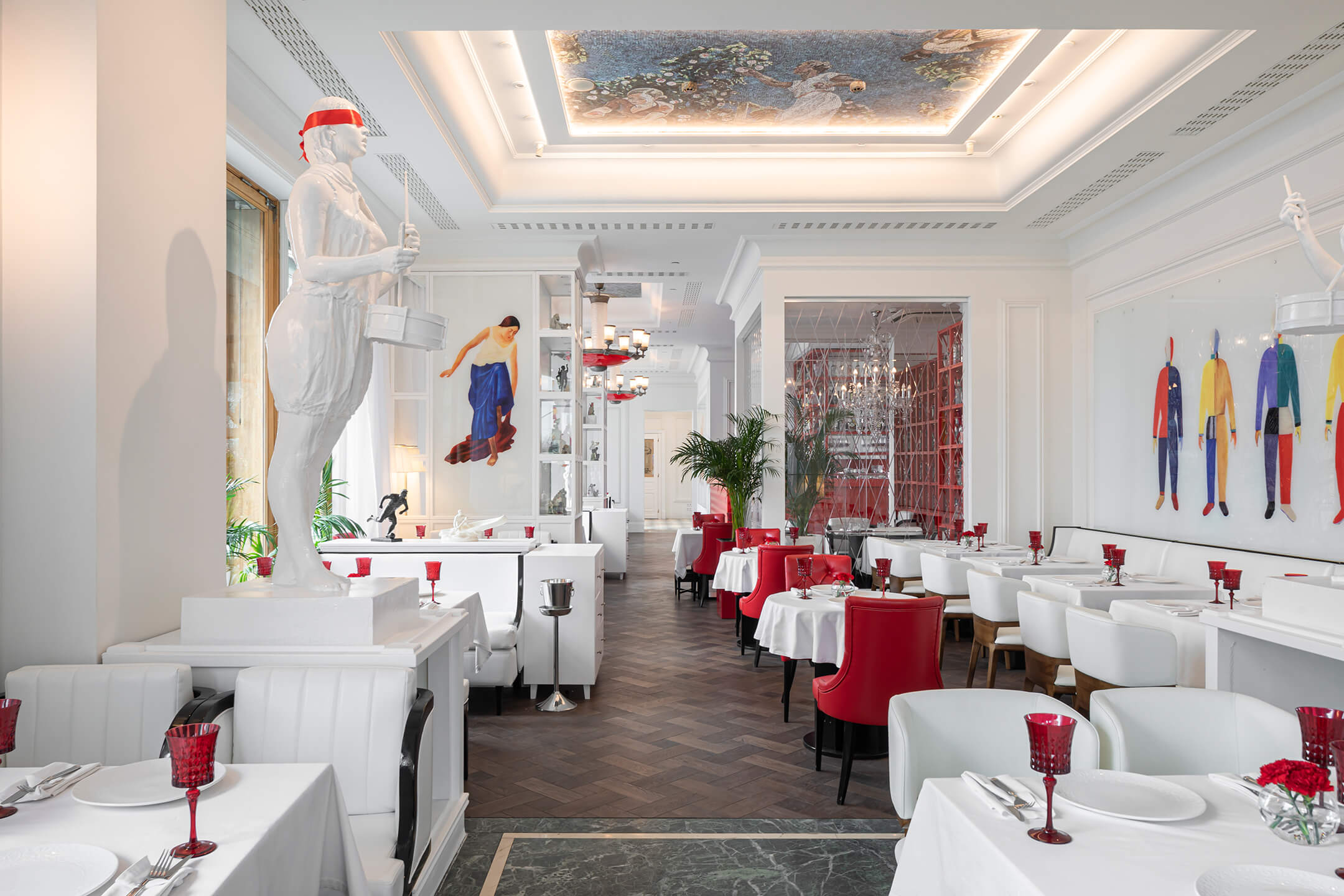
A restaurant in Zaryadye Park, in the very heart of Moscow, where nostalgia for the Soviet past meets a futuristic vision of the future. The interior is designed in a neo-futuristic «cosmic» style: floating flowerpots, vases with red carnations, bas-reliefs of workers and collective farm women, while the ceiling evokes the legendary Kosmos restaurant at the Rossiya Hotel. The kitchen presents a panorama of the cuisines of the peoples of the USSR, united into a single universe of modern Russian cuisine. A place where imperial grandeur and socialist abundance are transformed into a nostalgic fantasy of a great country.
Millionka
Vladivostok
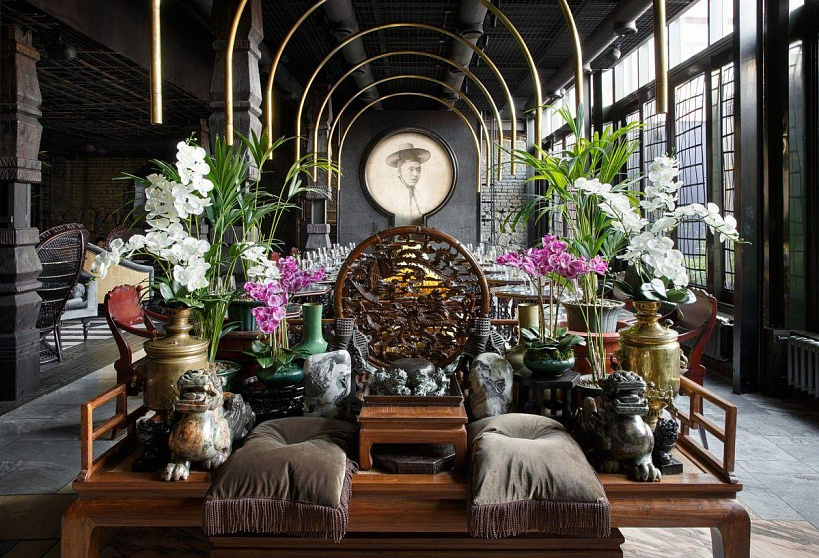
A Chinese-Russian fusion restaurant set within the historic Millionka quarter, styled in chinoiserie decor with hand-carved lacquered furniture, and known for a 250-plus label wine list recognized by the Russian Wine Awards.
Niki
Moscow
A stylish modern Russian restaurant located in the iconic Khudozhestvenny Cinema. It offers creative interpretations of Russian classics in a sophisticated contemporary setting.
Manul
Moscow
Manul is built around the cuisines of Siberian peoples, with a menu developed from recipes gathered on expeditions to Khakassia, Tuva, Altai, and the Yenisei region. Dishes include stroganina (thin-sliced frozen raw fish), muksun and chir, taiga venison, Khakass lamb, and khuzhuur pies, prepared in an open kitchen with a wood-fired oven. It sits in the Seasons gallery on Okhotny Ryad, a short walk from Red Square.
Modus
Sochi
A luxurious restaurant in the heart of Russia’s Olympic heritage, surrounded by greenery, at the intersection of the Formula 1 track and the Ice Cube. Spacious halls (up to 100 seats) and a summer terrace allow for events of any format — from business dinners to wedding banquets. The kitchen serves European, Italian, and Japanese cuisine. A place where contemporary architecture, signature cuisine, and high-level service create the perfect atmosphere for events of the highest calibre.
Red Fox
Sochi
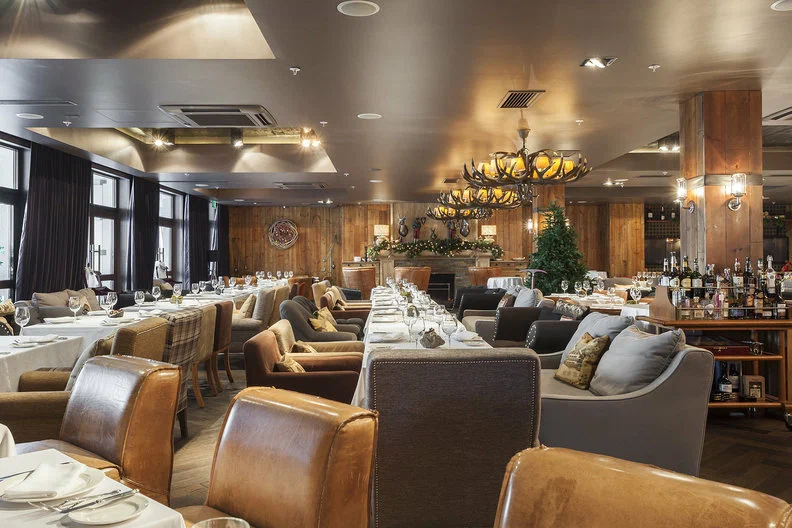
An alpine restaurant on Rosa Khutor with panoramic mountain views, where the cozy interior of a mountain chalet meets eclectic cuisine. The menu features American burgers, Caucasian baked goods, grilled dishes, and everything that world-class ski resorts are known for. A wide selection of craft beer and mountain beverages complements the experience.
Ruski
Moscow
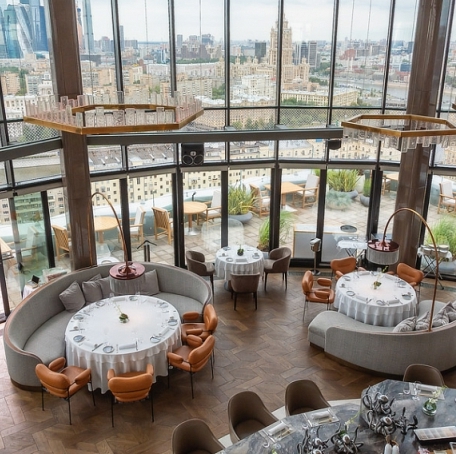
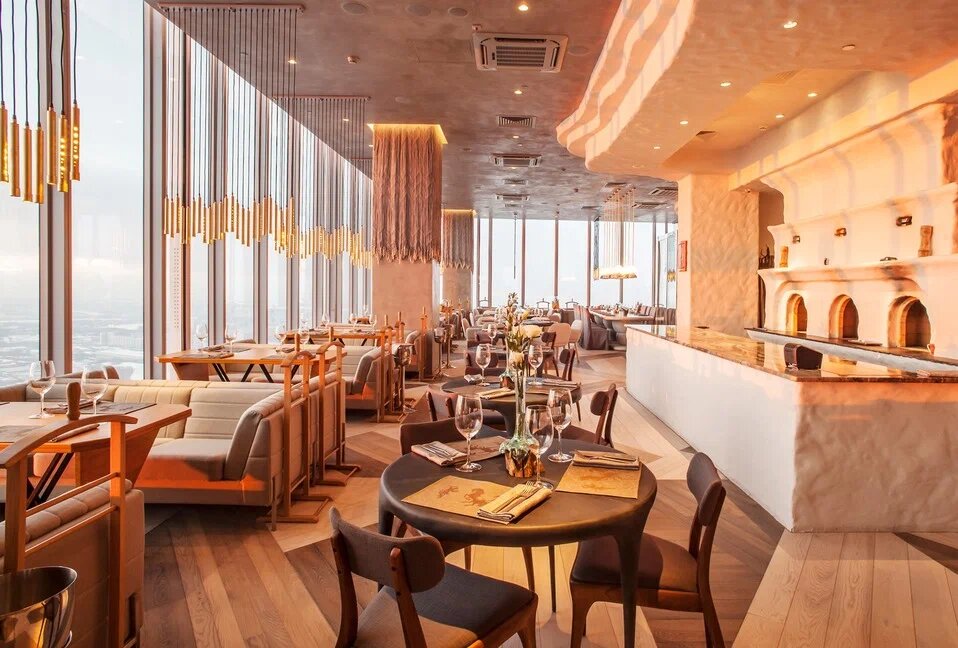
On the 85th floor of OKO Tower stands a Russian wood-fired oven. Eight meters of whitewashed clay — inside a skyscraper, above the city. The panoramic restaurant Ruski — Europe’s highest restaurant — builds its menu around it: venison dumplings, Volga fish pies, slow-cooked cabbage soup. The entire floor is floor-to-ceiling glass — the city below, the sky alongside. Next door: Ice Bar at −15°C, real fur coats, beluga caviar, a bar counter carved from ice blocks — the world’s highest ice bar. The cold is real. So is the caviar.
Voronezh
Moscow
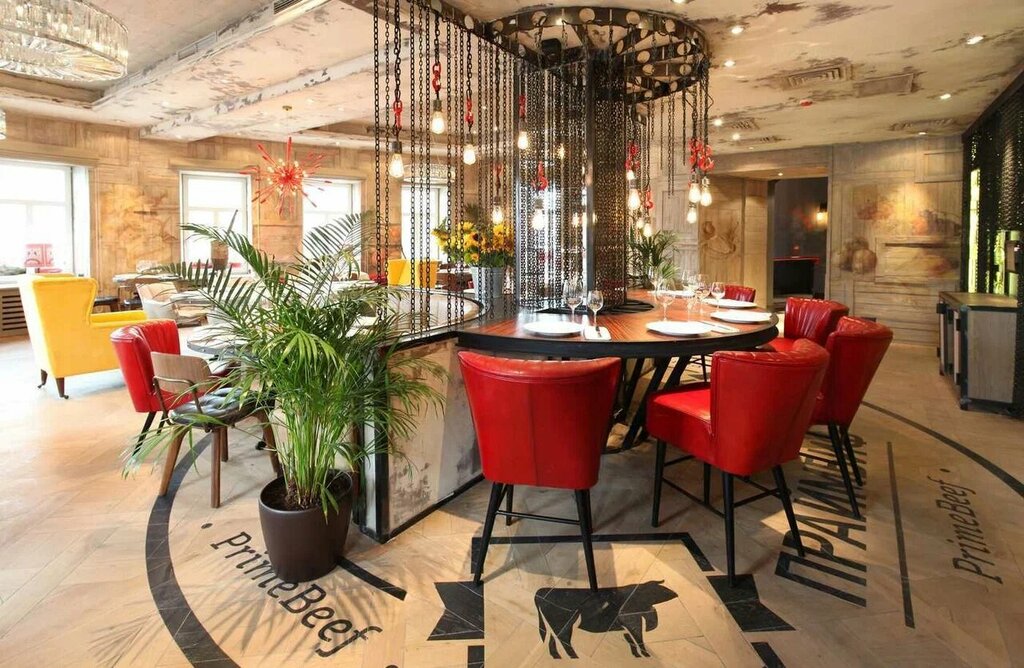
Stop by the Voronezh restaurant at the corner of Prechistenka and Gogolevsky Boulevard, celebrating the meat of the Voronezh region. Look for all kinds of cutlets, stuffed cabbage rolls, and everything that was popular in the second half of the 20th century — the local chef works wonderfully with this gastronomic heritage.
SAVOY
Moscow
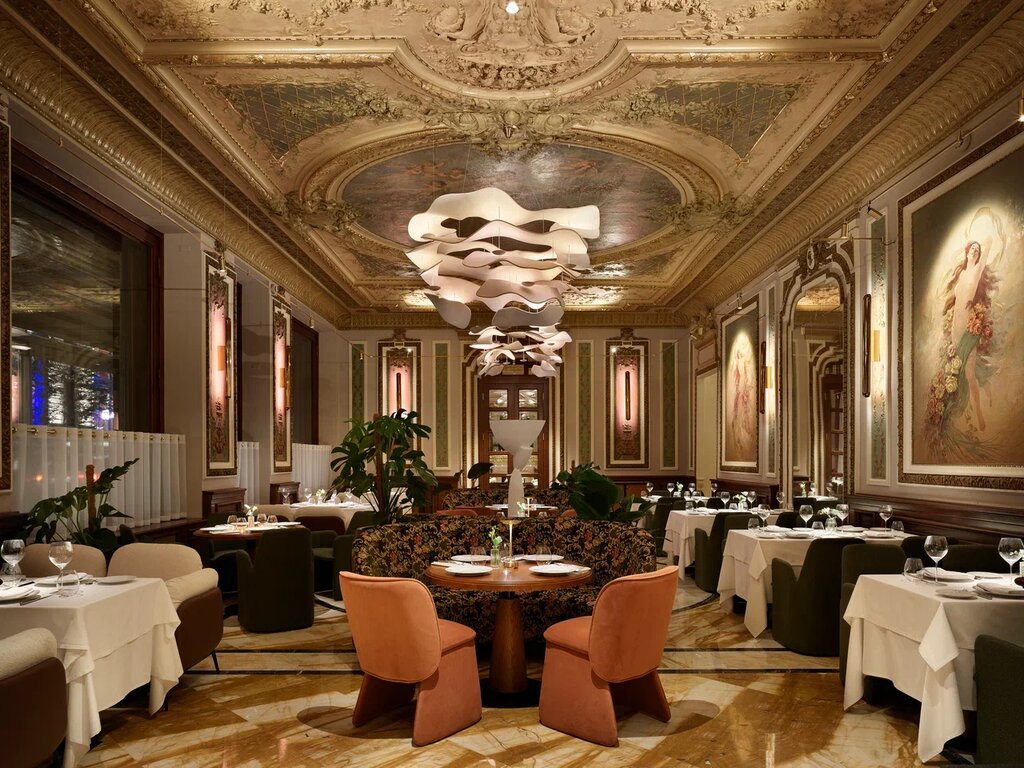
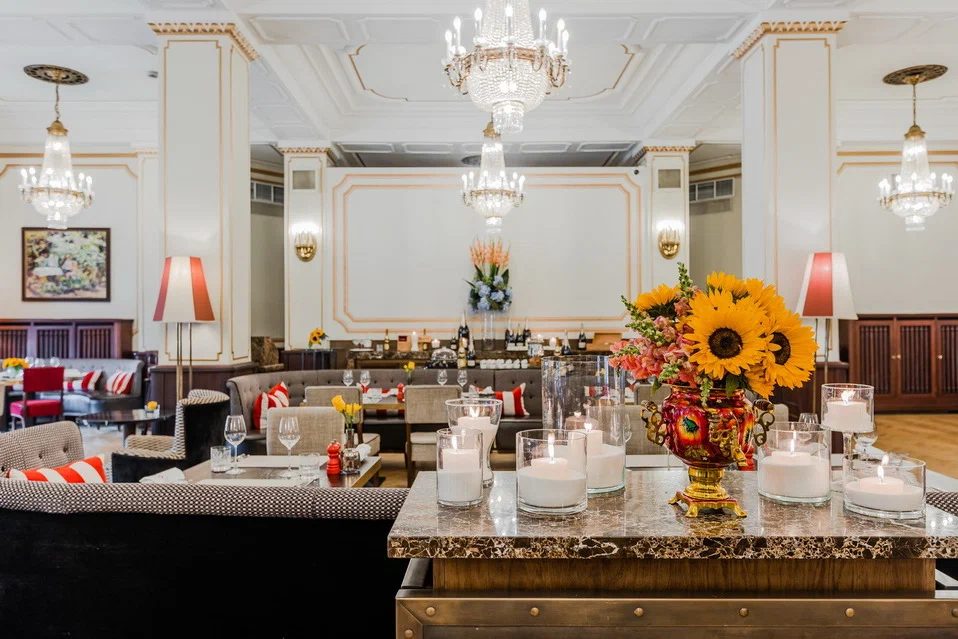
Opened in 1913, Savoy is one of Moscow’s oldest luxury restaurants, famous for its Art Nouveau interiors and historic atmosphere. The menu combines Russian classics with European fine dining.
Moskovskoe Nebo (Moscow Sky)
Moscow
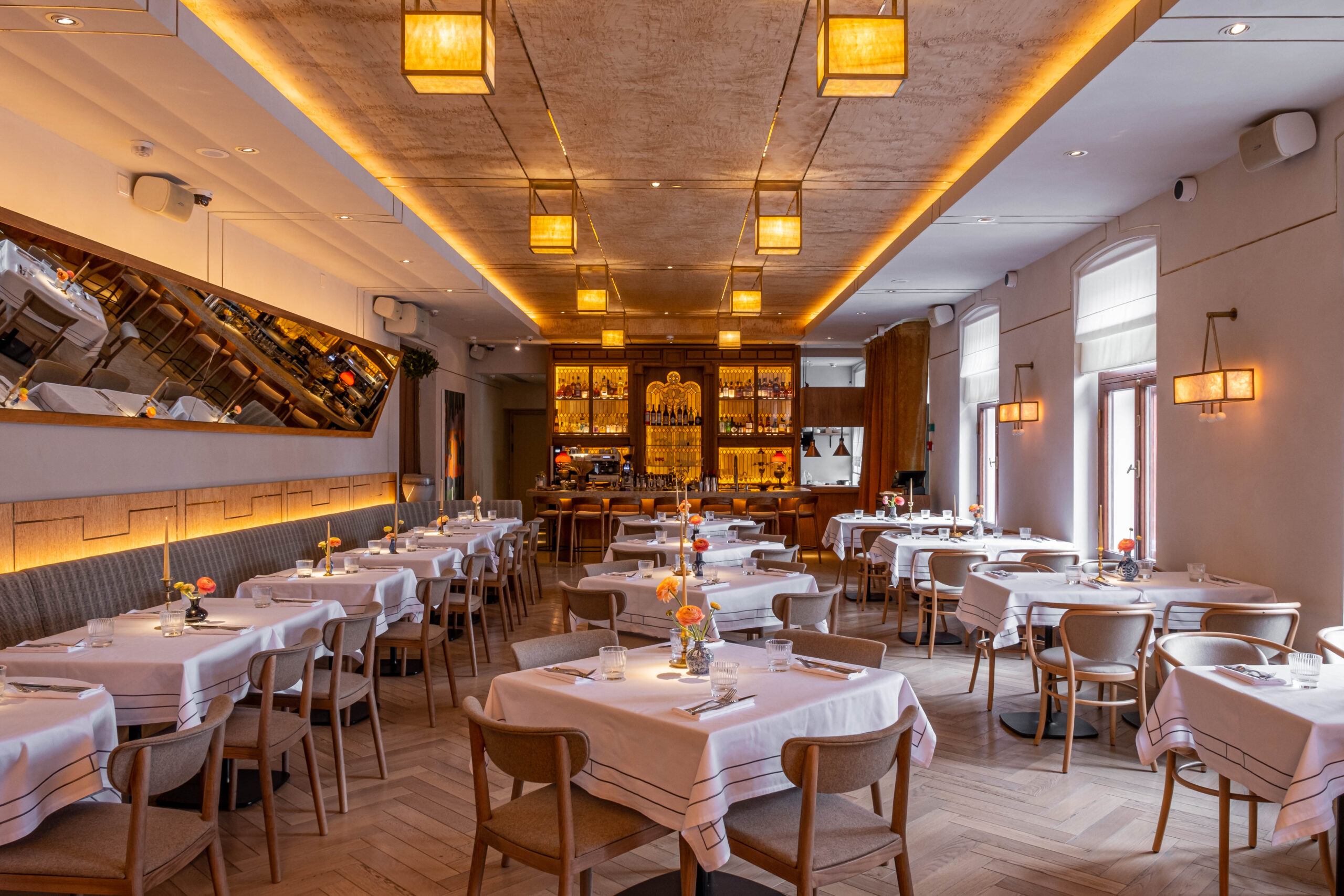
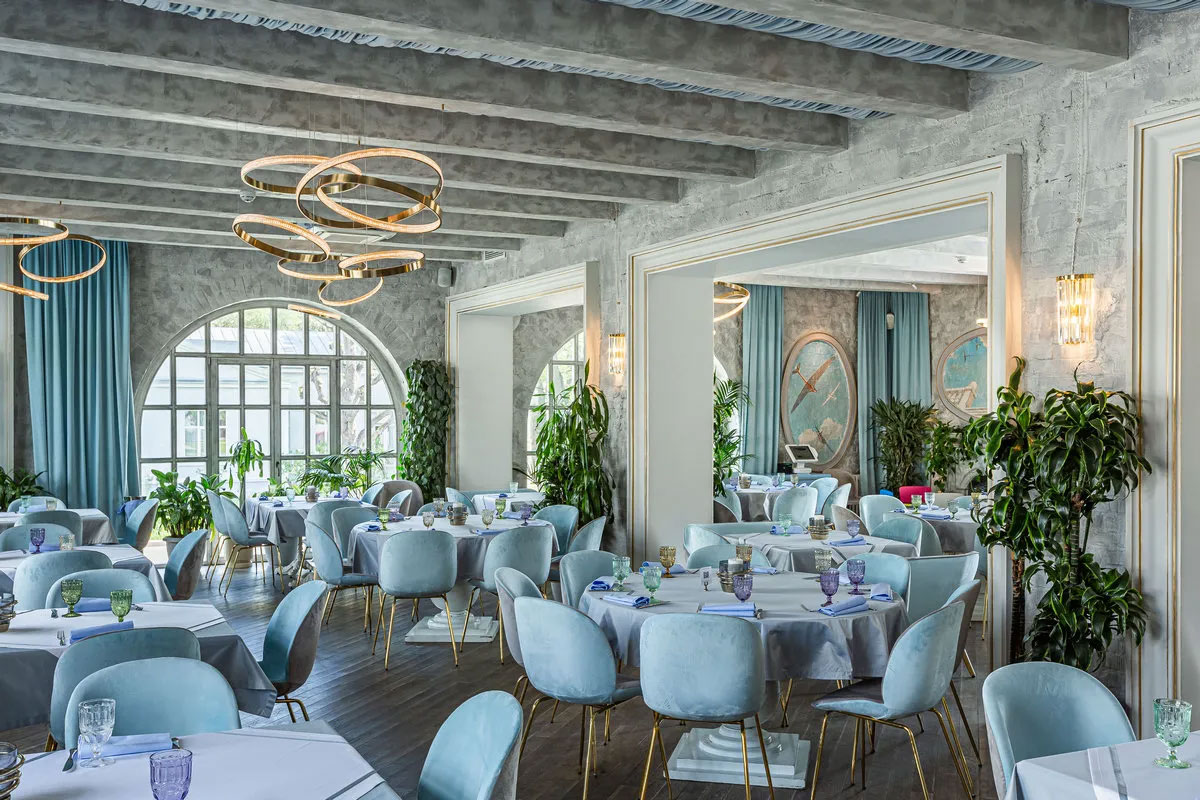
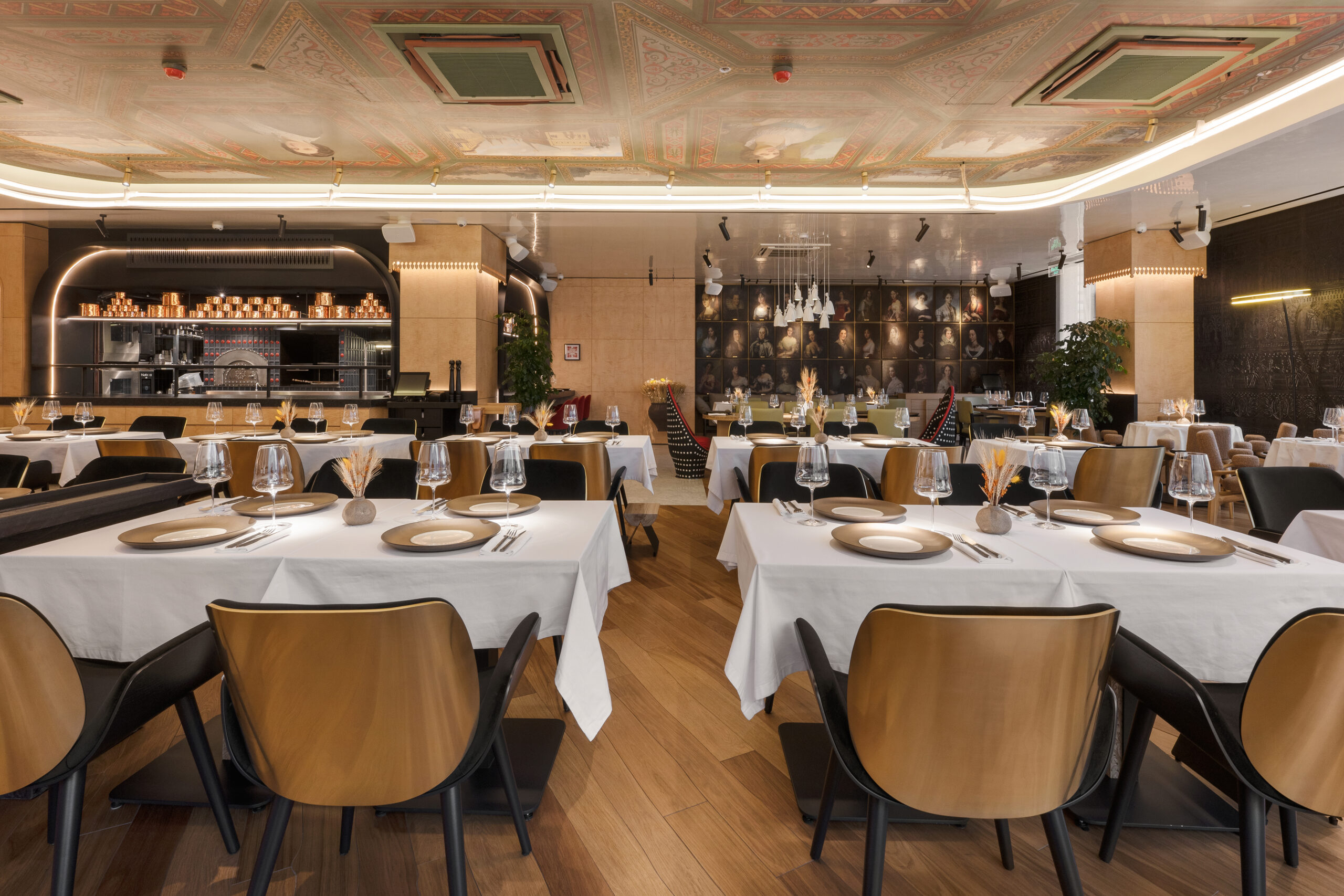
A restaurant inside a historic VDNKh pavilion. Soviet cuisine in a contemporary reading. The interior: white halls, pale blue textile draped from the ceiling, socialist realist frescoes on the walls. Pike cutlets, Olivier salad with beef pastrami. Familiar names, unexpected contents — that is exactly how this place works.
Plakuchaya Iva (Weeping Willow)
Sochi
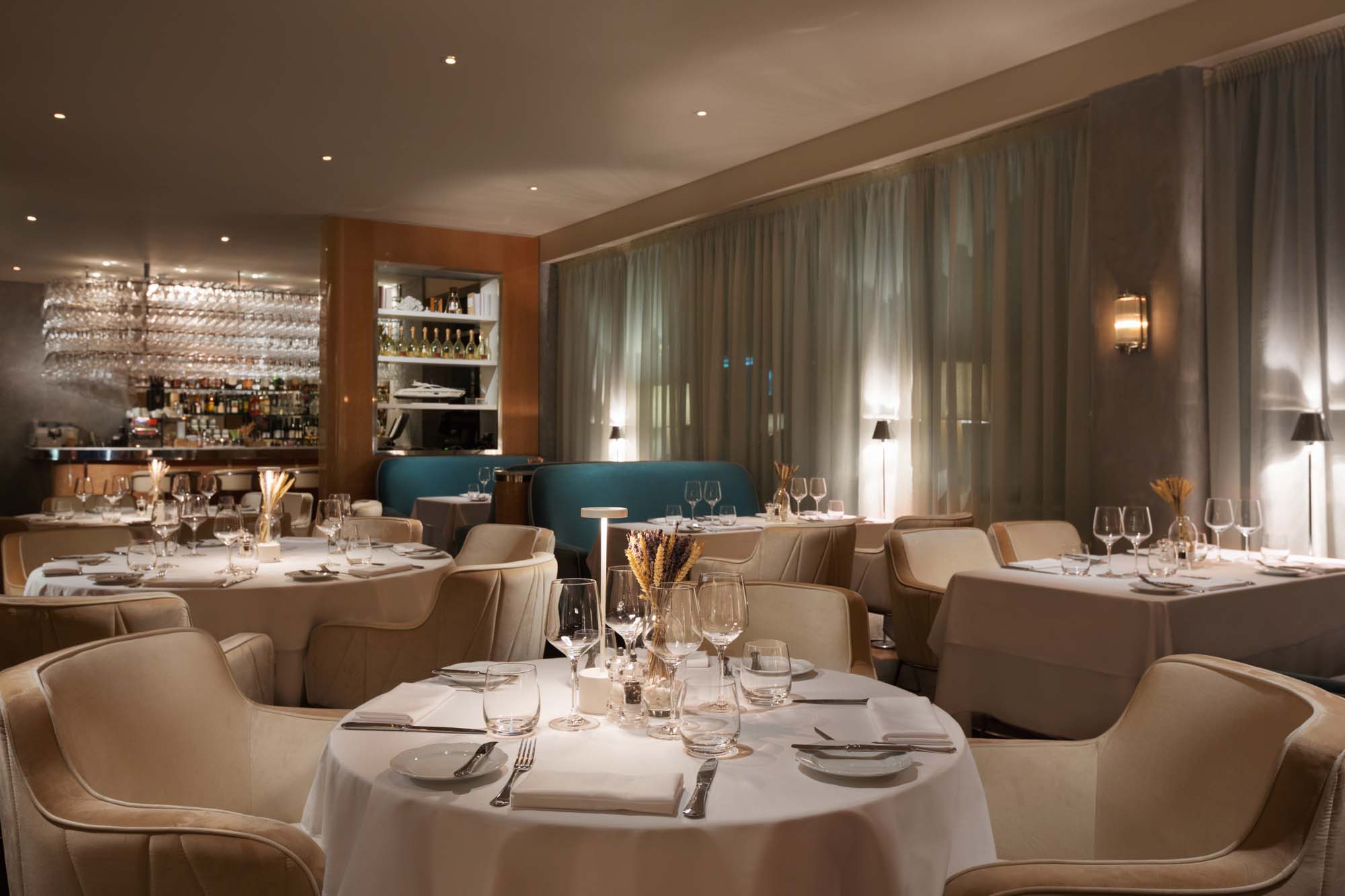
A seafood restaurant in the centre of Sochi on Voykova Street, whose name is a direct reference to the cult comedy «The Diamond Arm» by Leonid Gaidai. The menu was created under the guidance of brand-chef Vladimir Mukhin of the White Rabbit Family, who was listed in The Best Chef 2021. The cuisine is built around fish and seafood: several types of oysters, shrimp, sea urchins, Black Sea rapanas and mussels. Local specialities include red mullet and Black Sea turbot, while the Italian line features bruschettas, homemade pasta and risotto . The interior in a laconic style of noble shades resembles the atmosphere of a yacht, while the panoramic terrace is surrounded by greenery and offers a view of the old town and the port.
DR. Zhivago
Moscow
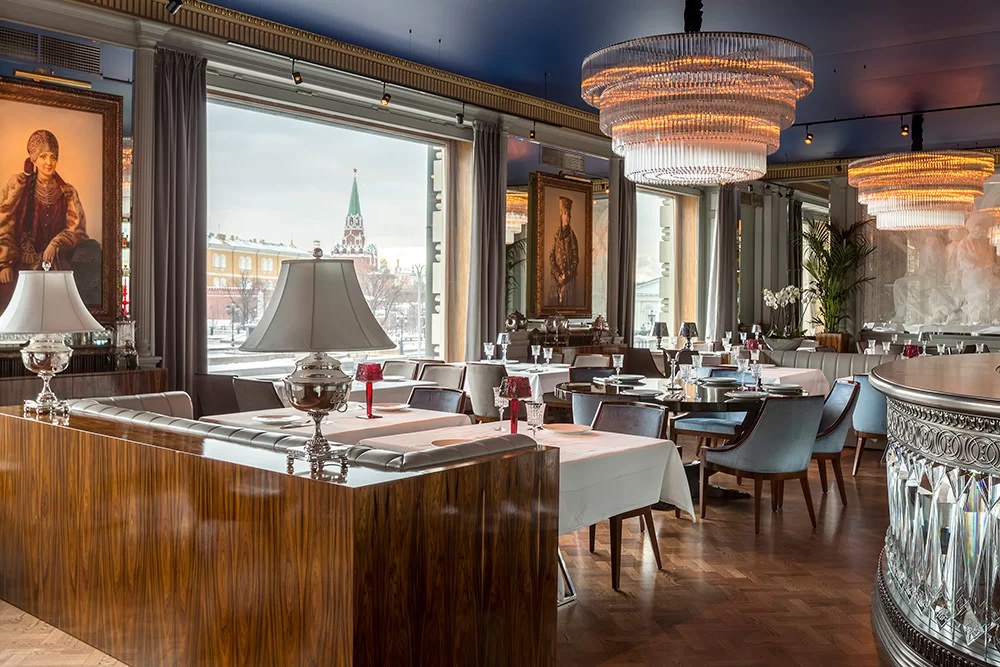
Dr. Zhivago is a grand café on the ground floor of the historic Hotel National, with views toward the Kremlin and Manege Square, and a recommendation from the Michelin Guide. The main hall displays reproductions of major Soviet-era paintings — Malevich, Petrov-Vodkin, Deineka, Samokhvalov — while an inner room takes its black-lacquer, gold-ceilinged look from Palekh lacquer boxes. The menu reworks Russian classics such as pozharsky cutlets, sturgeon aspic, and caviar service, backed by a vodka bar of polugar, samogon, and infused spirits.
Selfie
Moscow
A Michelin-starred restaurant showcasing modern Russian cuisine through seasonal local ingredients and refined contemporary techniques. An excellent choice for travelers looking to experience Russia’s gastronomic scene at its highest level.
Expeditsiya
Moscow
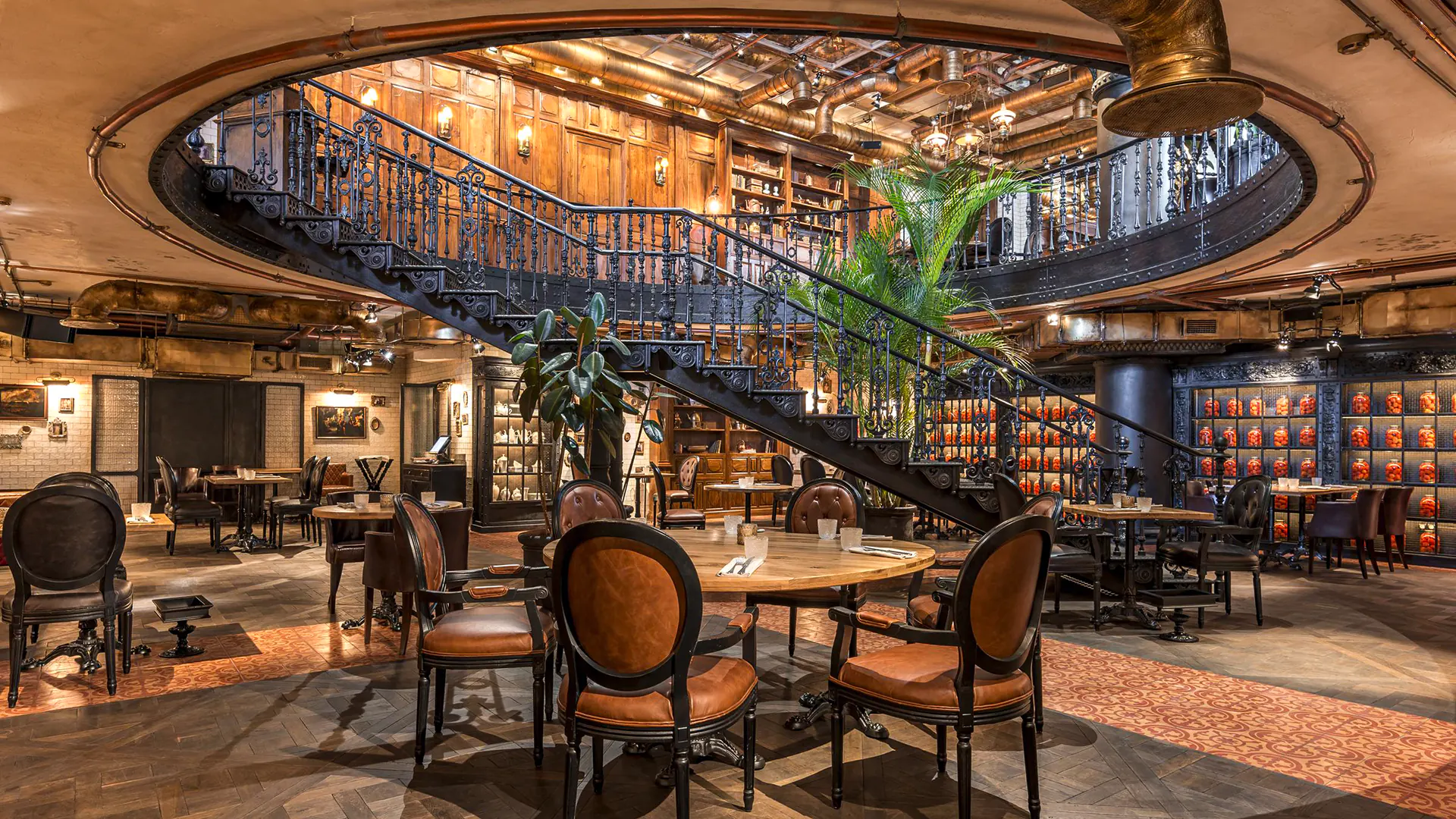
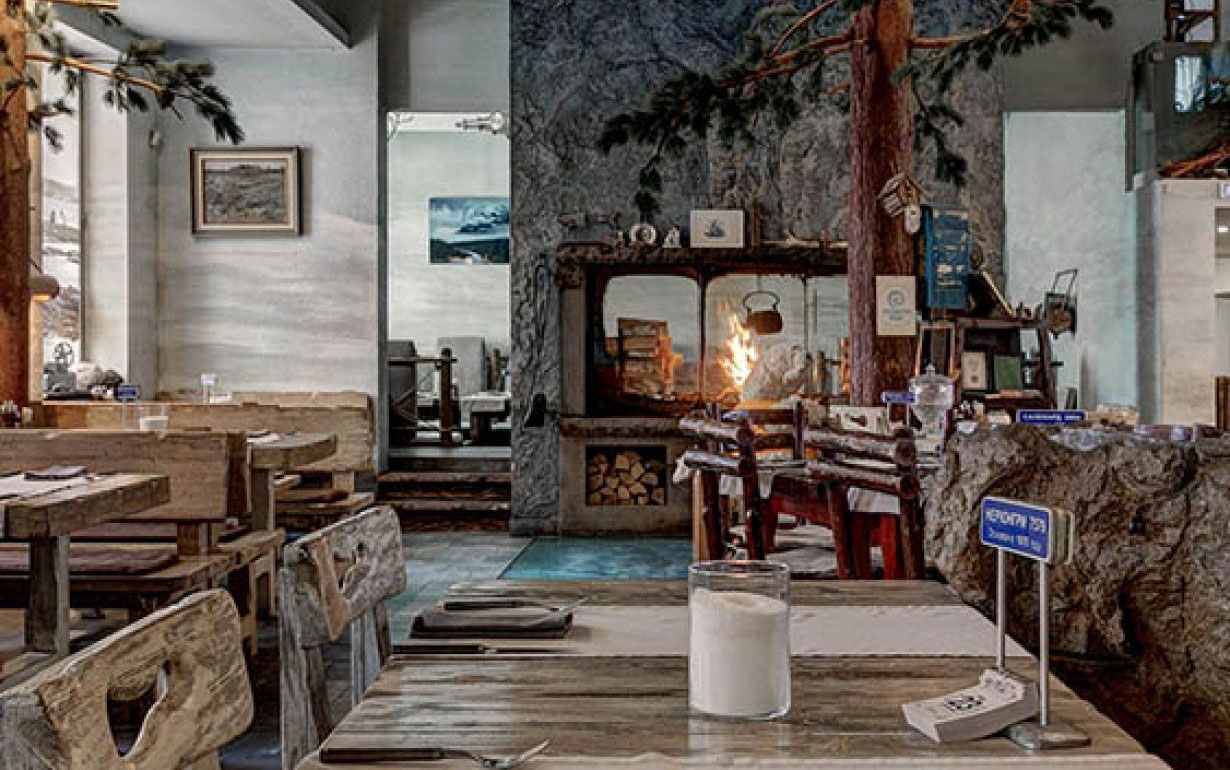
A long-standing restaurant of Northern cuisine, located in Pevchesky Lane. The menu features dishes and ingredients from the Russian North, while the space itself is divided into several themed areas: «Bivouac,» the Fireplace Hall, a terrace, and «Wintering.» It’s an ideal spot for those who want to discover how traditional Russian cuisine transforms when it moves from expedition conditions to a metropolitan restaurant kitchen.
Mashenka
Moscow
A charming restaurant dedicated to traditional Russian home-style cuisine, offering classic recipes prepared with high-quality seasonal ingredients. The cozy interior creates an authentic and welcoming atmosphere.
White rabbit
Moscow
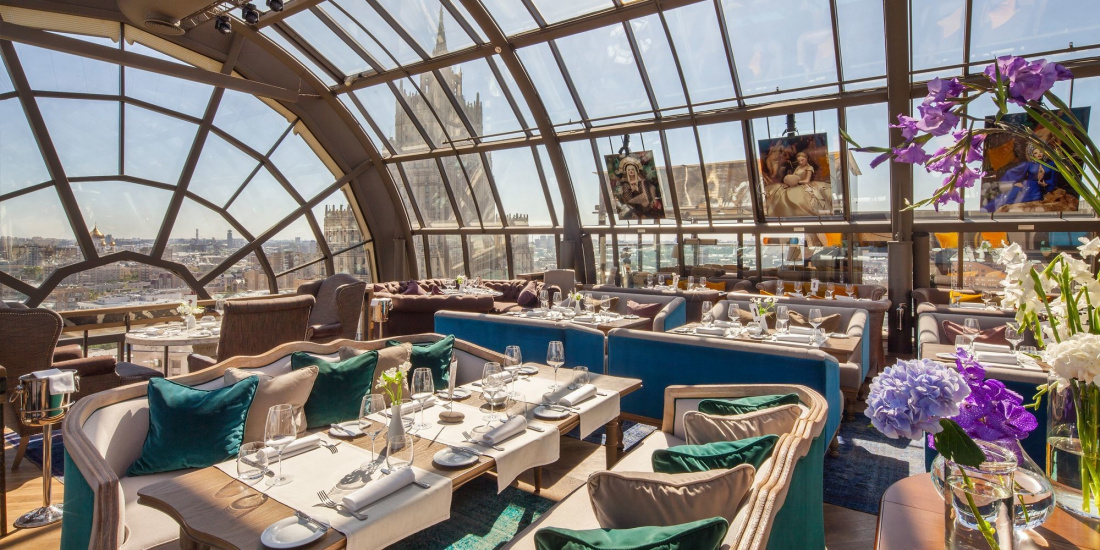
One of Moscow’s most celebrated fine dining restaurants, famous for its panoramic city views and innovative interpretation of Russian cuisine. Chef Vladimir Mukhin has made White Rabbit an international gastronomic landmark.
Astoria
Saint-Petersburg
The restaurant of the legendary Astoria Hotel, opened long ago opposite St. Isaac’s Cathedral. From the moment it opened, the hotel became one of the symbols of St. Petersburg’s high society: it hosted foreign guests, diplomats, performers, and members of the upper class. Today, the restaurant preserves the atmosphere of a historic grand hotel: European cuisine, classic service, and views of St. Isaac’s Square.
Oblomov
Moscow
Housed in a restored 19th-century mansion, Oblomov specializes in traditional Russian home-style cuisine prepared with premium ingredients. Its cozy atmosphere offers a glimpse into old Moscow hospitality.
Tsarskaya Rymochnaya
Moscow
A casual restaurant-and-vodka-bar on Novinsky Boulevard, working with Russian cuisine and traditional beverages, slightly reimagined by the local bartenders. The menu features borscht, pickles, roasts, and other familiar home-style comforts for everyday dining.
Aquamarine
Moscow
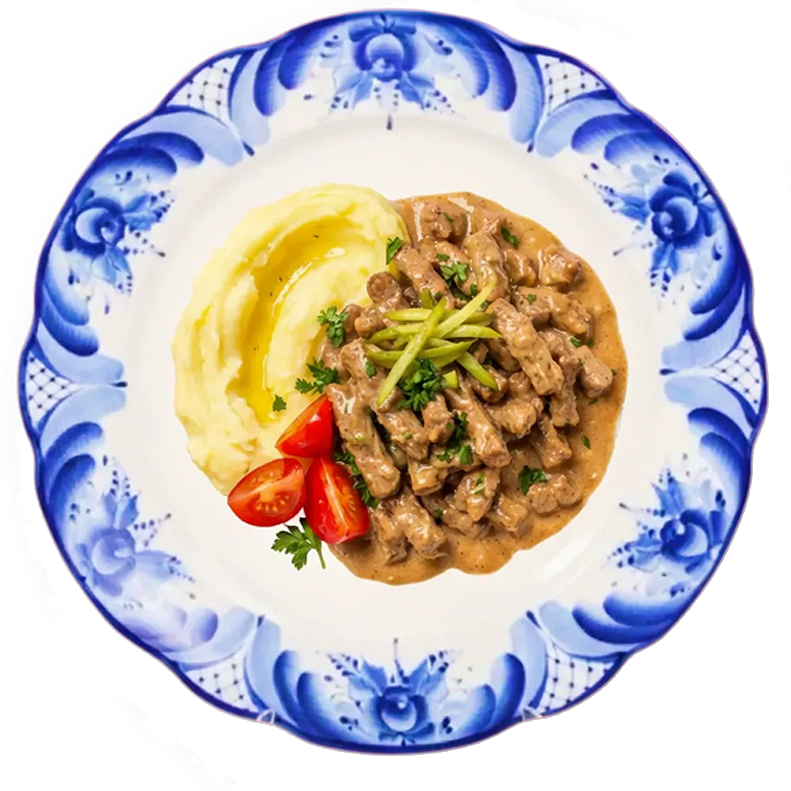
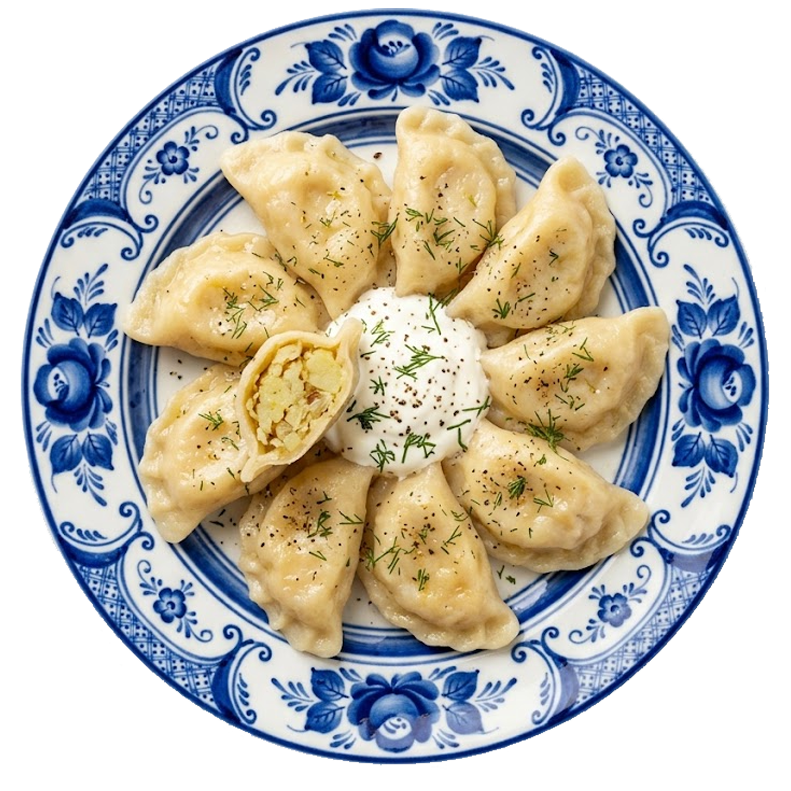
A restaurant by Novikov Group — one of Russia’s largest restaurant groups, with venues in London, Dubai, and Miami. Quality is watched closely here: Novikov Group does not open careless places. A good spot to try Russian classics: beef dumplings, cherry varenyky, beef stroganoff with mashed potato.