Fish kulebyaka

Fish kulebyaka is a large closed pie that became especially famous in Russian urban cuisine of the 19th century. Inside, fish, rice or another grain, eggs, and mushrooms may be combined. In complex versions, the fillings are arranged in layers and separated by thin pancakes to preserve their taste and structure. As early as the beginning of the 19th century, kulebyakas with salmon and porridge were prepared. The elongated shape allows the pie to be cut into portions, revealing the filling in each piece.

Kulebyaka is a traditional Russian pie known for its elaborate, layered fillings wrapped in dough. Its name derives from the old Russian verb «kulebyachit,» meaning to knead or shape by hand. In pre-revolutionary Russia, kulebyaka became a luxurious dish for nobility, featuring complex layers from dry (rice) to moist (cabbage) to prevent sogginess, and decorated with dough icons. Writers like Gogol and Chekhov praised it as a «temptation to sin» due to its richness and preparation difficulty. Here’s a little simplified but still classic recipe. You may use any fish you like — white like cod, pike or even salmon.

A fish kulebyaka is always an enclosed pie. It is also a large pie that is sliced into individual portions. The filling is typically multi-layered—combining, for instance, several types of fish, or fish paired with grains or other ingredients.

The fish used in a kulebyaka is raw. You simply use high-quality ingredients for the filling and good dough. You can also spread béchamel or sour cream sauce between the layers of the filling to ensure the pie is nice and juicy
Vlad Piskunov
represented by
Vlad Piskunov
cooking
time
90 min
difficulty
level
Medium
key
ingredients
12
Fish kulebyaka Fish kulebyaka

Ingredients

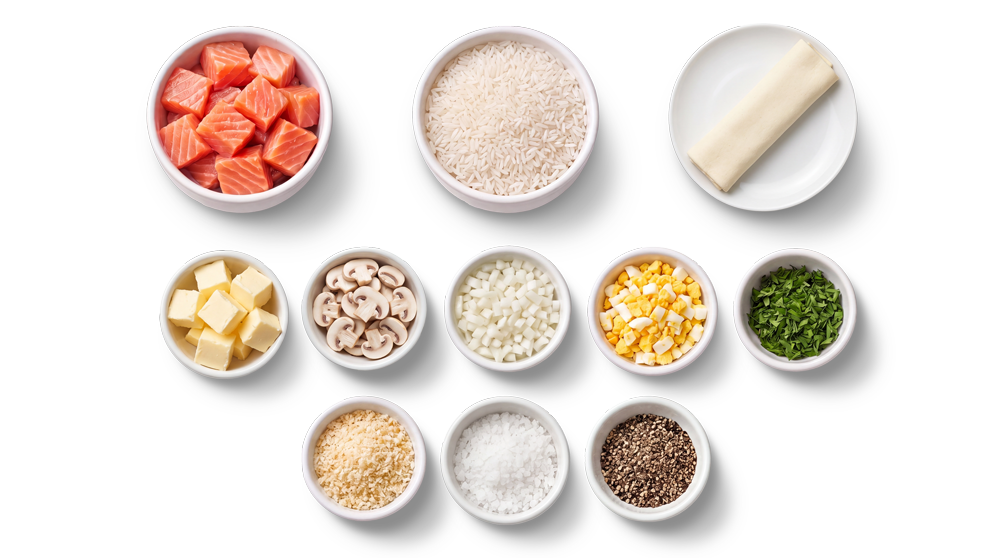
ready puff‑pastry
500  g
cod fillet or salmon, deboned and cut into small pieces or minced
500  g
cooked long‑grain rice
150  g
hard‑boiled eggs, chopped
3 pcs
medium onion, finely chopped
1 pcs
mushrooms, sliced
150-200  g
neutral oil
2  tbsp
butter
15  g
sour cream
3  tbsp
breadcrumbs or flour (to bind the filling)
1-2  tbsp
salt and black pepper
to taste 
chopped dill and parsley
1-2  tbsp
Servings: 6-8

Recipe

1.
Cooking

Roll the dough. Keep in mind that true kulebyaka should be oval – like an uncut beef wellington shape. This shape ensures better baking of the filling, as well as slicing that allows all the filling to be included in each portion.
2.
Gently sauté or poach the fish pieces in a little water/butter with salt until just cooked, then flake or finely chop.
3.
Fry mushrooms and onions in oil and butter until soft and lightly browned; season with salt and pepper, then cool.
4.
In a bowl, mix: fish, sour cream, breadcrumbs or flour, dill, parsley, salt, and pepper.
5.
Now the most important part, layering the filling. On the bottom sheet layer: rice → fish → mushrooms → eggs leaving a wide border. Wet the edges of the pastry with water, cover with the top layer, then crimp and seal the edges (you can braid or twist them for a decorative look).
6.
Egg wash and cut a few small steam vents.
7.
Preheat oven to 180 and bake for about 30-40 minutes until the pastry is golden and crisp.
Let the kulebyaka rest for 10-15 minutes before slicing.
8.
Serving

Cut into thick slices and serve warm, with sour cream, a green salad, and/or pickles or mustard.

where
to try

DR. Zhivago
DR. Zhivago
Moscow
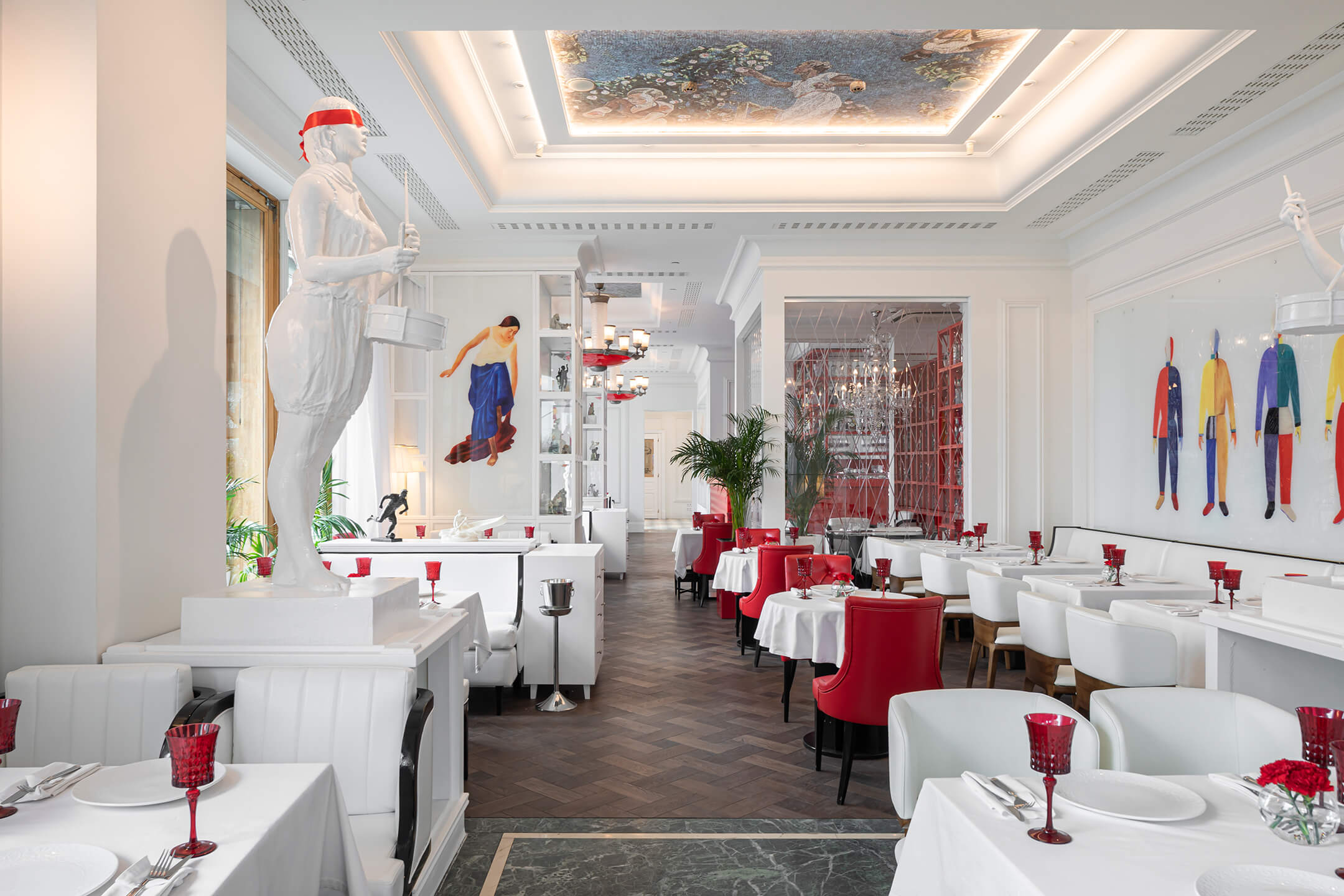
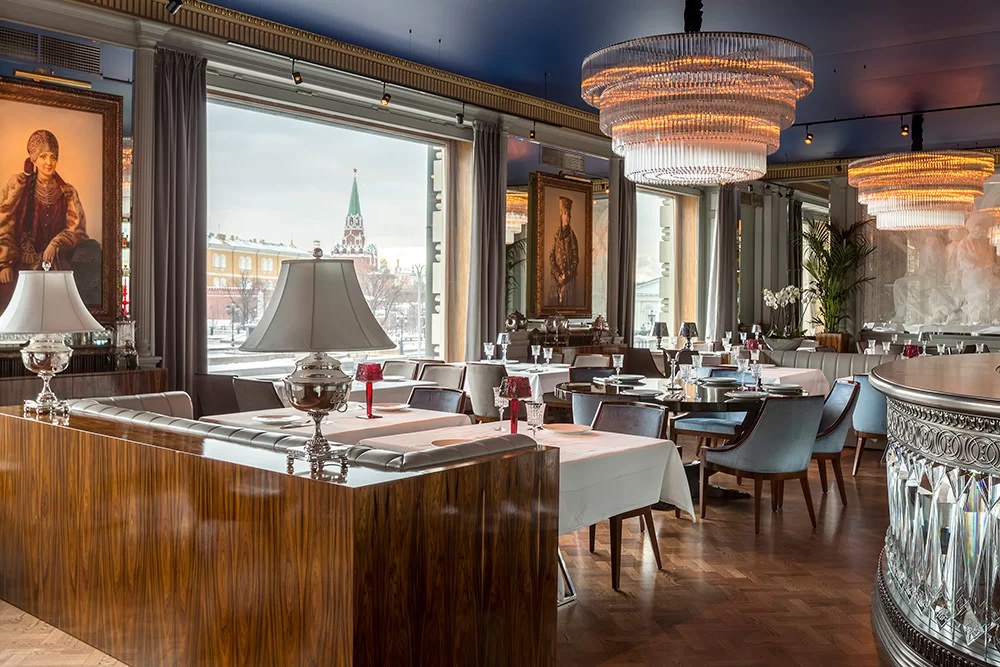
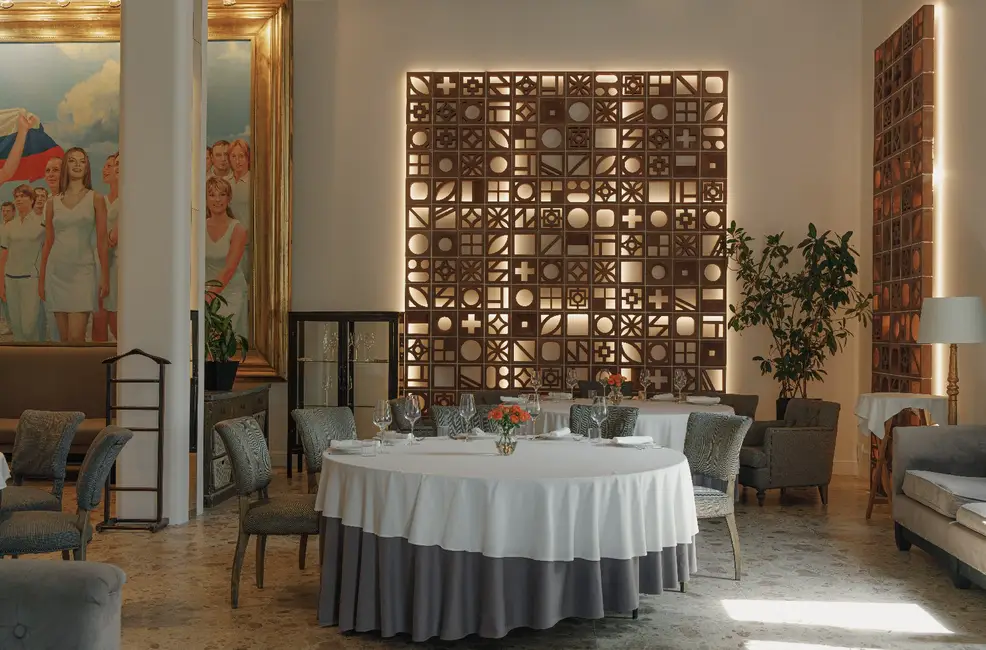
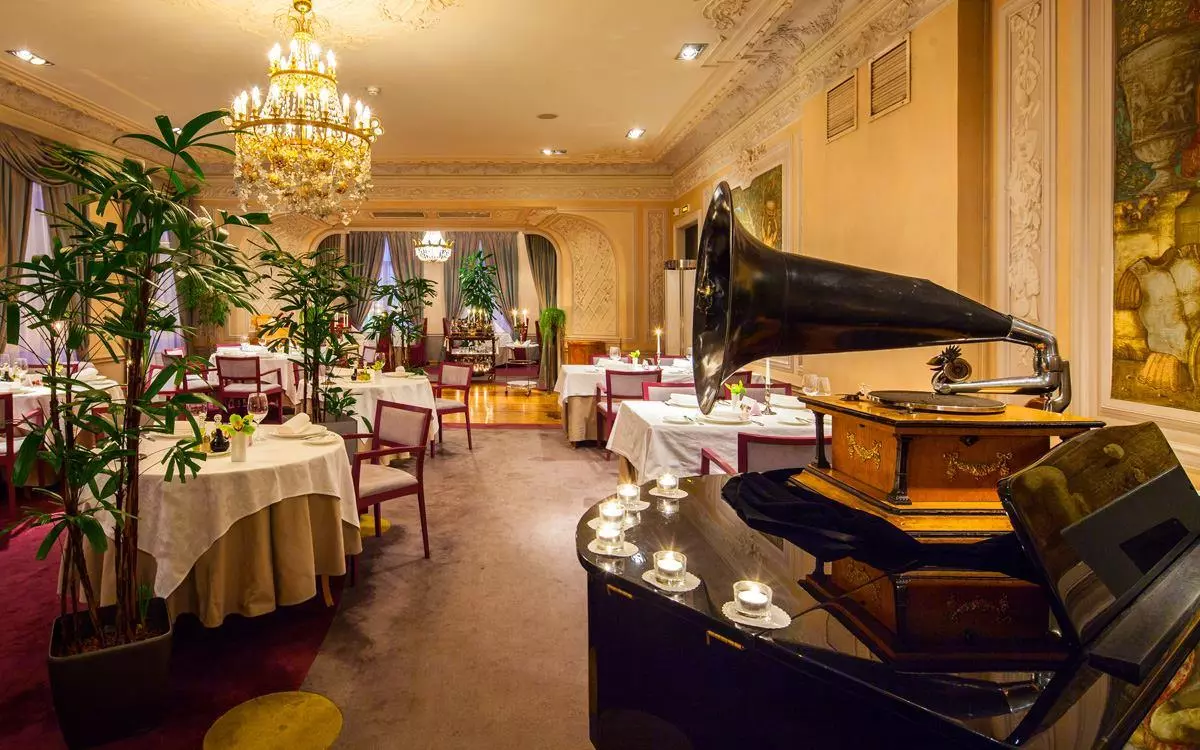
Dr. Zhivago is a grand café on the ground floor of the historic Hotel National, with views toward the Kremlin and Manege Square, and a recommendation from the Michelin Guide. The main hall displays reproductions of major Soviet-era paintings — Malevich, Petrov-Vodkin, Deineka, Samokhvalov — while an inner room takes its black-lacquer, gold-ceilinged look from Palekh lacquer boxes. The menu reworks Russian classics such as pozharsky cutlets, sturgeon aspic, and caviar service, backed by a vodka bar of polugar, samogon, and infused spirits.
Beluga
Beluga
Moscow
Beluga celebrates Russian gastronomy with an emphasis on premium seafood, caviar, and traditional delicacies presented in a contemporary style. Located next to Red Square, it offers one of Moscow’s finest dining experiences.
Modus
Modus
Sochi
A luxurious restaurant in the heart of Russia’s Olympic heritage, surrounded by greenery, at the intersection of the Formula 1 track and the Ice Cube. Spacious halls (up to 100 seats) and a summer terrace allow for events of any format — from business dinners to wedding banquets. The kitchen serves European, Italian, and Japanese cuisine. A place where contemporary architecture, signature cuisine, and high-level service create the perfect atmosphere for events of the highest calibre.
Palkin
Palkin
Saint-Petersburg
One of St. Petersburg’s oldest restaurant addresses. The establishment’s history dates back to 1785, and in the 19th century, the restaurant on Nevsky Prospekt became a meeting place for the city’s elite, writers, and artists. Today, Palkin continues the tradition of grand Russian cuisine: sturgeon, sterlet, caviar, game, rastegai pies, kulebyaka pies, and dishes inspired by pre-revolutionary restaurant traditions. The interiors feature stucco work, mirrors, and crystal, evoking 19th-century St. Petersburg.
Uhvat
Uhvat
Moscow
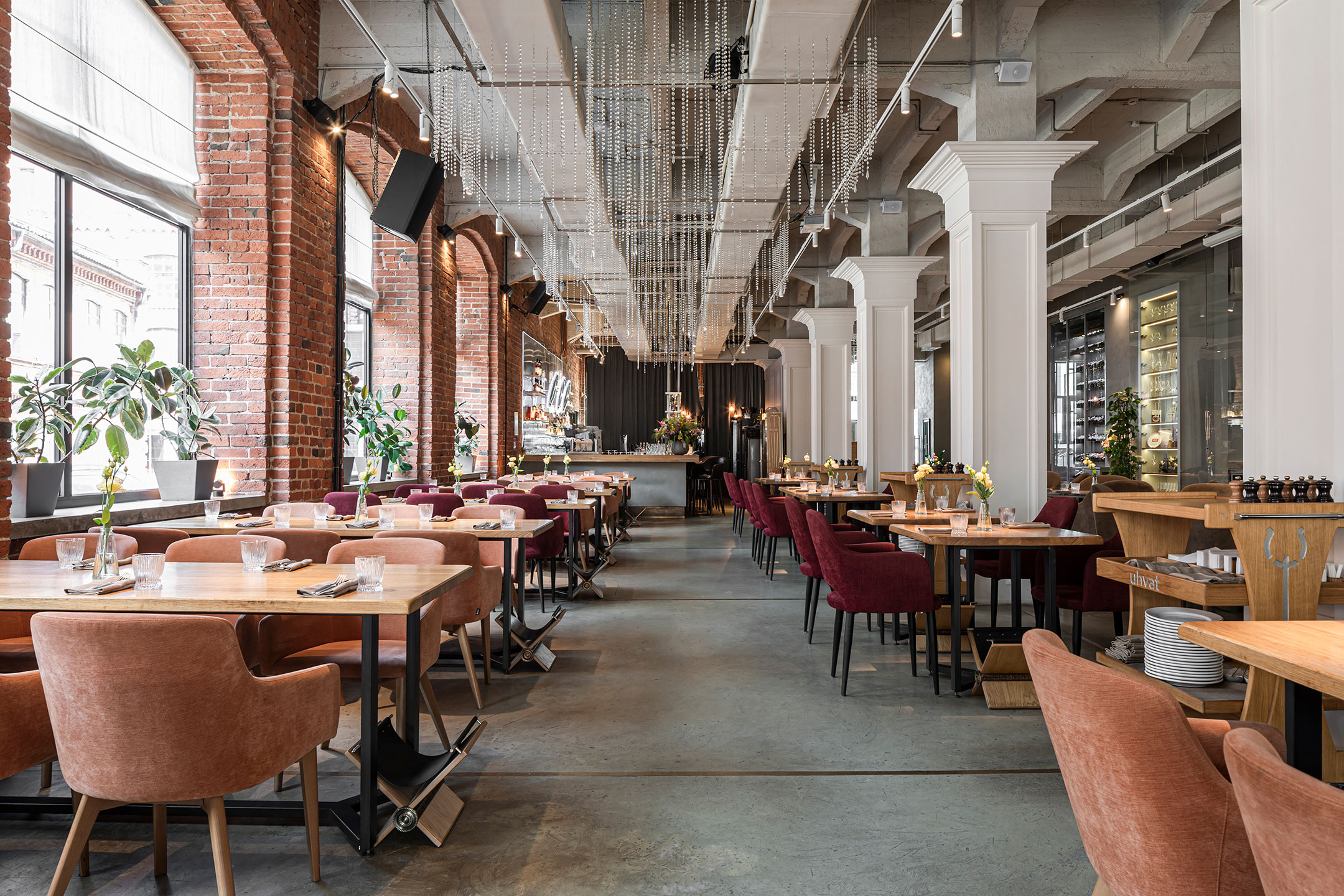
A contemporary restaurant inspired by traditional Russian oven cooking, where many dishes are prepared using classic slow-cooking techniques. The menu celebrates authentic Russian flavors with a modern presentation.

other recipes