Sturgeon with Champagne

Sturgeon occupied a noticeable place in Russian festive cuisine, especially in the regions of the Volga and Caspian fisheries. It was served in large pieces or whole, turning it into the centerpiece of the feast. As early as the beginning of the 19th century, there was a method of preparation in which the sturgeon was first lightly boiled, then browned in the oven and served with onion sauce. The dense meat of sturgeon holds its shape well when baked.

Russian cuisine is impossible to imagine without black caviar sourced from sturgeons, which were plentiful in the rivers of the Russian Empire. Sturgeon has a special mission: to adorn the festive table. Since the time of Tsar Ivan the Terrible, it had been a mandatory part of Kremlin feasts.

After the victory over Napoleon in 1812 and the foreign campaigns of the Russian army, there was a boom for everything French in the country. The nobility ordered not only clothes and tutors for their children from Paris, but also chefs. French cuisine, with its complex sauces, techniques, and exquisite combinations, became dominant in the aristocratic environment. It was the French chefs who worked in wealthy households who were the first to experiment with Russian products, using French techniques, such as braising in wine.
By the mid-19th century, as the merchant class became wealthier, sturgeon in wine became a prominent feature on their tables. Merchants loved to wag the dog, so a sturgeon in champagne ordered at famous restaurants like Yar or Hermitage was a symbol of a successful life.

Mind that the following recipe is for tableside fish filleting service in front of the guests.
Sturgeon is a very ancient foodstuff with a long tradition in Rus’. In the past, fishermen would form cooperatives to catch it, and people would work side by side to process the fish—roasting it in ovens, drying and curing it, or making ukha (fish soup).

The roasting process involved gutting the fish, burying it in cooling embers, adding aromatic branches and herbs, and leaving it overnight. In the morning, the fish was removed from the embers and the skin was peeled off, resulting in incredibly tender sturgeon meat
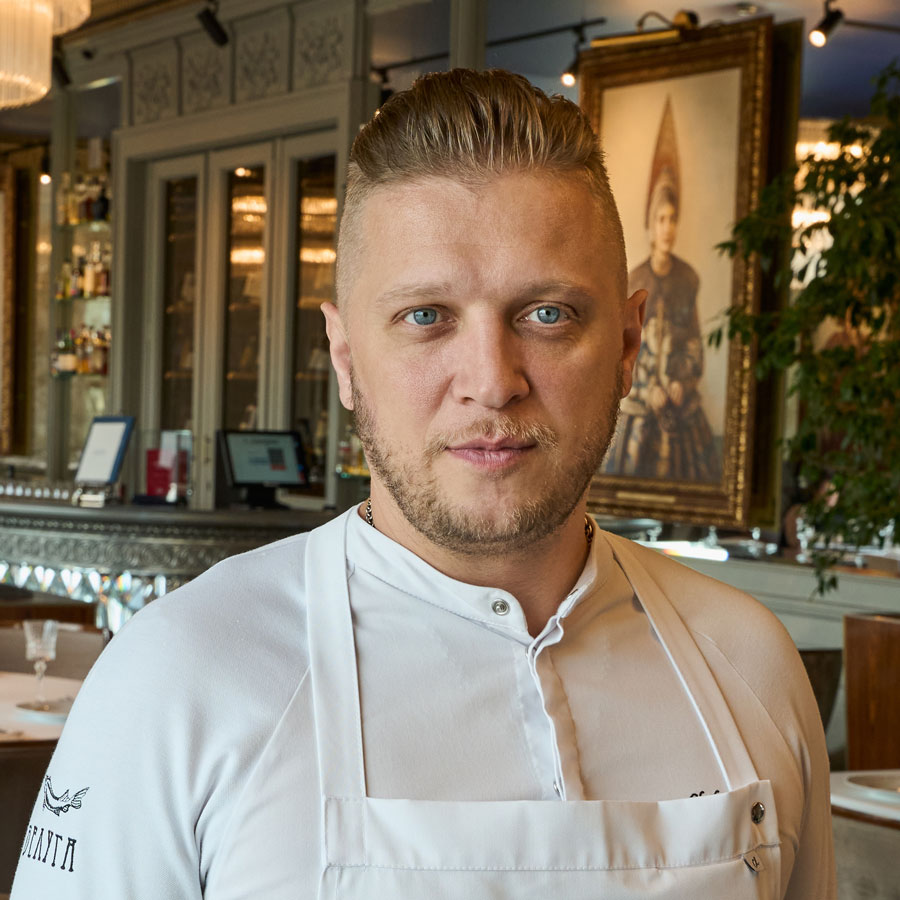
Roman Chistov
represented by
Roman Chistov
cooking
time
60 min
difficulty
level
Medium
key
ingredients
9
Sturgeon with Champagne Sturgeon with Champagne

Ingredients

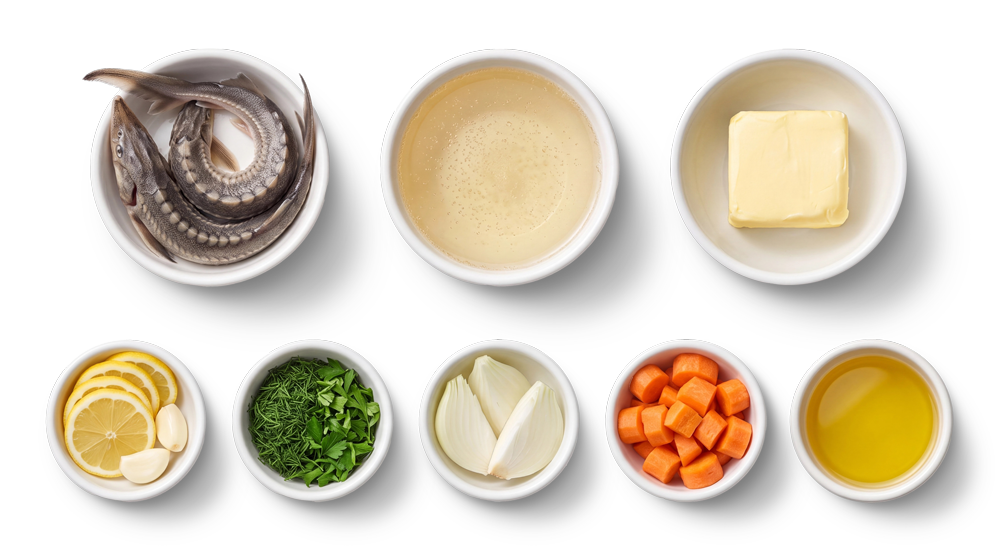
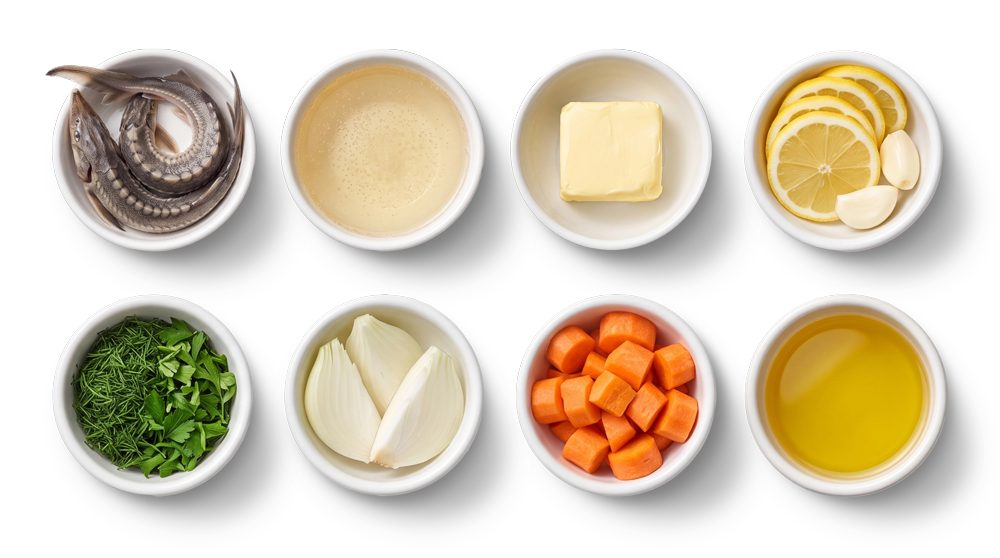
whole sturgeon, cleaned and scaled
1.5-2 kg
olive oil
2-3 tbsp
lemon juice
2-3 tbsp
garlic, minced
4-6  cloves
salt to taste
1.5-2 tsp
black pepper to taste
1  tsp
fresh herbs (dill, parsley)
 handful
lemons
2  sliced
champagne
150  ml
butter, melted (for basting)
2  tbsp
onion wedges, carrot pieces for the tray
 
Portions: 4-6

Recipe

1.
How to clean a sturgeon:

Sturgeon is covered with mucus, which can be difficult to remove. It is recommended to rinse the fish with boiling water and then use a clean dishwashing sponge with a rough side to clean it. This should be done immediately before placing the fish in the oven. Once the protective film is removed, the fish will quickly spoil.
2.
Before cooking, gut the fish, rinse it thoroughly, and remove the gills and eyes, as they can have a bitter taste. Pay attention to the main feature of sturgeon – its ancient spine called viscera. If the viscera is left as it is, it will shrink during the cooking process, causing the fish to deform. It is important to cut the viscera from the inside of the fish in 3-4 places.
3.
Another important aspect is the presence of bony growths. It is recommended to leave these growths intact before baking. It will soften in the oven, making them easier to remove. Serving the fish as a whole will preserve its "royal" appearance and the layer of delicious fat that lies beneath the growths.
4.
Cooking: Preheat the oven to 180-200°C. Line a large baking sheet or roasting pan with foil and lightly oil it.
5.
Rinse the whole sturgeon inside and out, pat dry. Rub the outside with olive oil, lemon juice, minced garlic, salt, and pepper. Stuff the cavity with lemon slices and herbs.
6.
Place the fish on the tray. Pour about 150 ml of champagne into the cavity and around the fish. Be ready to add a little extra if it evaporates completely. If using butter, melt it and mix with the remaining wine/champagne; use this to baste the sturgeon every 10 minutes during baking.
7.
Bake for 25-30 minutes, depending on weight, until the flesh is opaque and flakes easily and the internal temperature reaches about 60-63°C.
8.
Serving

Carefully transfer the whole sturgeon to a large serving platter. Spoon the reduced champagne juices. The flesh is so juicy, fatty and delicate that it doesn’t require any additional sauces. Serve with roasted potatoes - thinly sliced, pan‑fried until golden and crunchy, vegetables or a light salad on the side.

where
to try

Oblomov
Oblomov
Moscow
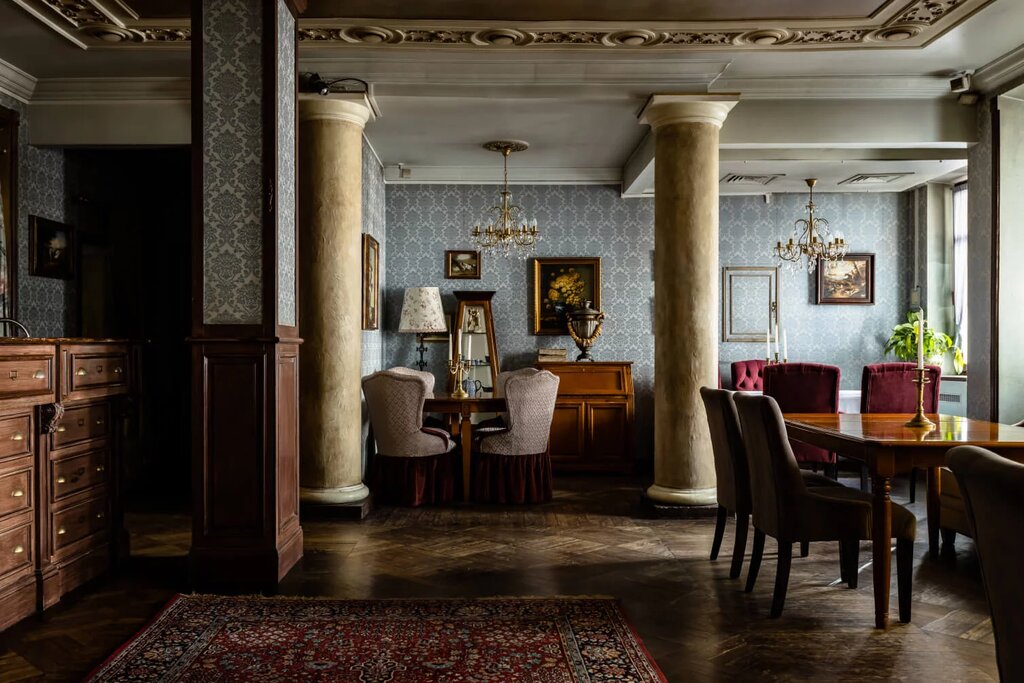
Housed in a restored 19th-century mansion, Oblomov specializes in traditional Russian home-style cuisine prepared with premium ingredients. Its cozy atmosphere offers a glimpse into old Moscow hospitality.
Mashenka
Mashenka
Moscow
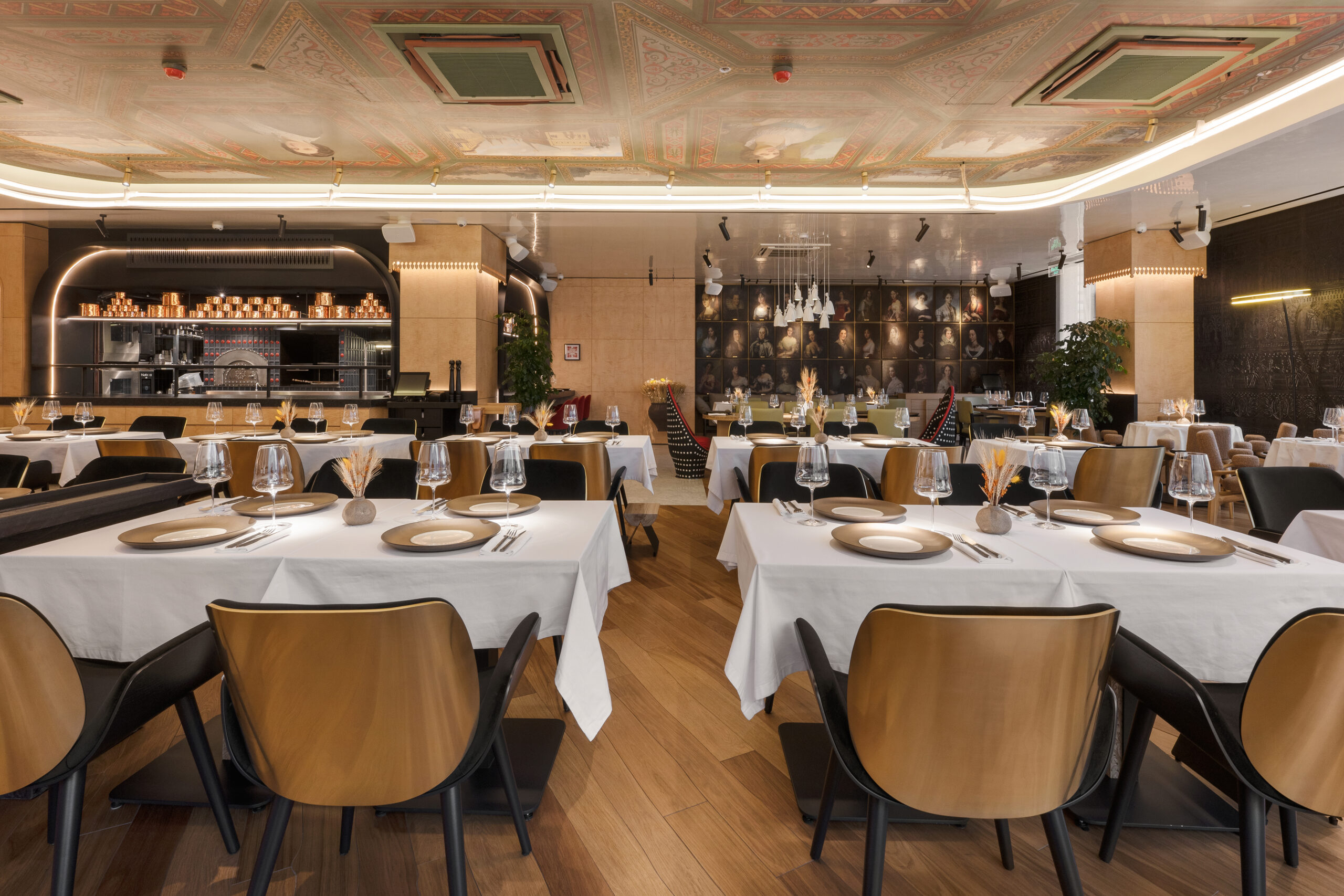
A charming restaurant dedicated to traditional Russian home-style cuisine, offering classic recipes prepared with high-quality seasonal ingredients. The cozy interior creates an authentic and welcoming atmosphere.
SAVOY
SAVOY
Moscow
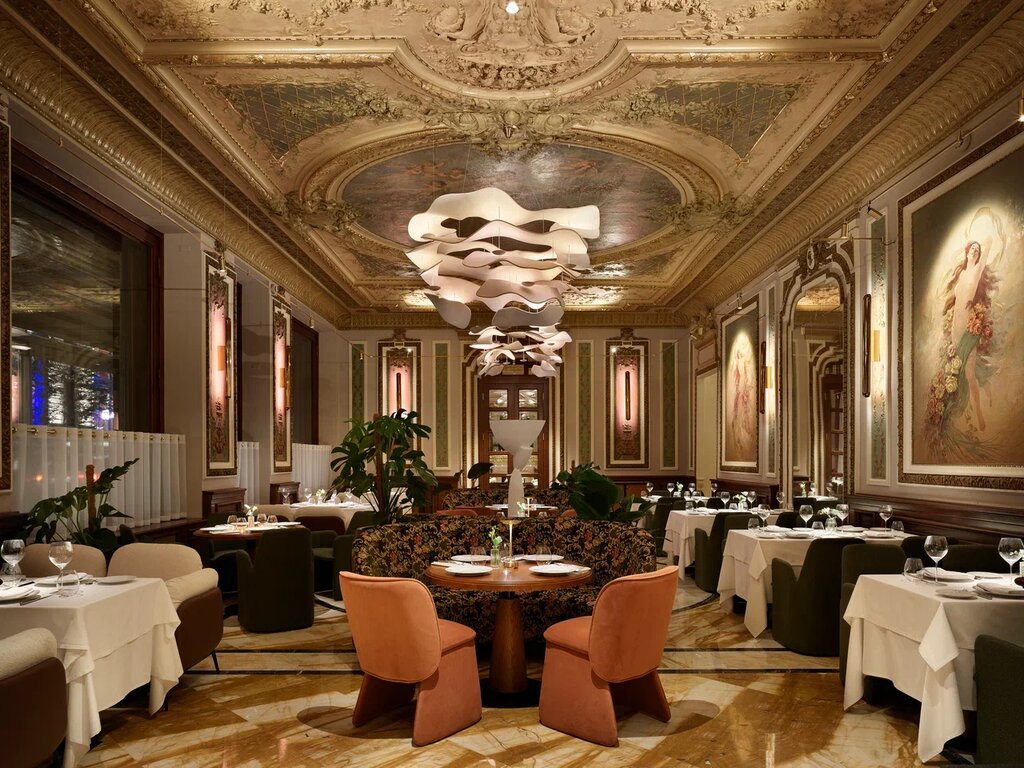
Opened in 1913, Savoy is one of Moscow’s oldest luxury restaurants, famous for its Art Nouveau interiors and historic atmosphere. The menu combines Russian classics with European fine dining.

other recipes