Manul
Moscow
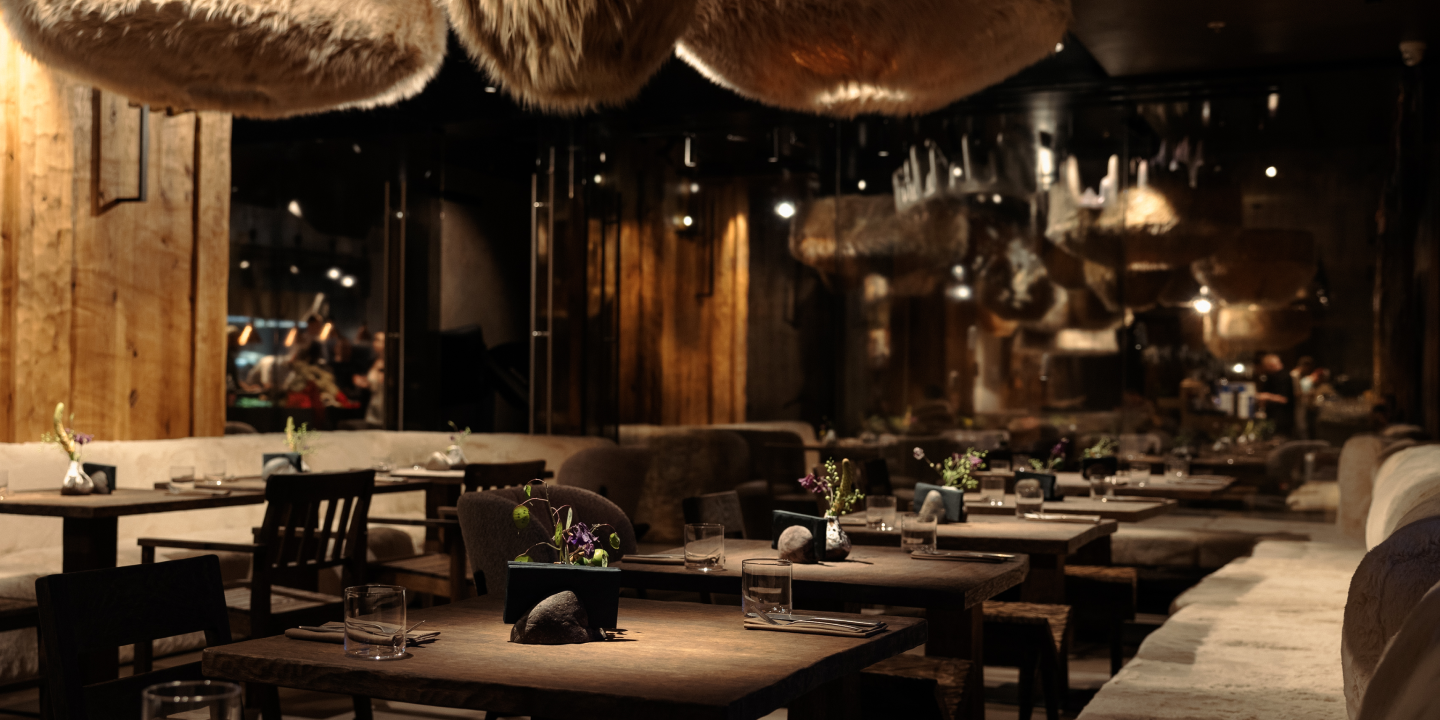
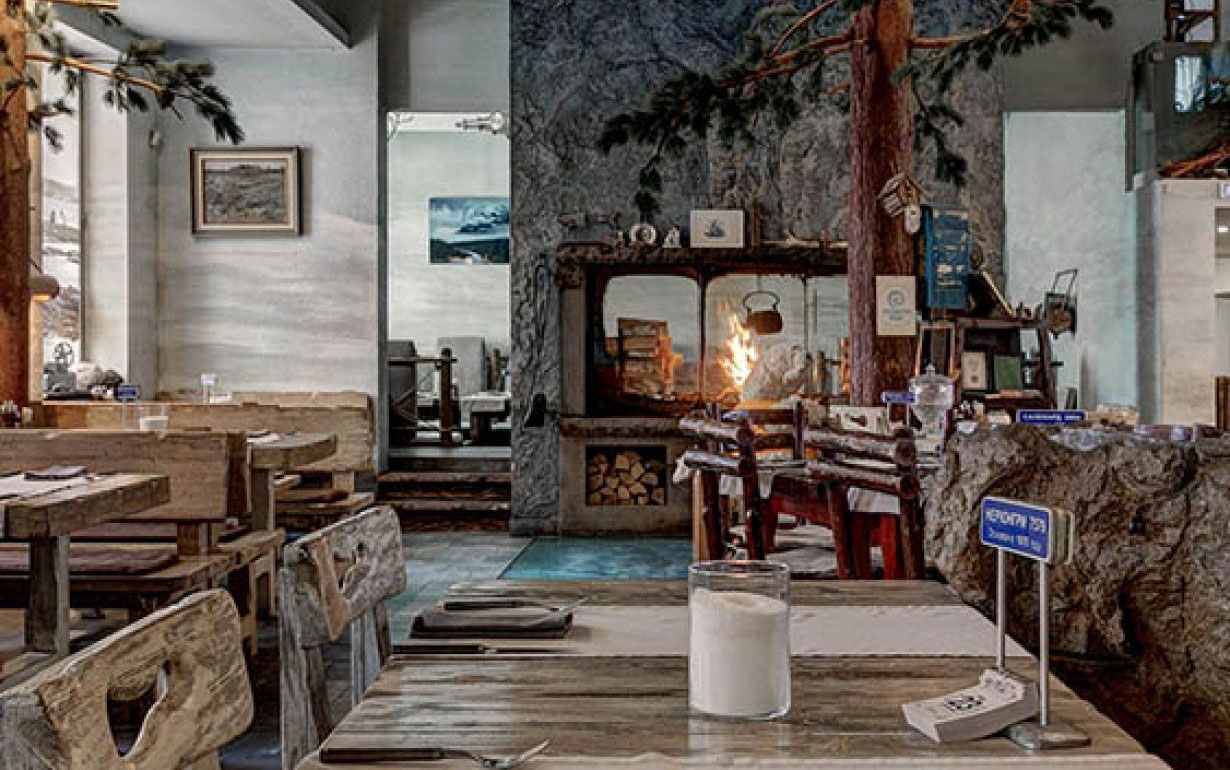
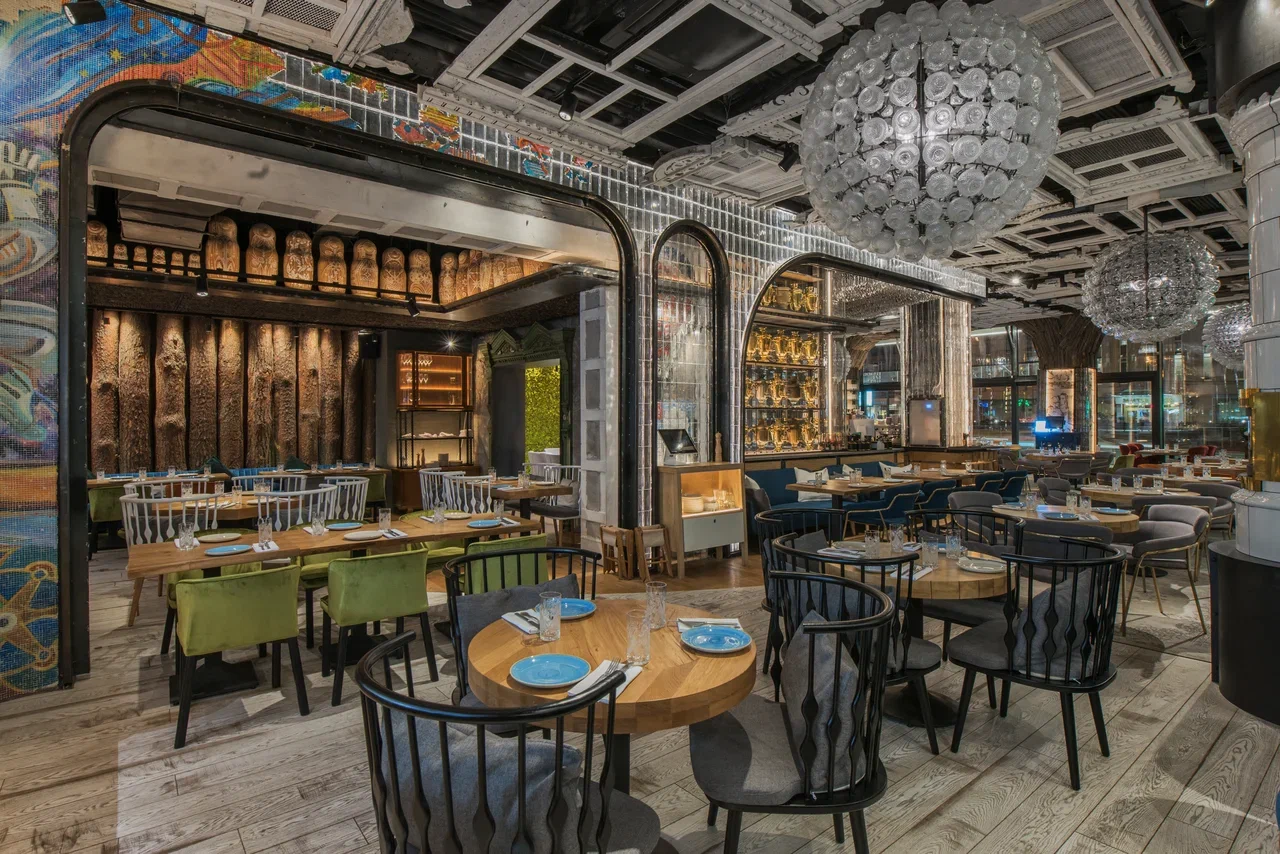
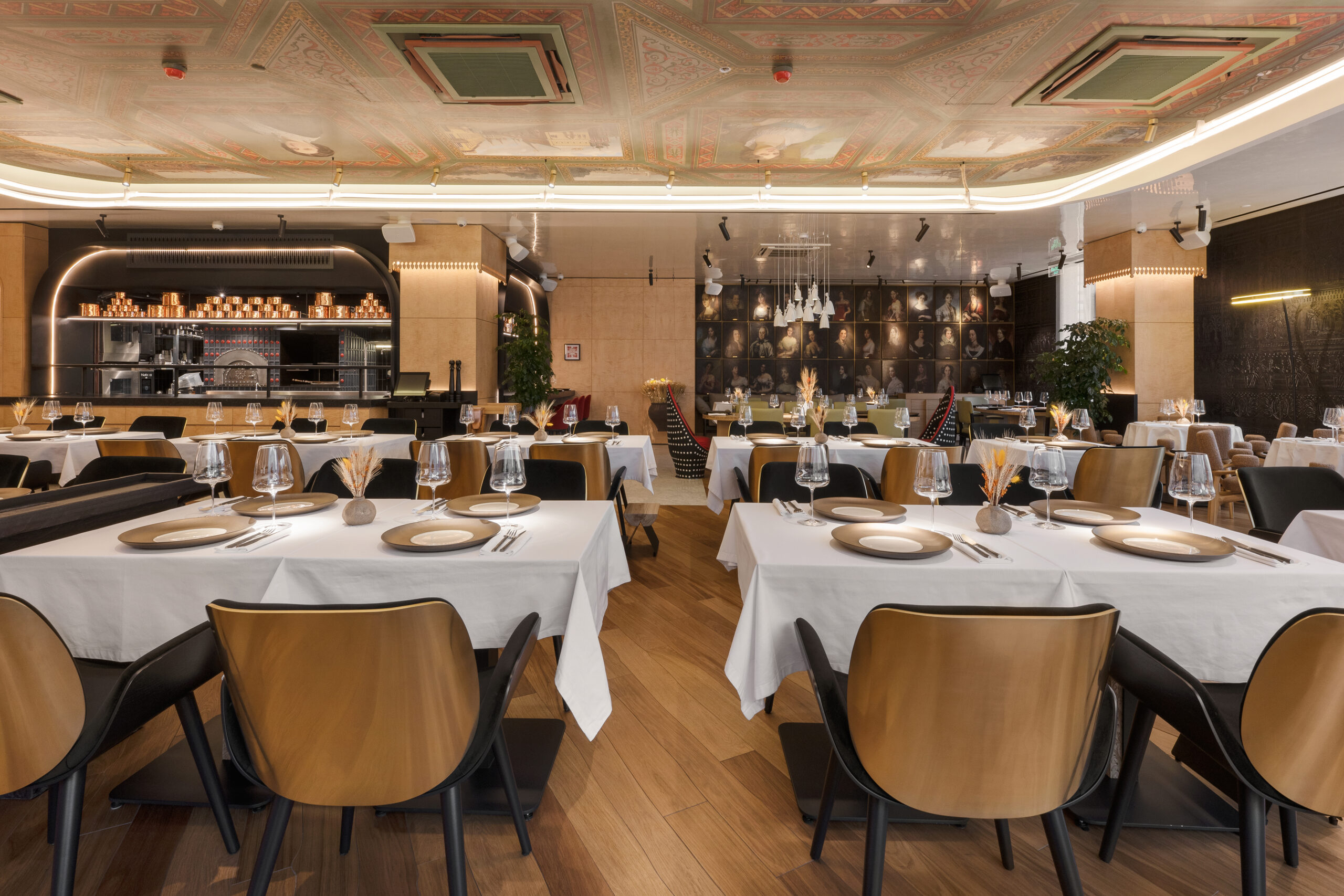
Manul is built around the cuisines of Siberian peoples, with a menu developed from recipes gathered on expeditions to Khakassia, Tuva, Altai, and the Yenisei region. Dishes include stroganina (thin-sliced frozen raw fish), muksun and chir, taiga venison, Khakass lamb, and khuzhuur pies, prepared in an open kitchen with a wood-fired oven. It sits in the Seasons gallery on Okhotny Ryad, a short walk from Red Square.
Ruski
Moscow
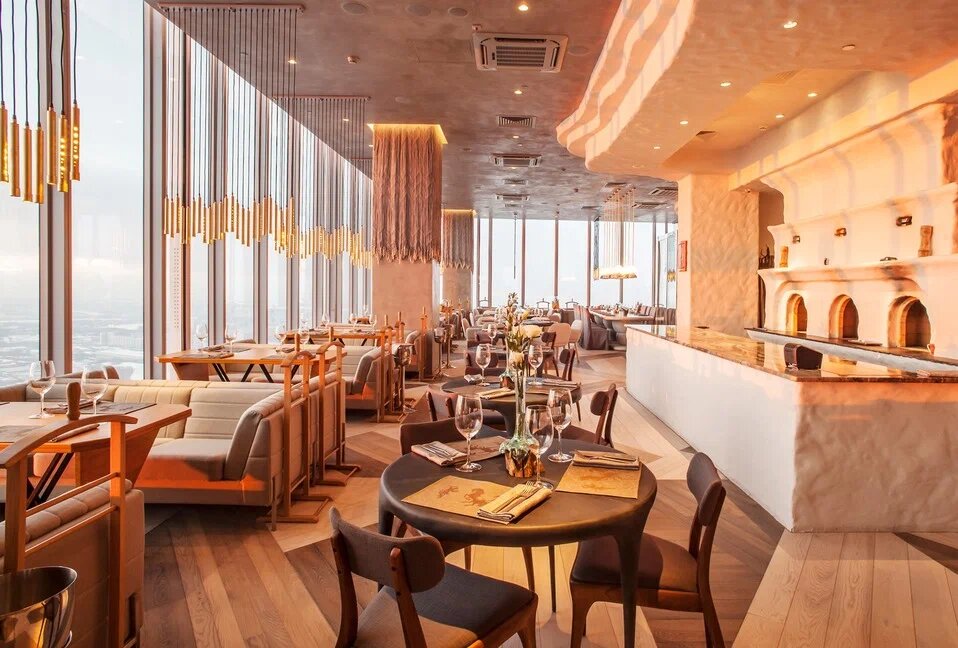
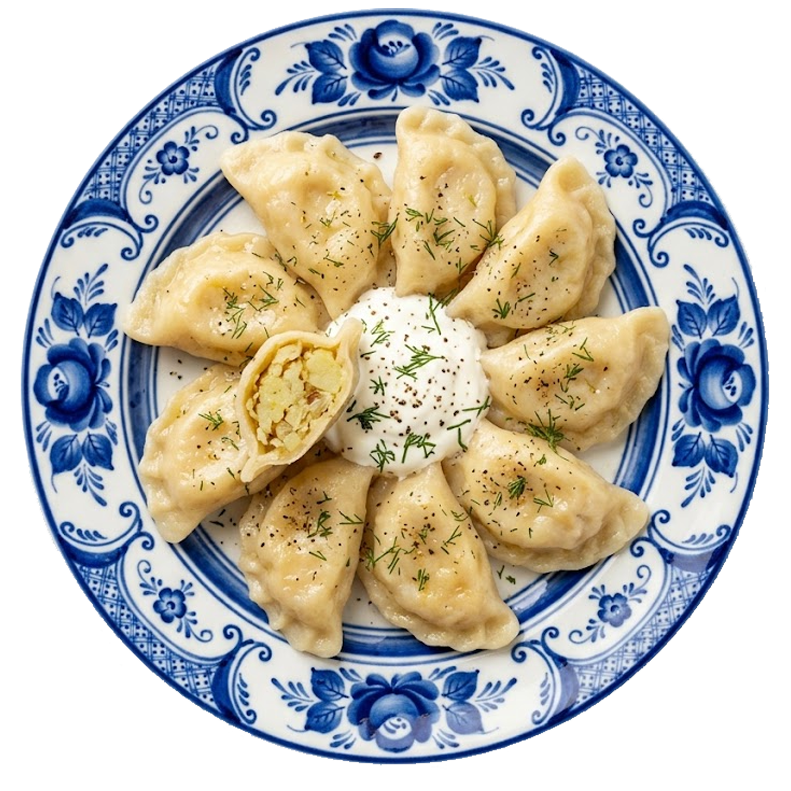
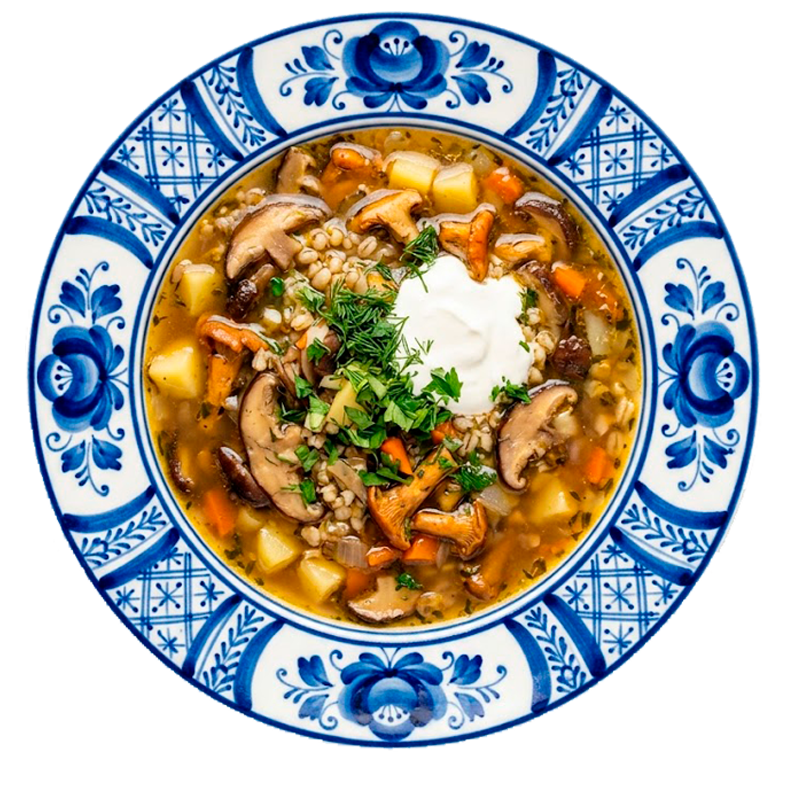
On the 85th floor of OKO Tower stands a Russian wood-fired oven. Eight meters of whitewashed clay — inside a skyscraper, above the city. The panoramic restaurant Ruski — Europe’s highest restaurant — builds its menu around it: venison dumplings, Volga fish pies, slow-cooked cabbage soup. The entire floor is floor-to-ceiling glass — the city below, the sky alongside. Next door: Ice Bar at −15°C, real fur coats, beluga caviar, a bar counter carved from ice blocks — the world’s highest ice bar. The cold is real. So is the caviar.
Beluga
Moscow
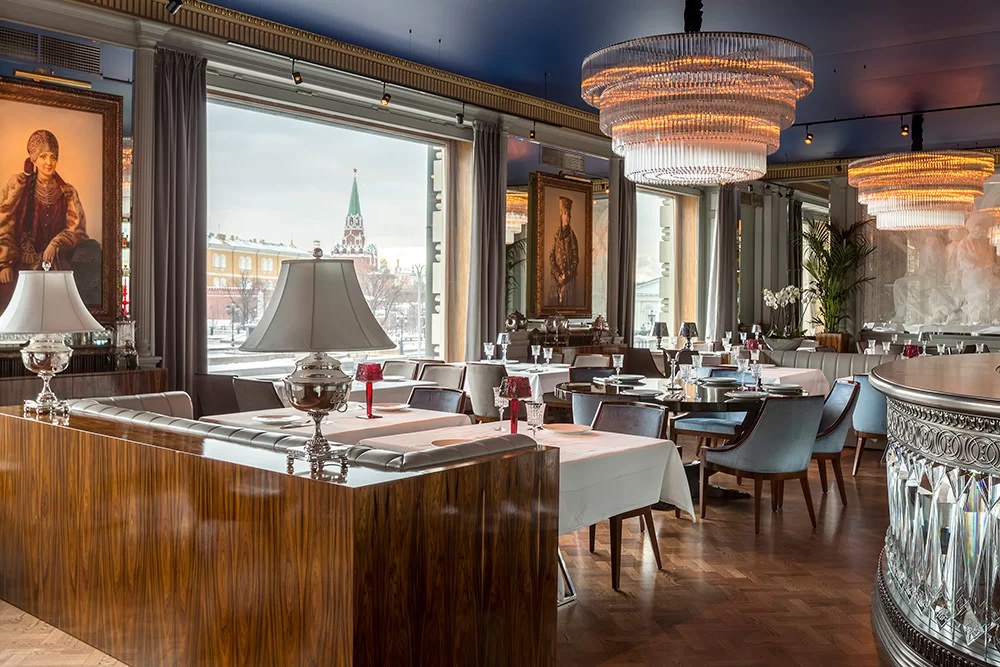
Beluga celebrates Russian gastronomy with an emphasis on premium seafood, caviar, and traditional delicacies presented in a contemporary style. Located next to Red Square, it offers one of Moscow’s finest dining experiences.
Uhvat
Moscow
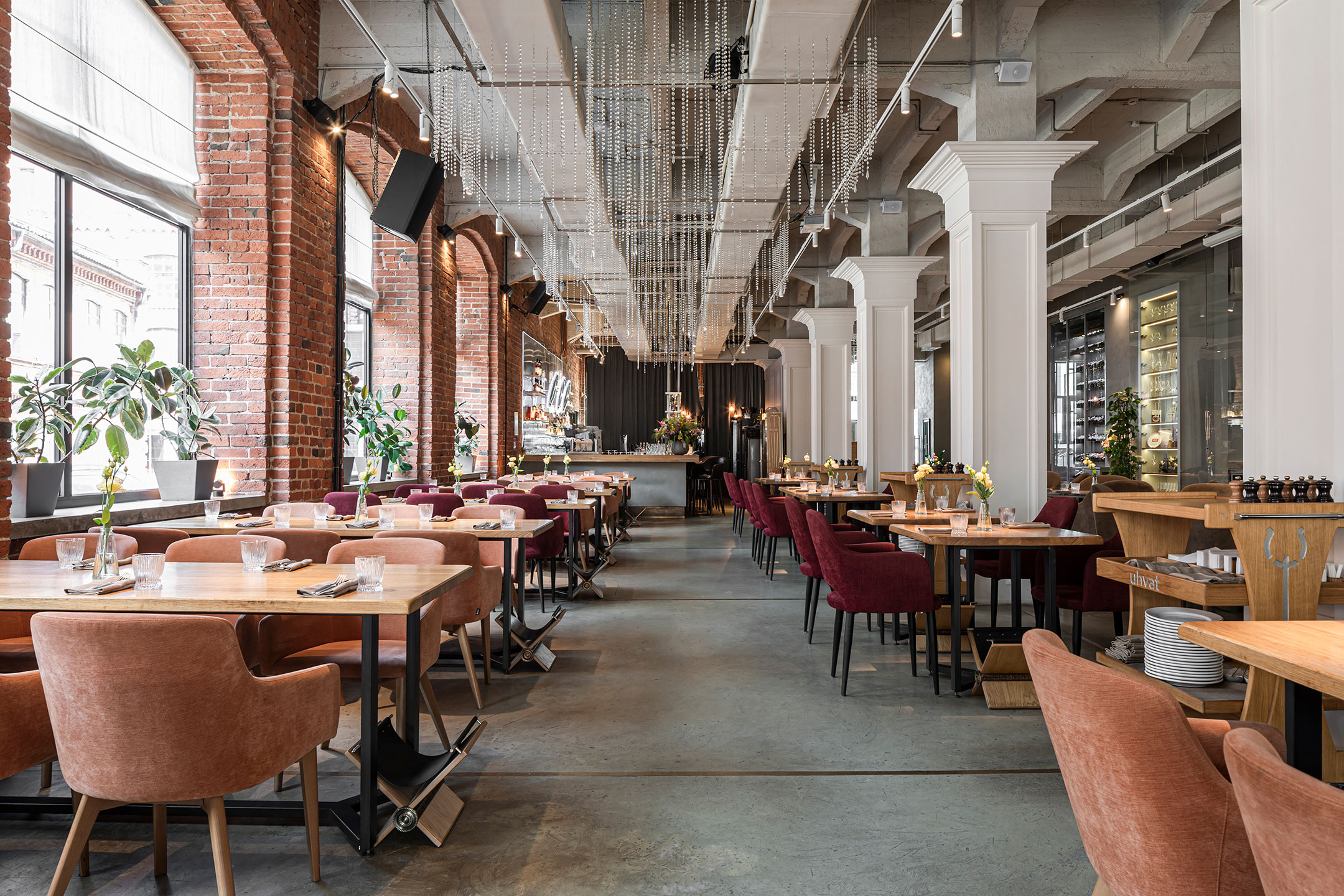
A contemporary restaurant inspired by traditional Russian oven cooking, where many dishes are prepared using classic slow-cooking techniques. The menu celebrates authentic Russian flavors with a modern presentation.
Dom Rossiyskoy Kukhni (House of Russian Cuisine)
Moscow
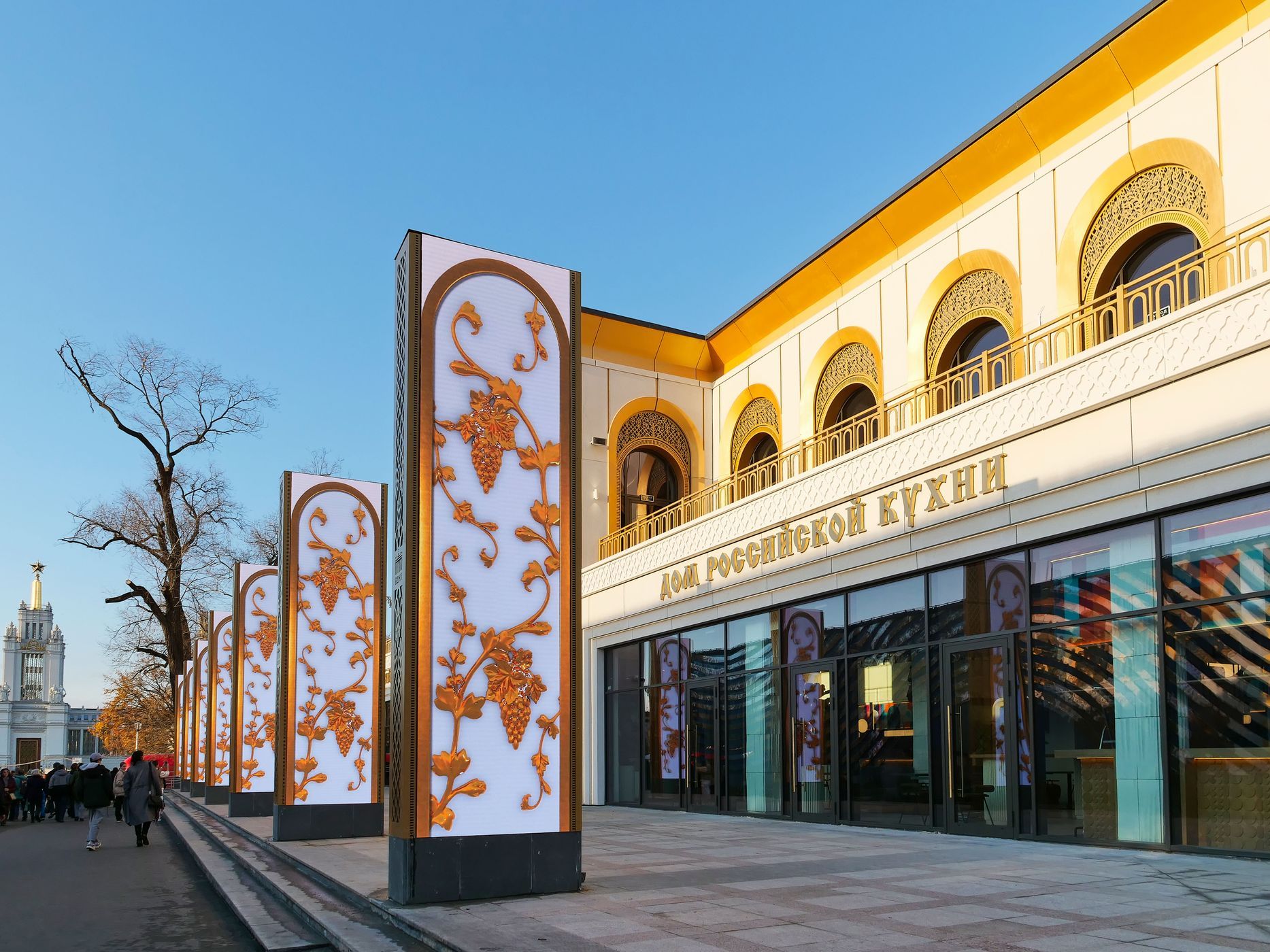
A food hall on the VDNKh grounds. 15 counters of regional cuisine from Kamchatka to Kaliningrad under one roof, cooking masterclasses and tastings throughout the day. A rare format: the gastronomy that usually takes a month of travel across the country — covered in a single lunch.
Expeditsiya
Moscow
A long-standing restaurant of Northern cuisine, located in Pevchesky Lane. The menu features dishes and ingredients from the Russian North, while the space itself is divided into several themed areas: «Bivouac,» the Fireplace Hall, a terrace, and «Wintering.» It’s an ideal spot for those who want to discover how traditional Russian cuisine transforms when it moves from expedition conditions to a metropolitan restaurant kitchen.
Voronezh
Moscow
Stop by the Voronezh restaurant at the corner of Prechistenka and Gogolevsky Boulevard, celebrating the meat of the Voronezh region. Look for all kinds of cutlets, stuffed cabbage rolls, and everything that was popular in the second half of the 20th century — the local chef works wonderfully with this gastronomic heritage.
#SiberiaSiberia
Moscow
A restaurant at the Azimut Hotel on Smolenskaya Street, where Siberia is assembled from specific products and dishes: stroganina made from muksun and sturgeon, pelmeni, salted mushrooms, venison, river fish, game, and wild Siberian herbs. The chef is Evgeny Kuznetsov, and most suppliers are Siberian producers.
Mashenka
Moscow
A charming restaurant dedicated to traditional Russian home-style cuisine, offering classic recipes prepared with high-quality seasonal ingredients. The cozy interior creates an authentic and welcoming atmosphere.