Vinegret
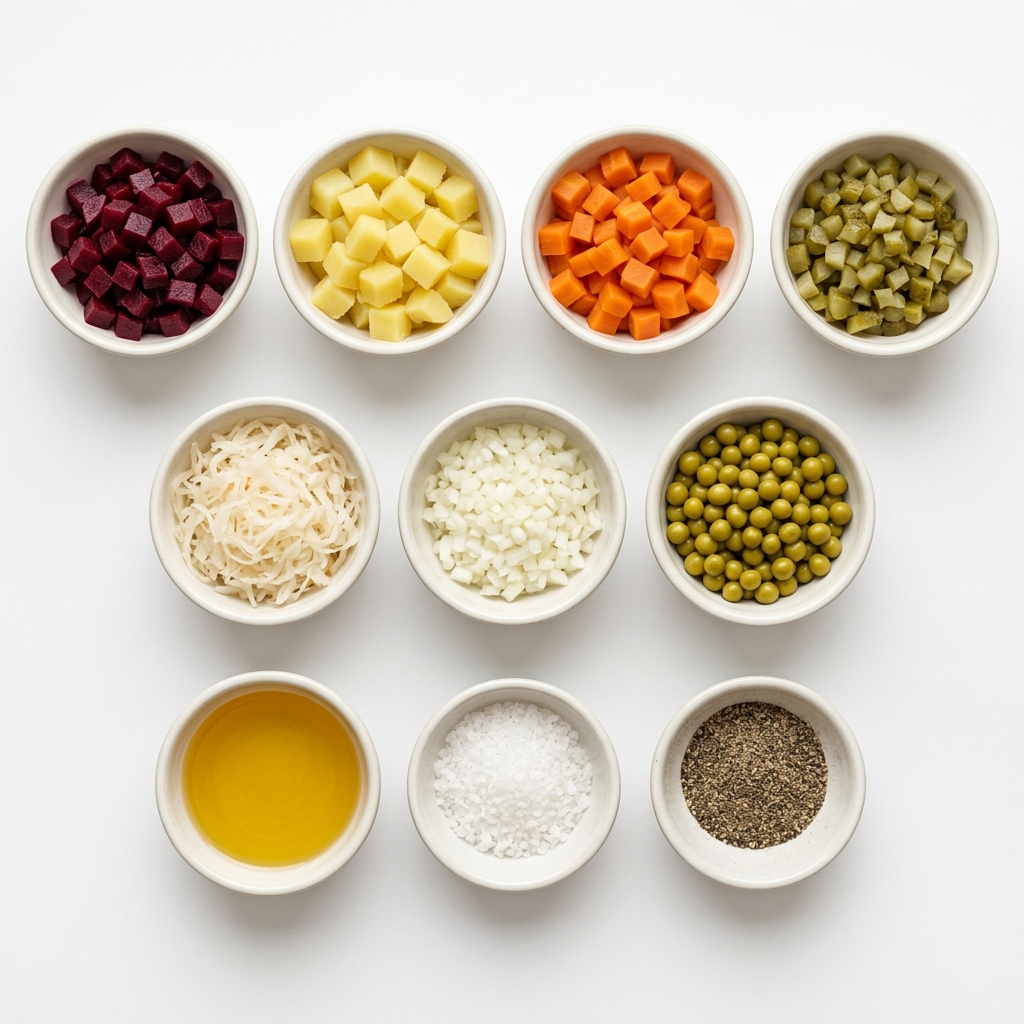
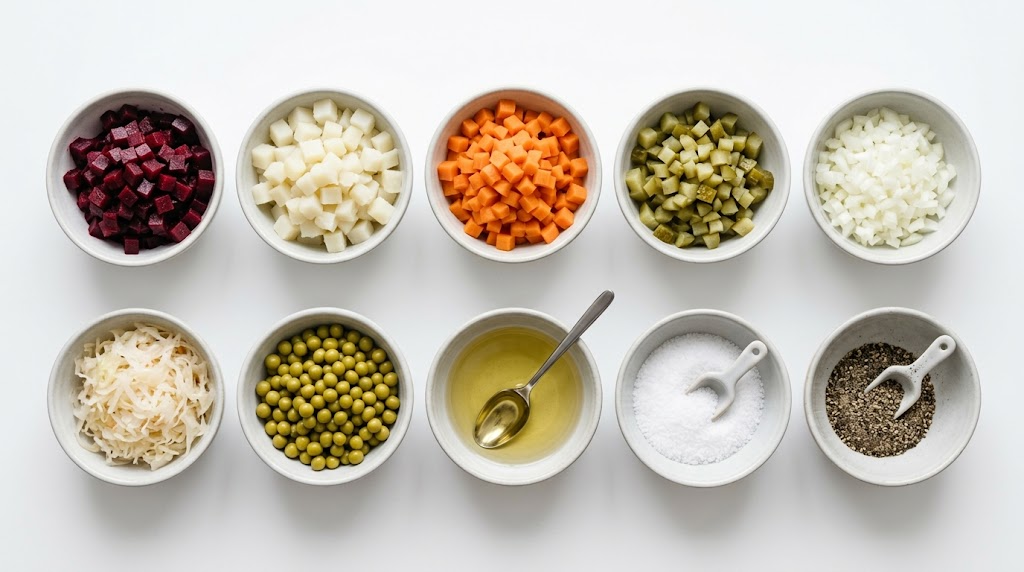
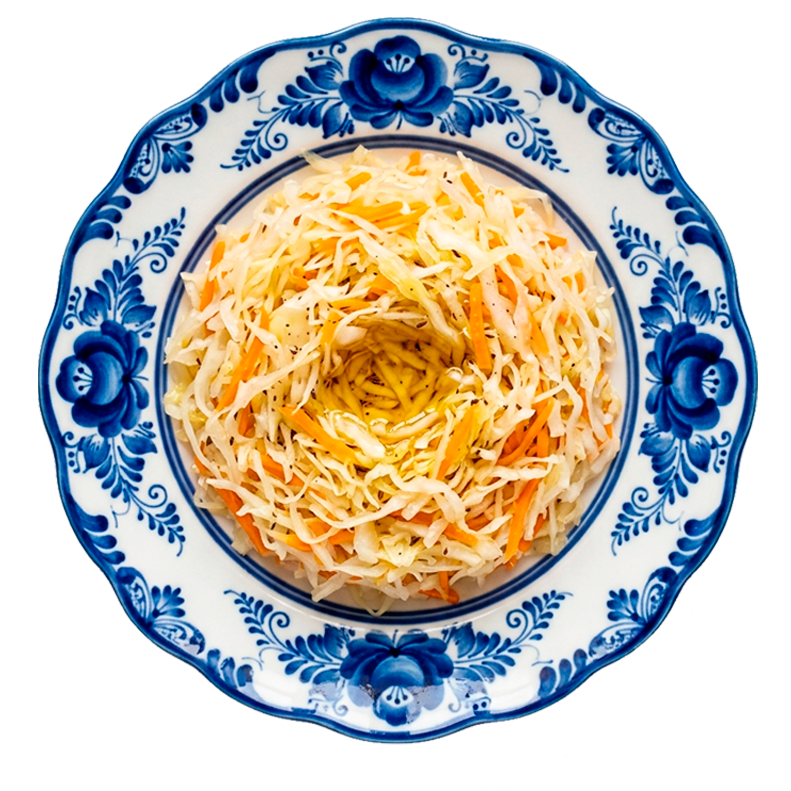
Vinegret has been familiar to Russian cuisine since the beginning of the 19th century, although its composition has changed substantially over that time. The name itself came from the French language and is linked to vinegar dressing. In the version familiar today, beetroot, potato, carrot, and pickled cucumbers are combined; sauerkraut, beans, or green peas are often added. Vegetable oil unites the sweetness of the root vegetables and the sourness of the pickles, and beetroot gives the salad its characteristic color.
Vinegret is a Russian salad made with diced boiled beets, potatoes, carrots, onions, and pickles or sauerkraut, and it became popular in Russian and other post-Soviet cuisines. The name comes from the French word vinaigrette, because the dish was originally linked to vinegar dressing. Early versions of the term referred more generally to mixed vegetables dressed with vinegar, not just the modern beet salad. By the 19th century, recipes influenced by Western European cooking had entered Russian kitchens, and vinegret evolved into a distinct salad. In modern cooking, vinegar is sometimes omitted and the salad is dressed with sunflower or other vegetable oil instead.
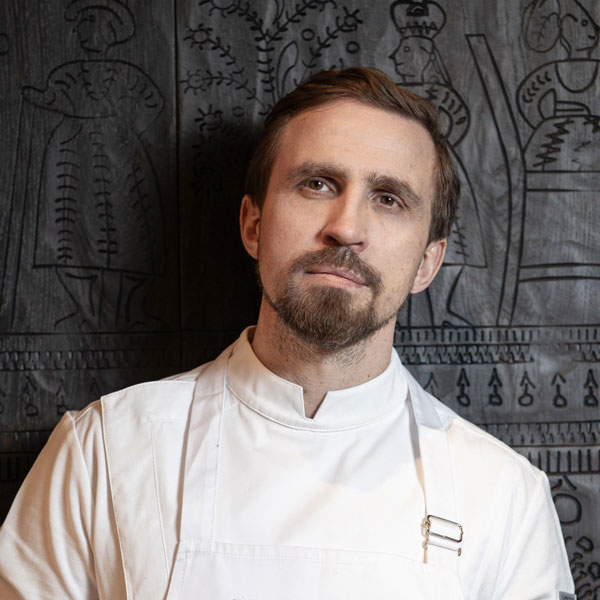
All the vegetables for the vinegret salad should be roasted on a bed of salt; that way, they retain the most flavor. I really love vinegret with excellent sauerkraut, pickles, and unrefined sunflower oil. And I like adding some salted fish—like Baltic sprat cured with spices—to create a contrast between the roasted vegetables and the fish
represented by
Igor Grishechkin
cooking
time
60 min
difficulty
level
Easy
key
ingredients
9
Ingredients
cup sauerkraut, drained
1/2
small onion, finely chopped
1 pcs
cup canned peas, drained
1/2
unrefined aromatic sunflower oil
3 tbsp
Recipe
1.
Boil the beets, potatoes, and carrots separately until tender. Let them cool completely, then peel and dice them into small cubes.
2.
Dice the pickles and finely chop the onion. If the sauerkraut is too sour or too wet, drain it well and, if needed, squeeze it lightly.
3.
In a large bowl, combine the beets, potatoes, carrots, pickles, sauerkraut, onion, and peas. Add the oil, season with salt and black pepper, and mix gently until everything is evenly coated.
4.
Let the salad rest in the refrigerator for 20–30 minutes before serving so the flavors can blend.
where
to try
Mari Vanna
Moscow
Authentic Soviet cuisine in excellent execution: famous salads like Olivier, herring under a fur coat, and mimosa; borscht, pirozhki, and of course, vodka — without which Soviet cuisine would not be complete.
Uhvat
Moscow
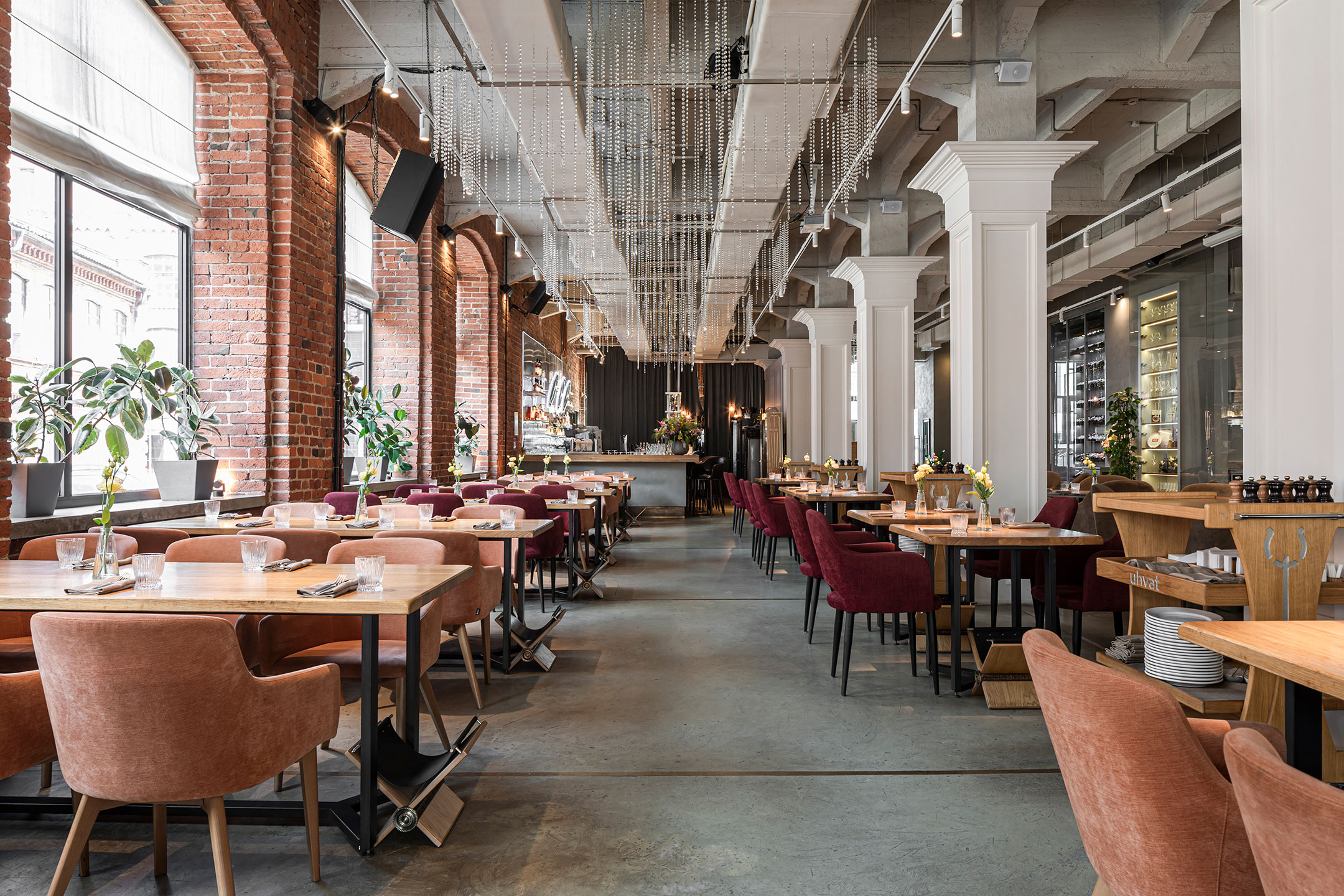
A contemporary restaurant inspired by traditional Russian oven cooking, where many dishes are prepared using classic slow-cooking techniques. The menu celebrates authentic Russian flavors with a modern presentation.
Café Pushkin
Moscow
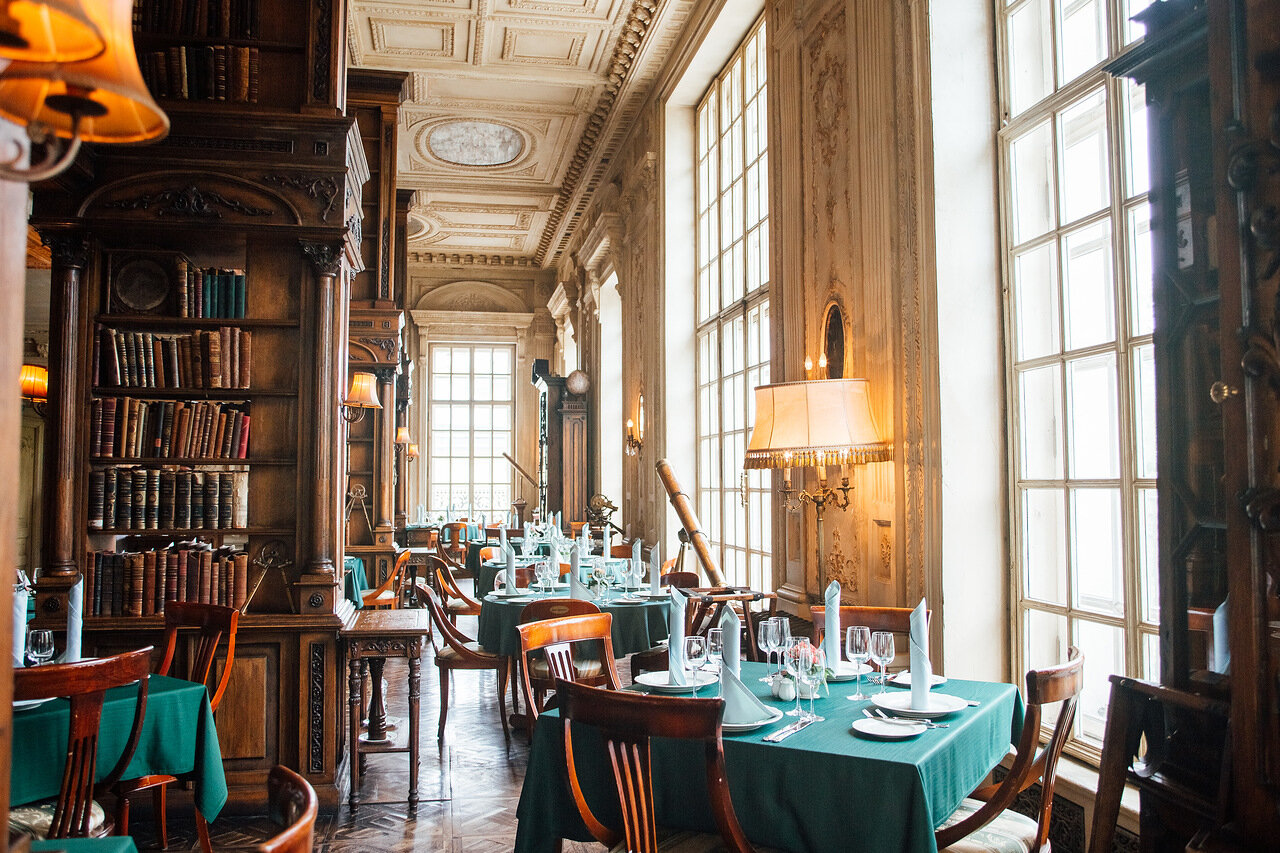
One of Moscow’s most iconic restaurants, Café Pushkin recreates the atmosphere of a 19th-century aristocratic mansion. It is renowned for classic Russian cuisine served in beautifully preserved historic interiors.
Matryoshka
Moscow
Matryoshka offers traditional Russian cuisine inspired by recipes from the late 19th and early 20th centuries. Set on the banks of the Moskva River, it combines elegant interiors with authentic flavors.
SAVOY
Moscow
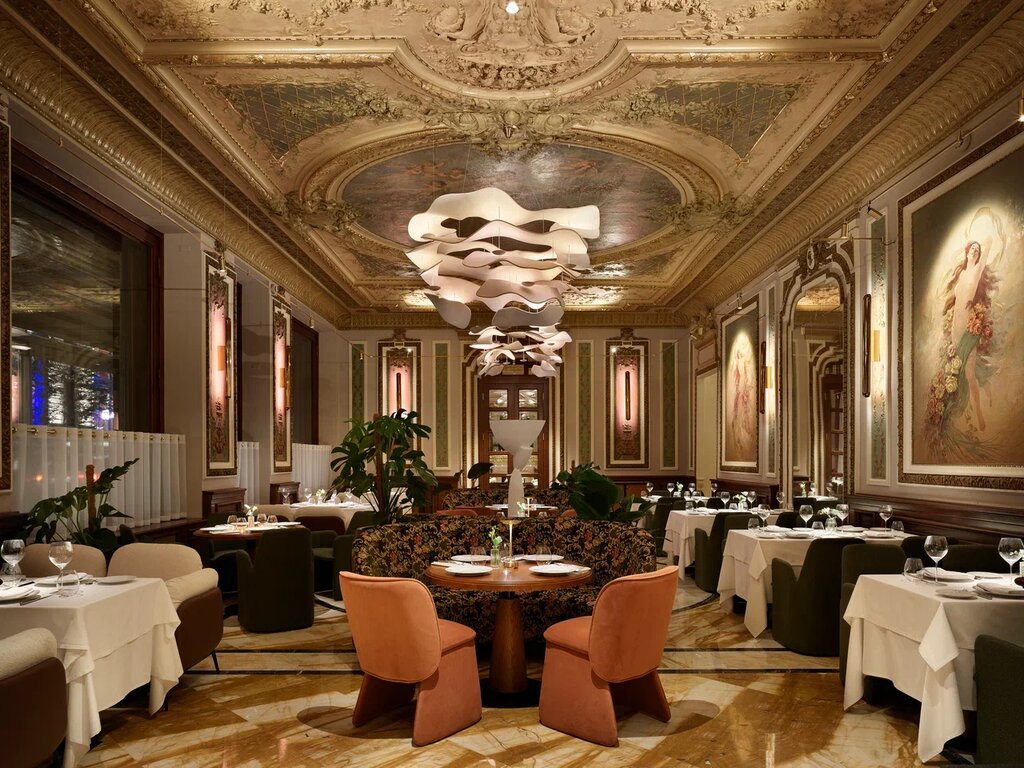
Opened in 1913, Savoy is one of Moscow’s oldest luxury restaurants, famous for its Art Nouveau interiors and historic atmosphere. The menu combines Russian classics with European fine dining.
Oblomov
Moscow
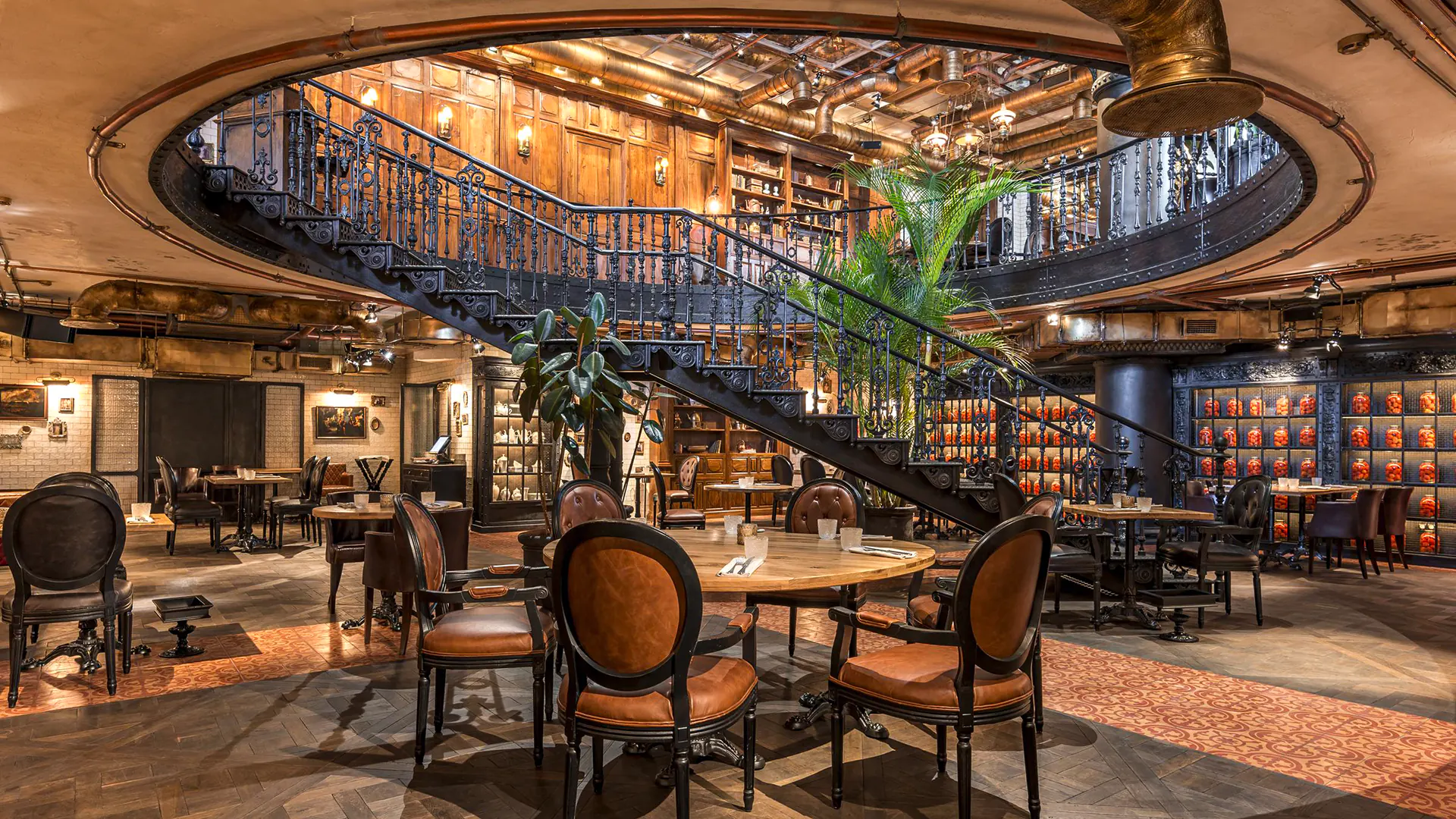
Housed in a restored 19th-century mansion, Oblomov specializes in traditional Russian home-style cuisine prepared with premium ingredients. Its cozy atmosphere offers a glimpse into old Moscow hospitality.
Astoria
Saint-Petersburg
The restaurant of the legendary Astoria Hotel, opened long ago opposite St. Isaac’s Cathedral. From the moment it opened, the hotel became one of the symbols of St. Petersburg’s high society: it hosted foreign guests, diplomats, performers, and members of the upper class. Today, the restaurant preserves the atmosphere of a historic grand hotel: European cuisine, classic service, and views of St. Isaac’s Square.