Rasstegai

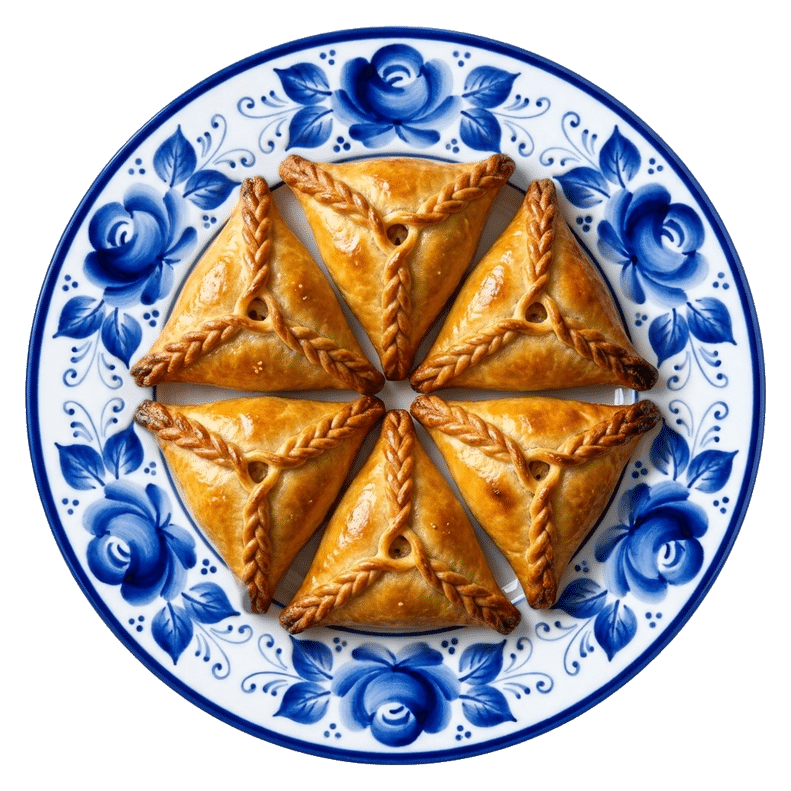
Rassstegai are portion-sized pies made from yeast dough with a small opening on top. In the 19th century, they became a noticeable part of Moscow tavern cuisine. Fish rassstegai were especially valued: they were served with ukha, and a little broth could be added through the open middle. The Moscow restaurant «Praga» was famous for its filling of sterlet and sturgeon. Besides fish, rassstegai are also made with meat, mushrooms, and other fillings.

Rasstegai is a traditional Russian open‑top pie often filled with fish, meat, liver, or mushrooms, and enjoyed as a snack alongside soup or tea. It first appeared in the early 19th century and became a favorite in Moscow and St. Petersburg taverns and inns. Its name means «unbuttoned,» which refers to the hole or window in the center of the dough: the top is left open so the filling shows through and can be topped with hot broth when served. Most famous rasstegai were always fish ones. The richest and tastiest were, of course, the sturgeon rasstegai, but these were mostly a festive option. A popular filling was vyaziga— a chord of sturgeon, which was first dried, then soaked, and then added to fish filling.

Rasstegai have an opening at the top that allows juices to escape from the filling rather than bursting the dough—since the filling is placed inside raw.

You can add a little broth to cold rasstegai, and the filling will become incredibly juicy again
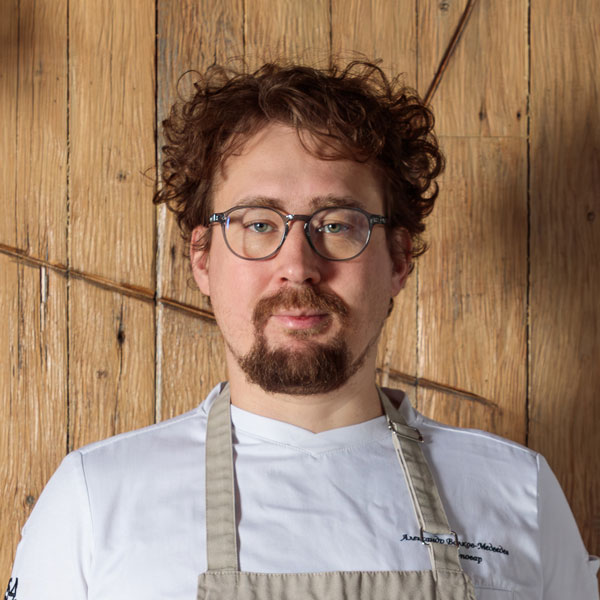
Alexander Volkov-Medvedev
represented by
Alexander Volkov-Medvedev
cooking
time
90 min
difficulty
level
Medium
key
ingredients
8-7
Rasstegai Rasstegai

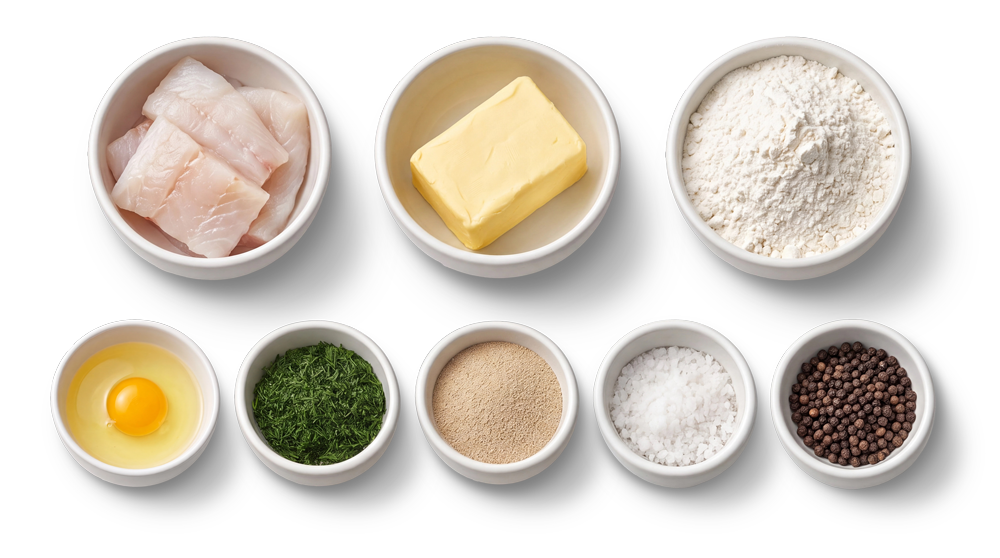
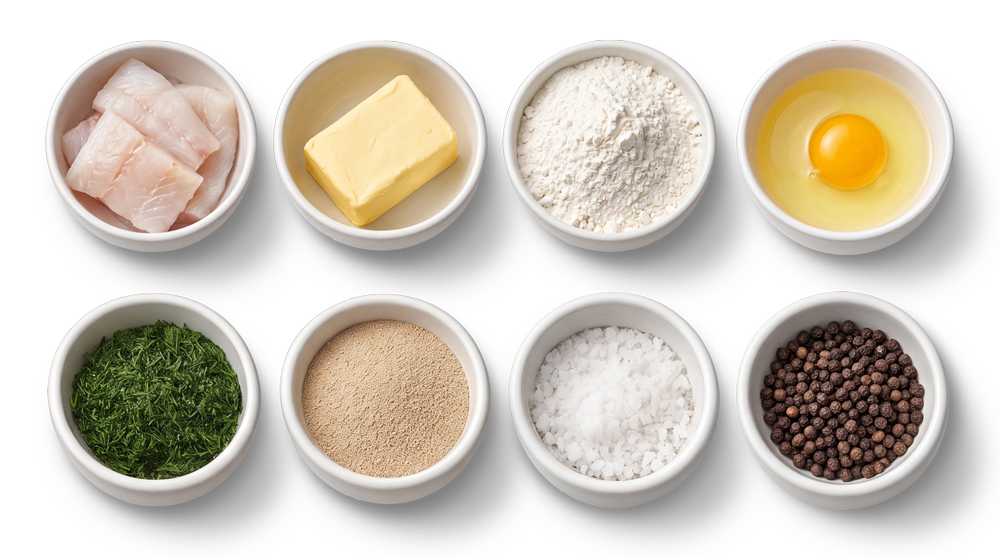
Ingredients

For the dough:
all‑purpose wheat flour
500  g
dry yeast
7  g
warm milk
240  ml
sugar
2  tbsp
salt
1  tsp
egg, slightly beaten
1 pcs
vegetable oil
2-3  tbsp
extra flour for kneading
 
For the fish filling:
white or red fish fillet (salmon, muksun, sig, or pike), skin and bones removed
300  g
medium onion, finely chopped
1  pcs
butter or vegetable oil
2  tbsp
fresh dill or parsley, chopped
1-2  tbsp
salt
1/2 tsp
a pinch of black pepper
 
cream (for extra softness)
1-2  tbsp
For egg wash:
egg yolk
1  pcs
milk
1  tbsp
Portions: 8-10 rasstegai

Recipe

1.
Cooking

Warm the milk until it is just warm to the touch. In a bowl, mix the warm milk, sugar, and yeast; leave for 10-15 minutes until foamy.
2.
Add the egg, salt, vegetable oil, and about half the flour; stir, then gradually add the remaining flour to form a soft dough.
3.
Knead for 8-10 minutes until smooth and elastic. Place in an oiled bowl, cover, and let rise in a warm place for about 1 hour, or until doubled in volume.
4.
Fry the chopped onion in butter or oil over low heat until soft and golden. Let cool. Cut the fish into small cubes or thin strips. Mix the fish with the cooled onions, dill or parsley, salt, pepper, and cream. Taste and adjust seasoning.
5.
Punch down the risen dough and divide into 8-10 equal pieces. Roll each piece into a ball, then flatten into a round disc (about 9-10 cm in diameter).
6.
Place a heaped tablespoon of fish filling in the center of each disc. Pinch the edges up and around the filling, leaving a small round “window” open in the middle so the filling is visible. The shape should look like a small boat or open‑top bun.
7.
Place the shaped rasstegai on a parchment‑lined or lightly greased baking tray, about 2-3 cm apart.Cover with a towel and let rise for 20 minutes in a warm place.
8.
Mix the egg yolk with 1 tbsp milk and brush the dough around the edges (not the exposed filling).
9.
Bake in a 180-200°C preheated oven for 2-25 minutes until the dough is golden‑brown and the filling is cooked through.
10.
Serving

Serve warm, traditionally with a small bowl of fish broth (ukha) poured into the open window just before eating.

where
to try

Voronezh
Voronezh
Moscow
Stop by the Voronezh restaurant at the corner of Prechistenka and Gogolevsky Boulevard, celebrating the meat of the Voronezh region. Look for all kinds of cutlets, stuffed cabbage rolls, and everything that was popular in the second half of the 20th century — the local chef works wonderfully with this gastronomic heritage.
Ruski
Ruski
Moscow
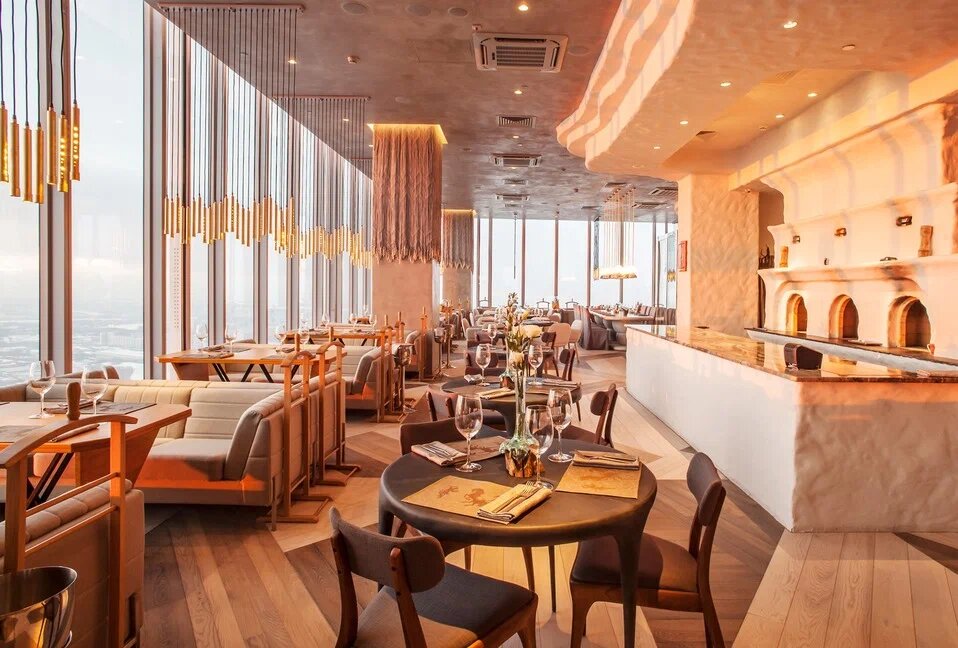
On the 85th floor of OKO Tower stands a Russian wood-fired oven. Eight meters of whitewashed clay — inside a skyscraper, above the city. The panoramic restaurant Ruski — Europe’s highest restaurant — builds its menu around it: venison dumplings, Volga fish pies, slow-cooked cabbage soup. The entire floor is floor-to-ceiling glass — the city below, the sky alongside. Next door: Ice Bar at −15°C, real fur coats, beluga caviar, a bar counter carved from ice blocks — the world’s highest ice bar. The cold is real. So is the caviar.
DR. Zhivago
DR. Zhivago
Moscow
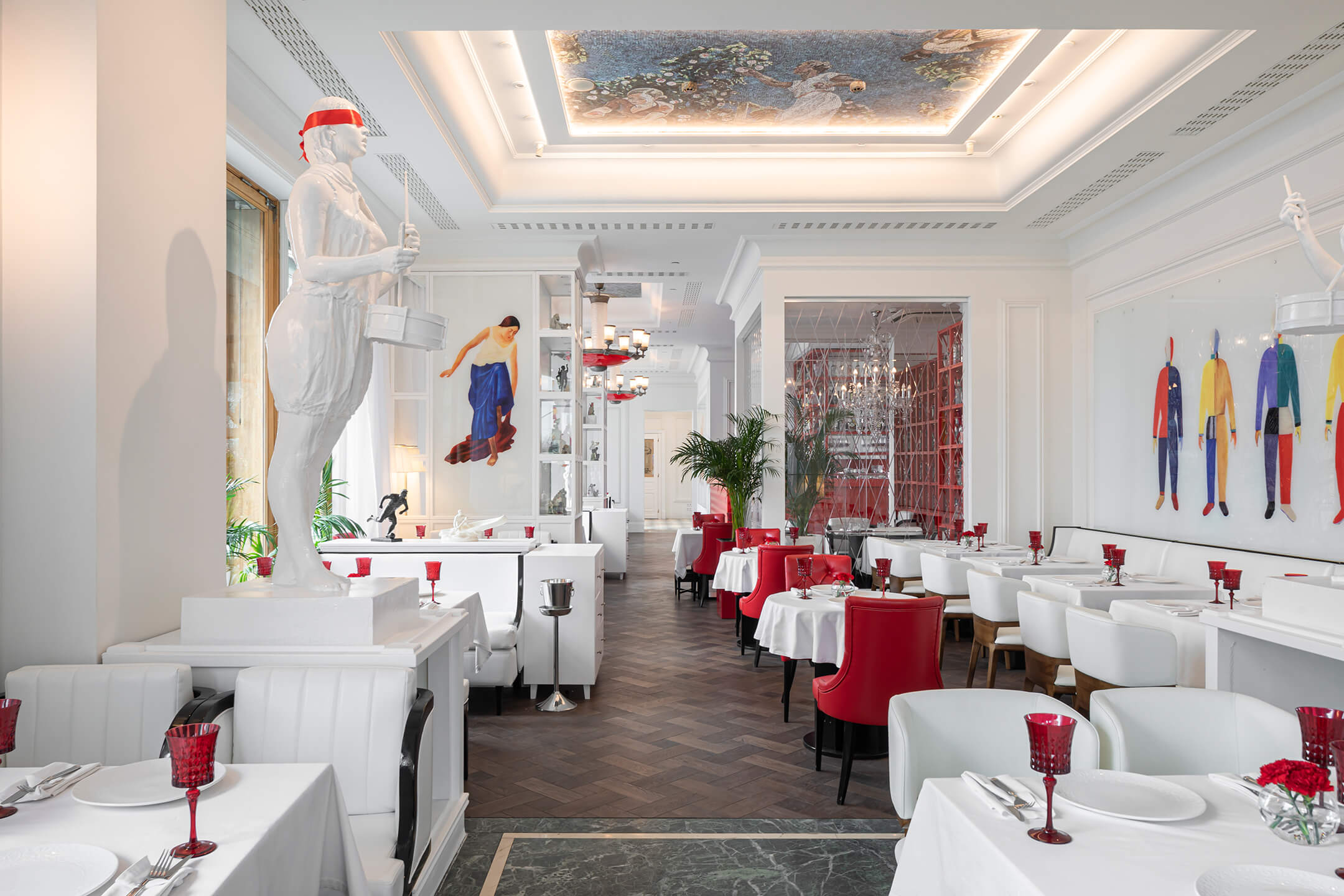
Dr. Zhivago is a grand café on the ground floor of the historic Hotel National, with views toward the Kremlin and Manege Square, and a recommendation from the Michelin Guide. The main hall displays reproductions of major Soviet-era paintings — Malevich, Petrov-Vodkin, Deineka, Samokhvalov — while an inner room takes its black-lacquer, gold-ceilinged look from Palekh lacquer boxes. The menu reworks Russian classics such as pozharsky cutlets, sturgeon aspic, and caviar service, backed by a vodka bar of polugar, samogon, and infused spirits.
Bar “The Legendary Bear”
Saint-Petersburg
This is where, in 1906, St. Petersburg locals first saw a bar counter, ice-cold cocktails, and decided: we need this. The historic interiors have been restored down to the smallest detail — antique clocks, vintage silverware, barmen in white jackets. Choose from cocktails made according to those very same recipes, and pair them with rastegai pies and crab-stuffed golubtsy. «My soul feels lighter» — a guest’s review from over a century ago that still holds true today.

other recipes