Uhvat
Moscow
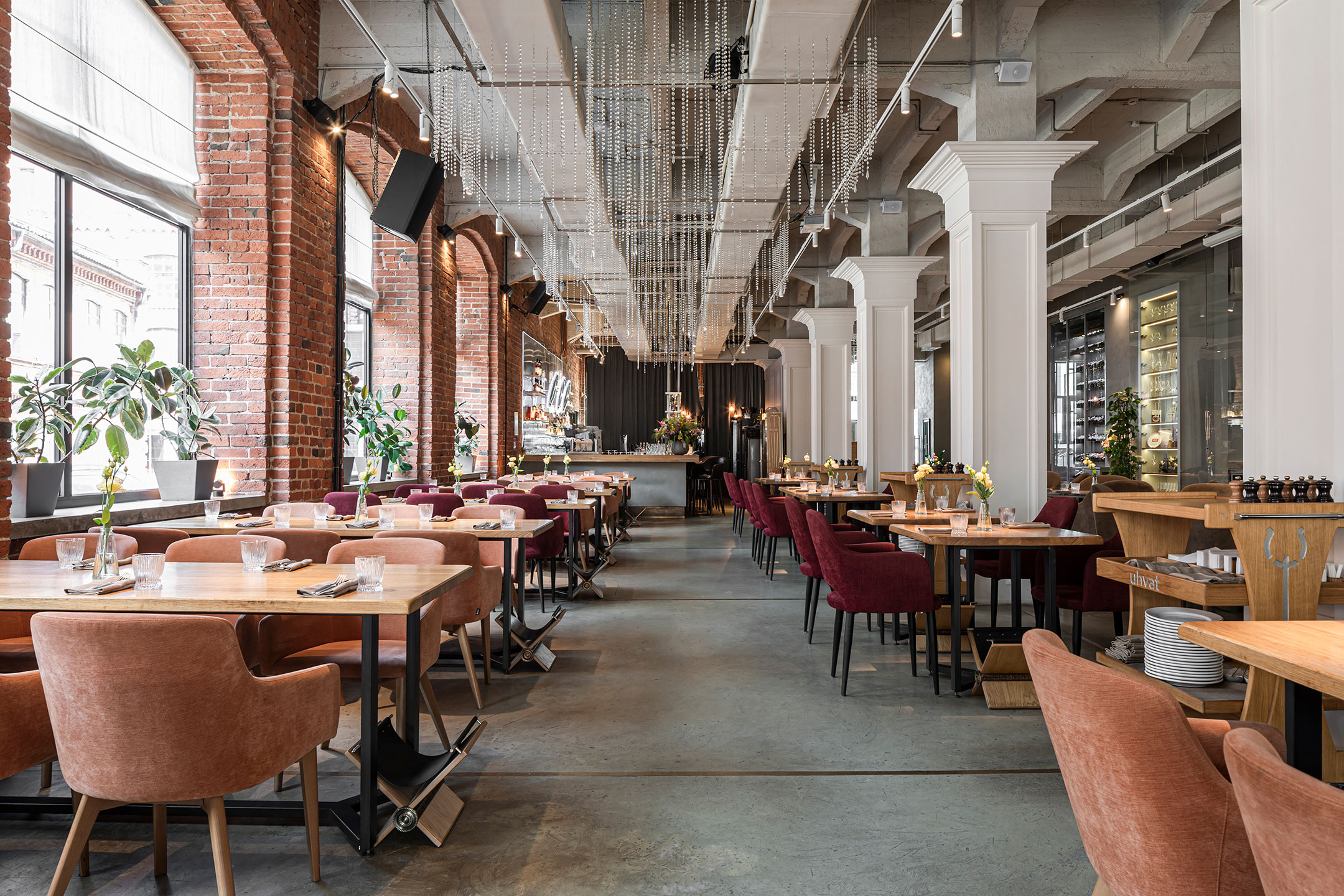
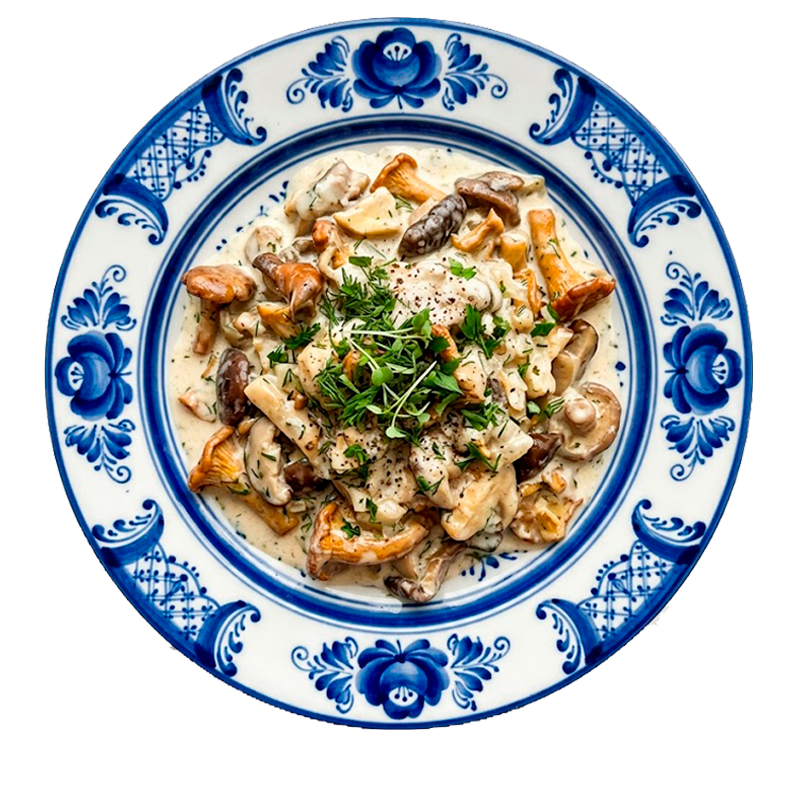
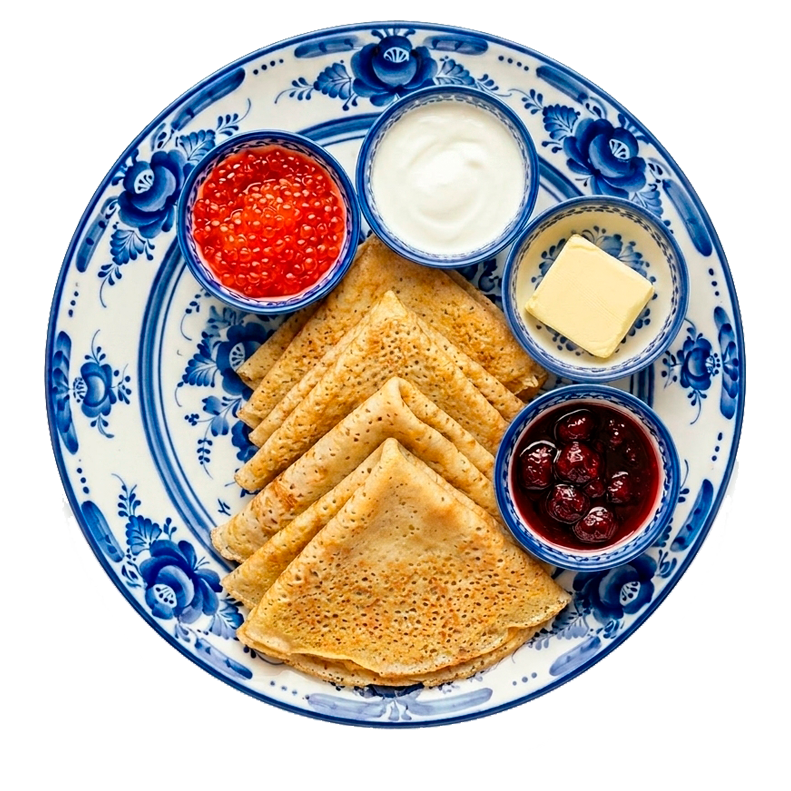
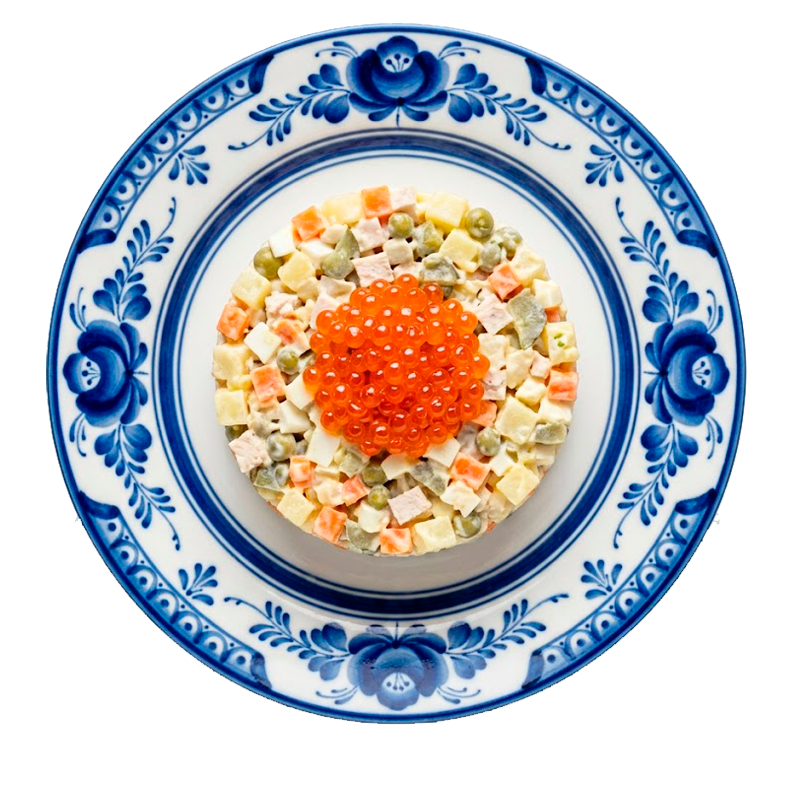
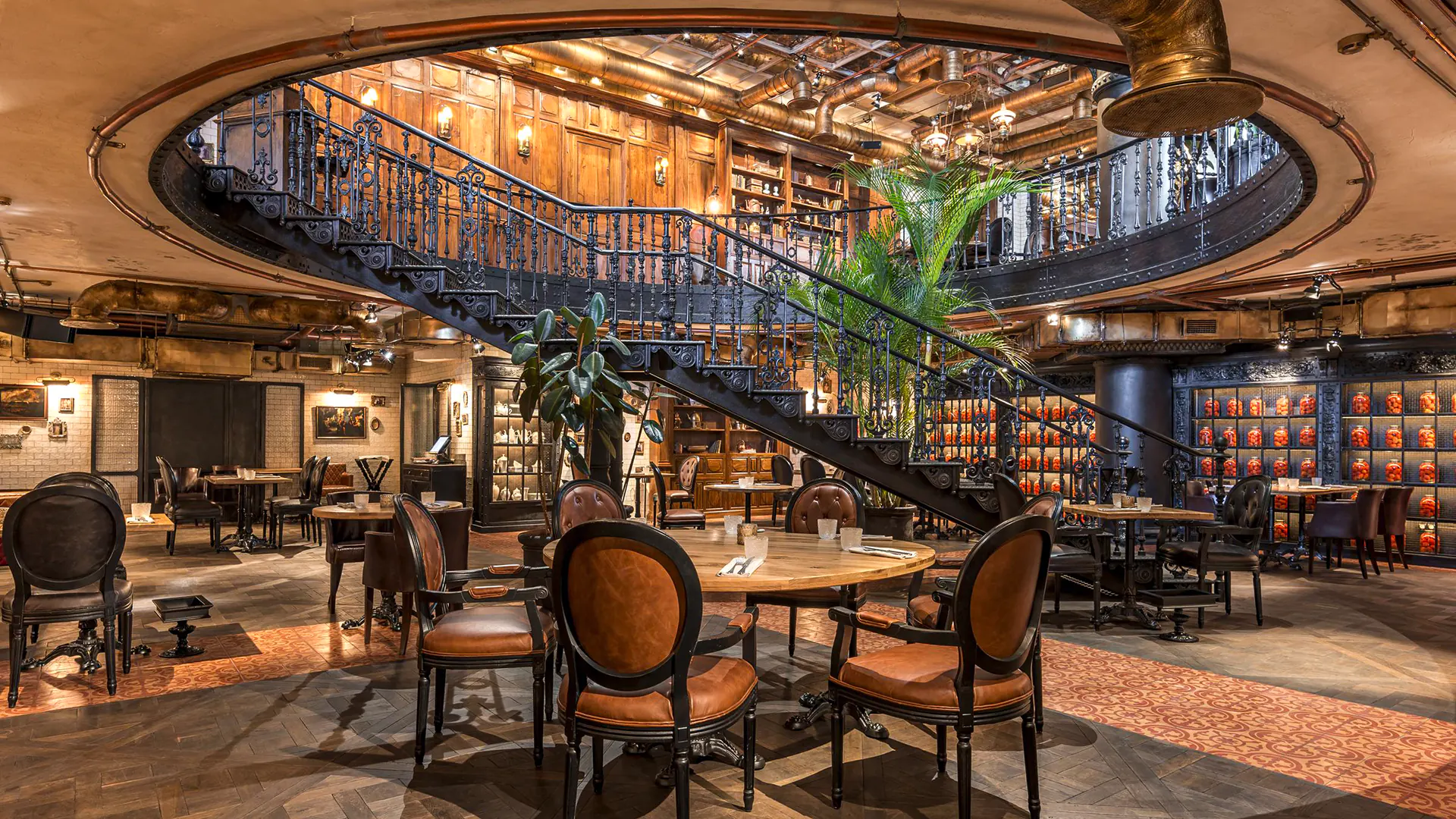
A contemporary restaurant inspired by traditional Russian oven cooking, where many dishes are prepared using classic slow-cooking techniques. The menu celebrates authentic Russian flavors with a modern presentation.
Shalyapin
Moscow
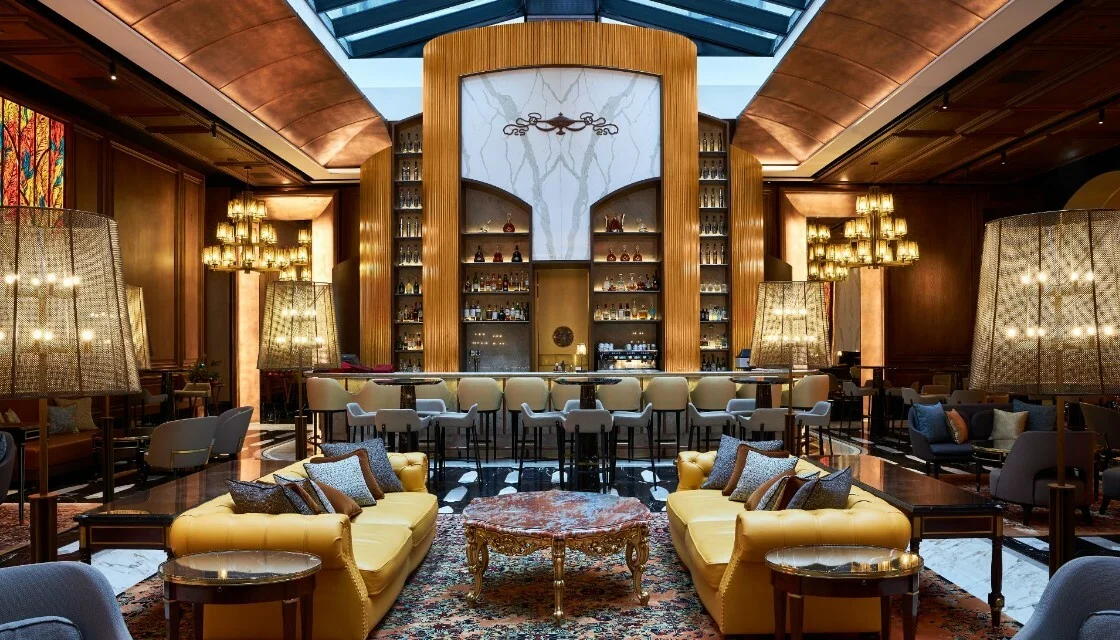
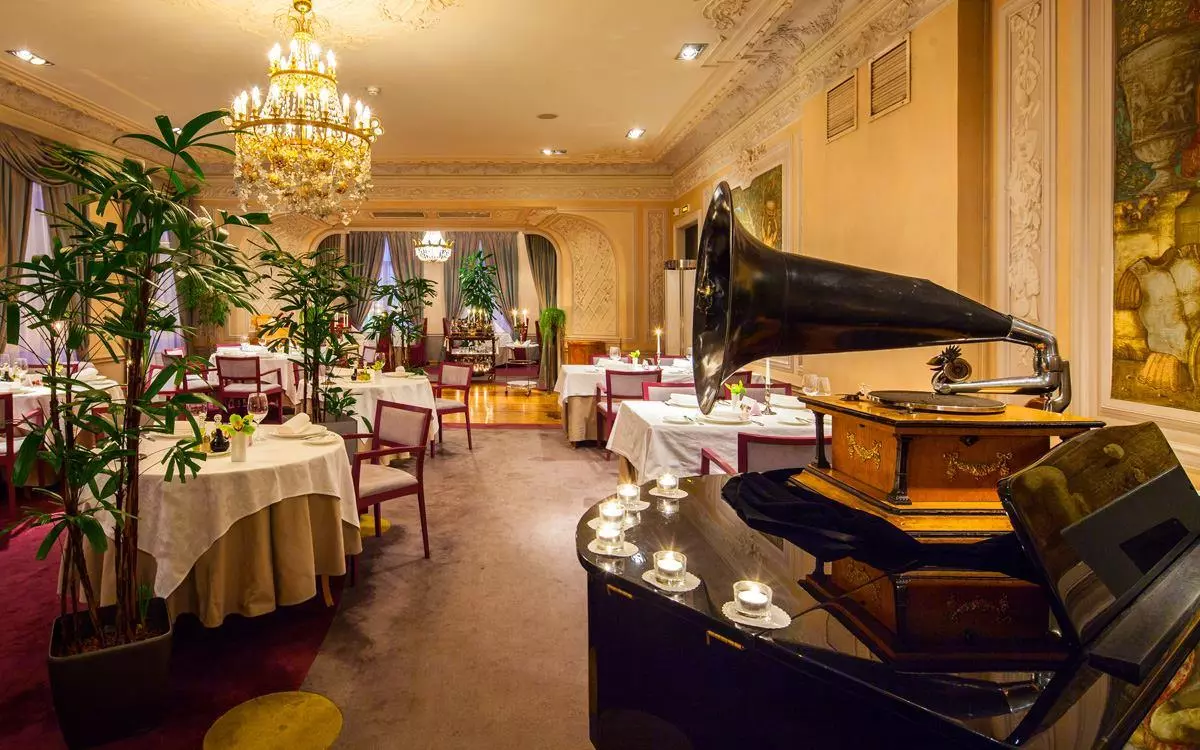
A refined cocktail bar at the Metropol Hotel in Teatralny Proyezd. Beyond its intricate drink menu, you can often find guest shifts and alcohol sets by touring stars. The experience is enhanced by a cultural programme: occasionally, you can catch live performances on a Bechstein grand piano, vinyl DJ sets, or immersive theatrical productions.
Dom Rossiyskoy Kukhni (House of Russian Cuisine)
Moscow
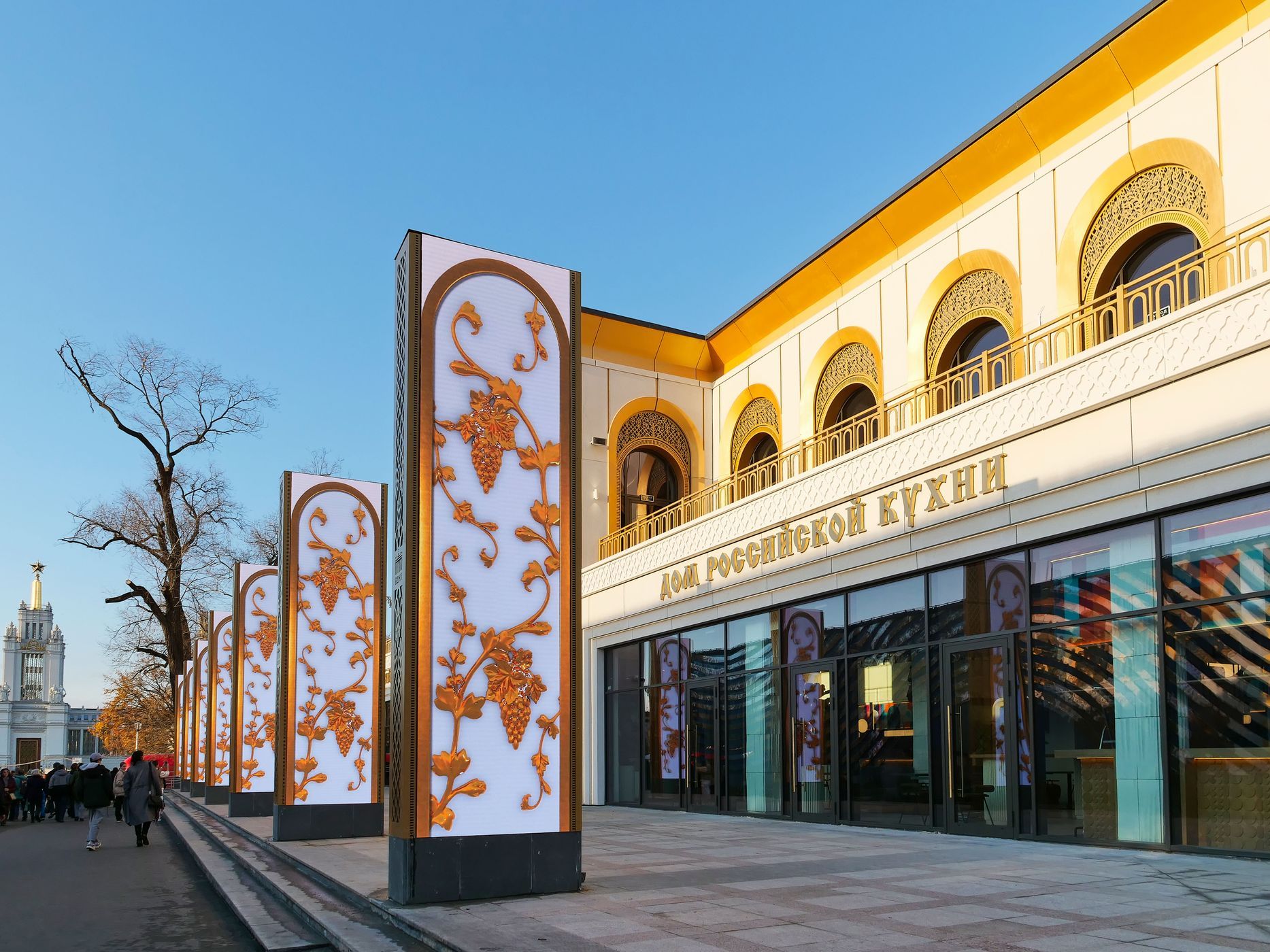
A food hall on the VDNKh grounds. 15 counters of regional cuisine from Kamchatka to Kaliningrad under one roof, cooking masterclasses and tastings throughout the day. A rare format: the gastronomy that usually takes a month of travel across the country — covered in a single lunch.
Oblomov
Moscow
Housed in a restored 19th-century mansion, Oblomov specializes in traditional Russian home-style cuisine prepared with premium ingredients. Its cozy atmosphere offers a glimpse into old Moscow hospitality.
Café Pushkin
Moscow
One of Moscow’s most iconic restaurants, Café Pushkin recreates the atmosphere of a 19th-century aristocratic mansion. It is renowned for classic Russian cuisine served in beautifully preserved historic interiors.
Astoria
Saint-Petersburg
The restaurant of the legendary Astoria Hotel, opened long ago opposite St. Isaac’s Cathedral. From the moment it opened, the hotel became one of the symbols of St. Petersburg’s high society: it hosted foreign guests, diplomats, performers, and members of the upper class. Today, the restaurant preserves the atmosphere of a historic grand hotel: European cuisine, classic service, and views of St. Isaac’s Square.
Tsarskaya Rymochnaya
Moscow
A casual restaurant-and-vodka-bar on Novinsky Boulevard, working with Russian cuisine and traditional beverages, slightly reimagined by the local bartenders. The menu features borscht, pickles, roasts, and other familiar home-style comforts for everyday dining.
Matryoshka
Moscow
Matryoshka offers traditional Russian cuisine inspired by recipes from the late 19th and early 20th centuries. Set on the banks of the Moskva River, it combines elegant interiors with authentic flavors.
Palkin
Saint-Petersburg
One of St. Petersburg’s oldest restaurant addresses. The establishment’s history dates back to 1785, and in the 19th century, the restaurant on Nevsky Prospekt became a meeting place for the city’s elite, writers, and artists. Today, Palkin continues the tradition of grand Russian cuisine: sturgeon, sterlet, caviar, game, rastegai pies, kulebyaka pies, and dishes inspired by pre-revolutionary restaurant traditions. The interiors feature stucco work, mirrors, and crystal, evoking 19th-century St. Petersburg.
Manul
Moscow
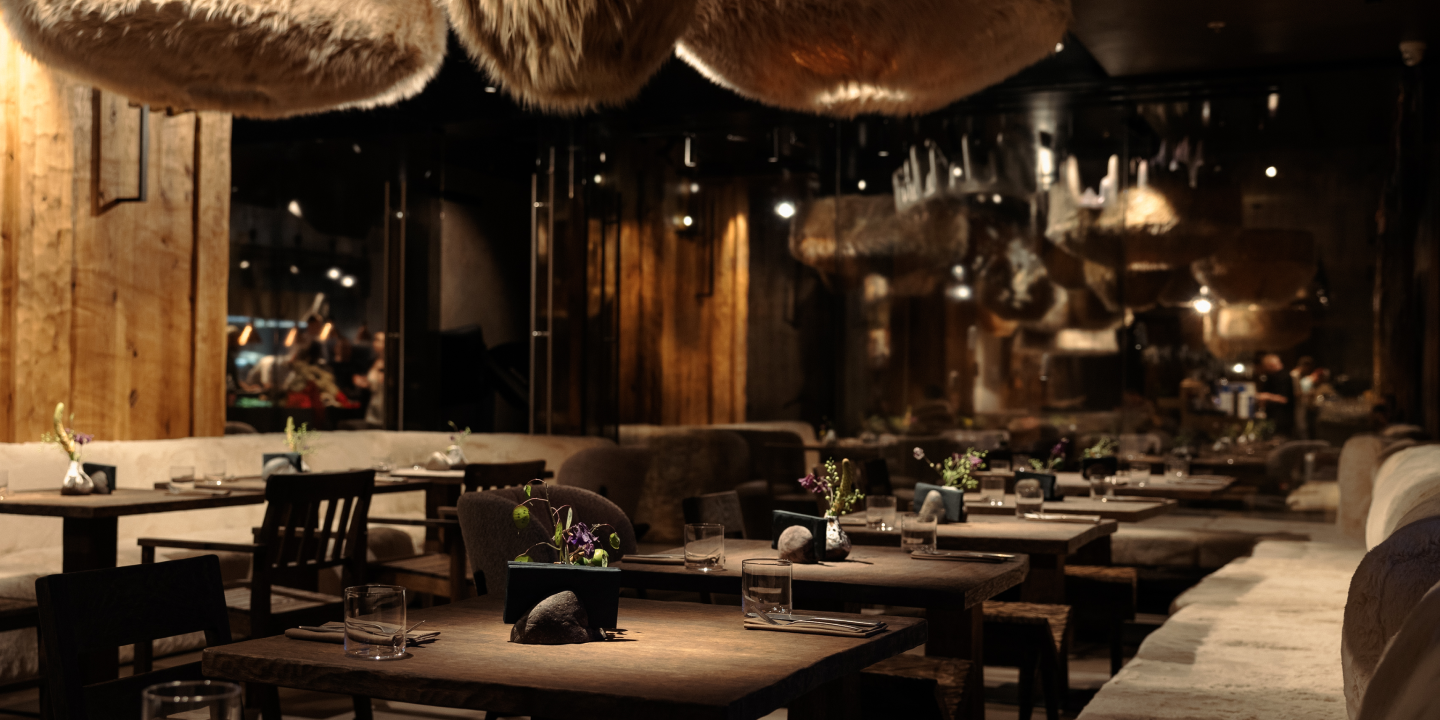
Manul is built around the cuisines of Siberian peoples, with a menu developed from recipes gathered on expeditions to Khakassia, Tuva, Altai, and the Yenisei region. Dishes include stroganina (thin-sliced frozen raw fish), muksun and chir, taiga venison, Khakass lamb, and khuzhuur pies, prepared in an open kitchen with a wood-fired oven. It sits in the Seasons gallery on Okhotny Ryad, a short walk from Red Square.
DR. Zhivago
Moscow
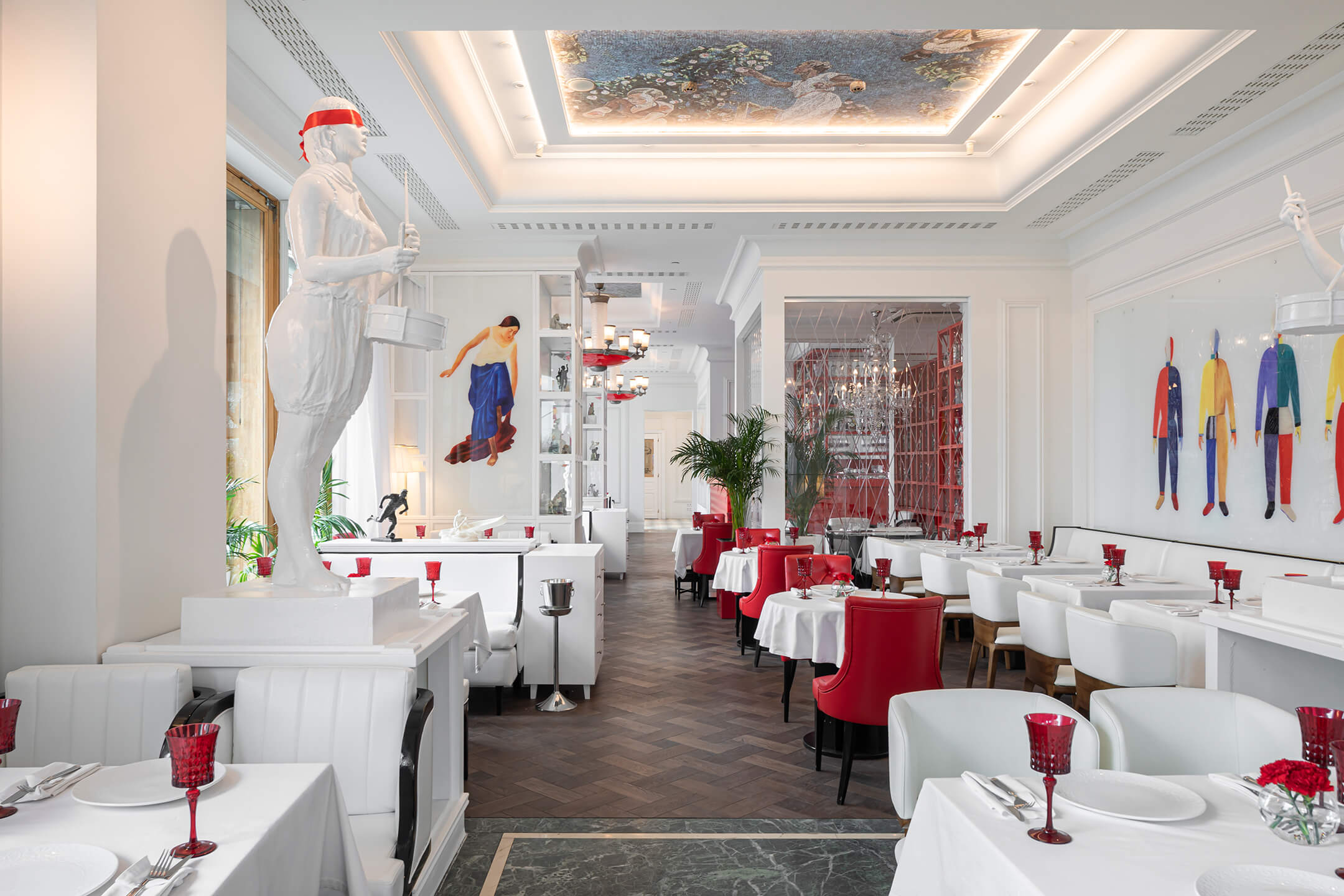
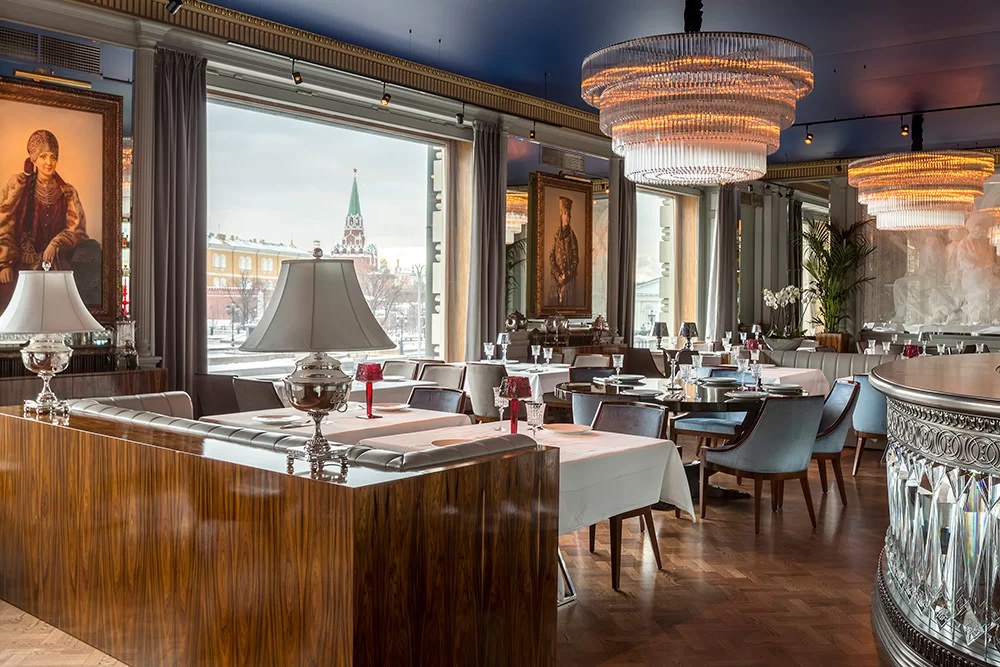
Dr. Zhivago is a grand café on the ground floor of the historic Hotel National, with views toward the Kremlin and Manege Square, and a recommendation from the Michelin Guide. The main hall displays reproductions of major Soviet-era paintings — Malevich, Petrov-Vodkin, Deineka, Samokhvalov — while an inner room takes its black-lacquer, gold-ceilinged look from Palekh lacquer boxes. The menu reworks Russian classics such as pozharsky cutlets, sturgeon aspic, and caviar service, backed by a vodka bar of polugar, samogon, and infused spirits.
Expeditsiya
Moscow
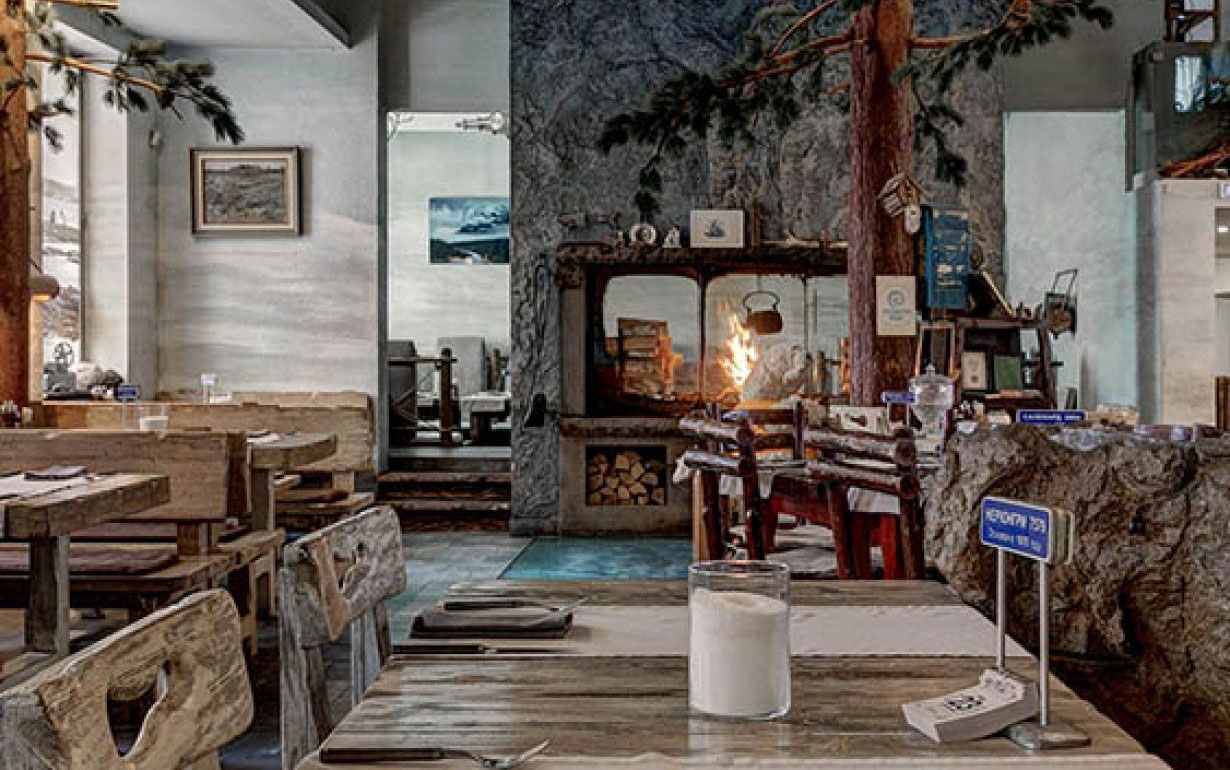
A long-standing restaurant of Northern cuisine, located in Pevchesky Lane. The menu features dishes and ingredients from the Russian North, while the space itself is divided into several themed areas: «Bivouac,» the Fireplace Hall, a terrace, and «Wintering.» It’s an ideal spot for those who want to discover how traditional Russian cuisine transforms when it moves from expedition conditions to a metropolitan restaurant kitchen.
Beluga
Moscow
Beluga celebrates Russian gastronomy with an emphasis on premium seafood, caviar, and traditional delicacies presented in a contemporary style. Located next to Red Square, it offers one of Moscow’s finest dining experiences.
Moskovskoe Nebo (Moscow Sky)
Moscow
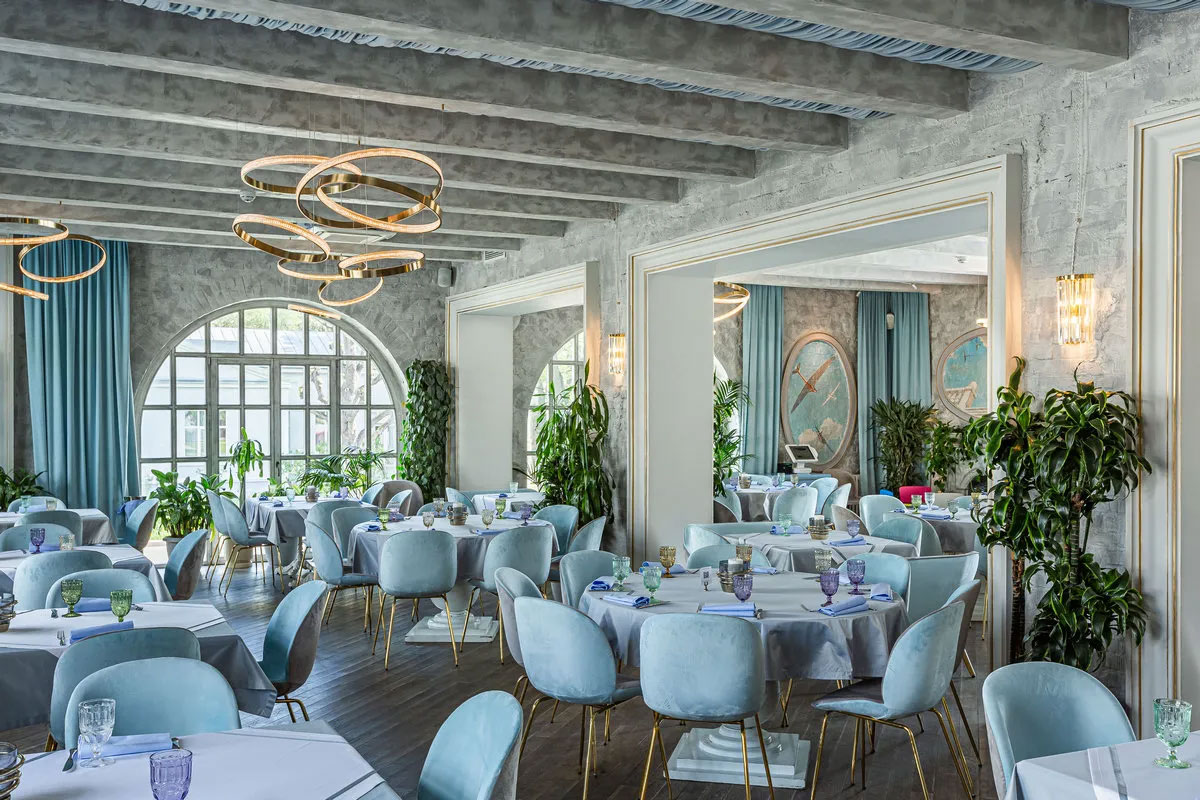
A restaurant inside a historic VDNKh pavilion. Soviet cuisine in a contemporary reading. The interior: white halls, pale blue textile draped from the ceiling, socialist realist frescoes on the walls. Pike cutlets, Olivier salad with beef pastrami. Familiar names, unexpected contents — that is exactly how this place works.